Study: What do these passages teach us about God’s desire to save everyone?
Apply: How should we show our love and respect for every human being?
Share: Your friend asks, if God’s love is unconditional then why will some people be lost?
Read in Class:Deuteronomy 7:6-9. Ask the class to identify the main idea of this passage.
Study: What do these verses teach about the relationship between God making covenants and God’s lovingkindness?
Apply: What are ways that you can constantly keep the reality of God’s love in your thoughts? Why is it important to do that?
Share: Your friend says a certain man keeps coming by the church asking for money to buy food for his family, but only uses it for his drug addiction. How can we help free people from their bondage and addictions when they won’t even help themselves? What do you tell your friend?
Read in Class: 1 John 4:7-20. Ask the class to identify the main idea of this passage.
Study:What does this tell us about the priority of God’s love?
Apply: Think about what you have been forgiven and what it cost you to be forgiven by Jesus. What should this tell you about forgiving others?
Share: Your friend says she can never forgive her aunt for what she did to her and her family. It is beyond forgivable. What do you tell your friend?
Study: What do these passages teach about the relationship between God’s love, our love for God, and love for others?
Apply: What specific steps can you take to love God by loving others? What could you do today and in the coming days to show people God’s love and (eventually) invite them to enjoy what it means to have the promise of eternal life?
Share: Can you think of someone in your community who needs to be shown unconditional love? How can you show them God’s love this week?
Study: What do these verses reveal about God’s steadfast love for His people, now and before the world existed?
Apply: What does the fact that God continues to bestow love on this world, despite its fallenness and evil, tell us about His love and character? How should this truth cause us to love Him in return?
Share: Your friend says since God’s love is unconditional and everlasting, everyone will be saved no matter what. What do you tell your friend?
Read in Class: Matthew 22:1-14. Ask the class to define the main idea of this passage.
Study: What is the meaning of this parable?
Apply: What about your life reveals that you have accepted the wedding invitation and have come appropriately clothed?
Share: Your friend asks, “What does it mean that Many are called but few are chosen?” What do you tell your friend?
Main Theme: In this, our last week in John, we will look at some of this Gospel’s key points, which can help us move beyond the mere head knowledge of Jesus to, instead, knowing Him better and more closely abiding in Him and in His Word.
Read in Class: John 21:1-25. Have the class define the main idea of this chapter.
Study: What crucial truths are revealed here, especially about God’s grace—and human humility?
Apply: Why is humility so key in anyone seeking to know the Lord? In light of the Cross, what do any of us have to be proud of?
Share: Your friend points out that people jumped to the wrong conclusion about what Jesus meant in John 21:20-23. Your friend asks why people sometimes misunderstood Jesus’ words. What do you tell your friend?
Read in Class:John 1:4-10 and John 8:12. Ask the class to define the common thread of these passages.
Study: What great contrast is present here, and why is this contrast so foundational to understanding truth?
Apply: Read John 8:42-44. How does Jesus describe the false foundation on which the religious leaders of Israel had based their faith?
Share: Your friend asks you, “How do you respond to truths that “step on your toes,” as opposed to how you should respond to those truths?” What do you tell your friend?
Read in Class: John 4:46-54. Ask the class to define the main idea of this passage.
Study: What problem brought the official to Jesus, and what was the real underlying issue here?
Apply: What is the relationship between our love for Jesus and obedience? Why is any kind of “obedience” not based on love in danger of being legalism?
Share: Your friend asks you if you believe in Jesus because you have seen signs and miracles, or because of what the Bible says about Jesus. What do you tell your friend?
Read in Class: John 12:32 and John 15:1-11. Ask the class if there is a common thread in these two passages.
Study: What is it that draws people into a relationship with Jesus?
Apply: What is the secret of spiritual growth and health?
Share: What are some fresh and new revelations you have gained studying this quarter’s lesson, “Themes in the Gospel of John?”
Main Theme: John presents the Cross as the enthronement of Jesus, particularly tied to the idea of the hour, which is referred to numerous times throughout the book (John 7:30; John 8:20; John 12:27). This idea of enthronement is an ironic picture since crucifixion was the most ignominious and shameful way to die that the Romans used. This contrast points to the deeply ironic depiction that John presents: Jesus is dying in shame, but it is, at the same time, His glorious enthronement as the Savior.
Read in Class: John 18:33-19:5. Ask the class to define the main idea of this passage.
Study: What did Pilate and Jesus talk about? How did Pilate try to persuade the people to ask for Jesus’ release?
Apply: How scary—a pagan ruler wants to release Jesus while the spiritual leaders of the nation, who should have recognized Him, wanted Him crucified instead! What lessons can we take from this for ourselves?
Share: Your friend asks you, “how do you understand the idea of Jesus as the Truth?” What do you tell your friend?
Read in Class: John 19:25-30. Ask the class what the main idea of this passage is?
Study: What touching scene regarding Jesus’ mother happened at the cross?
Apply: When Jesus said, “It is finished,” what does that mean for each of us? What was finished, and how does that apply to our lives?
Share: Your pastor friend says he wishes he had time to help his ailing mother, but his ministry just keep him so busy that he can’t be there for his mother. What do you tell your pastor friend?
Read in Class: John 20:1-10. Ask the class to define the main idea of this passage.
Study: What was the meaning of the folded face cloth?
Apply: What is the importance to us about what is depicted in these verses?
Share: Your friend asks, “when Jesus was resurrected wouldn’t it have been more advantageous for Him to have gone at once to appear before all the leaders back in Jerusalem, instead of just appearing first to a woman who had been fighting addictions?” What do you tell your friend?
Read in Class:John 20:11-18. Ask the class what the main idea of this passage is?
Study: What happened here that shows why Mary Magdalene still did not understand the meaning of the empty tomb? What changed everything for Mary?
Apply: Read 1 Corinthians 15:12-20. According to Paul, what good is our Christian faith if Christ had not been raised from the dead?
Share: Your friend asks, how you know for sure that Jesus was really resurrected? What do you tell your friend?
Main Theme: This week’s lesson looks at how the Gospel of John presents the Father, Son, and Holy Spirit, but now within the context of the farewell discourse (John 13:1-17:26).
Study: How does this reveal the breach that sin caused, and what does it mean that it was God seeking them out, not vice versa?
Apply: These verses present the Father in close connection with Jesus Christ, His Son. The Father has intimate contact with our world and a deep investment in our salvation. What does this truth teach us about God’s love for us?
Share: Your friend says, “Jesus made the greatest sacrifice to come and die for us while all the Father had to do was watch from heaven.” What do you tell your friend?
Study: What do the following texts teach us about the relationship between Jesus and the Father?
Apply: How would your life be changed if your thoughts and actions were fully an expression of God’s will for your life? That is, how can we better live out what we know from Jesus is God’s will for our lives?
Share: Your friend asks how do we get to know God now that Jesus is up in heaven and no longer with us? What do you tell your friend?
Study: What do these passages teach us about the importance of the Holy Spirit for conversion?
Apply: How have you seen the Holy Spirit working in your conversion process?
Share: Your friend says that the Holy Spirit convicted her that the Sabbath is no longer binding. What do you tell your friend?
Read in Class: John 17:1-26. Have the class define the main idea of this passage.
Study: What words or phrases in this chapter express the desire of Jesus for a close relationship of love between Himself, the Father, and His disciples?
Apply: How can you better reflect the love of God, such as exists between Jesus and the Father, in your own life?
Share: Your friend asks how your church family reflects the unity of the Father, Son, and Holy Spirit. What do you tell your friend?
Main Theme: This week continues with the revelation of God as given us in John. We will also more fully explore the flip side of things, in which, despite the powerful evidence for Jesus as the Messiah, some rejected Him. We will study this idea for two reasons: to avoid the same mistake, but also to consider how we might be able to reach out to those in danger of making that mistake, as well.
Share: Your friend says she accepted the gift of eternal life years ago, so she knows no matter what she does today, good or bad, she is already saved. What do you tell your friend? See Once Saved Always Saved.
Read in Class: John 1:12-13. Ask the class to summarize this passage.
Study: What are the steps described here about becoming a Christian?
Apply: Read Romans 8:16. What principle about salvation in Jesus is found here?
Share: Your friend says we are either predestined to be the children of God or we are predestined to be lost. We have no choice? What do you tell your friend? See How do we Get Elected by God?
Apply: Read Numbers 13:23-33. What made the difference between the two reports the spies brought back about Canaan? How do we make sure we don’t make the same mistake most of the spies made?
Share: Your friend asks, did Satan try to tempt Jesus into disbelief? Is so, how did Jesus meet that temptation? What do you tell your friend? See Matthew 4:1-4.
Main Theme: Who were some of these people, and why did they testify as they did to the identity of Jesus?
Read in Class: John 12:1-8. Ask the class to define the main idea of this passage.
Study: What was the significance of Mary’s actions here? How was this a witness to who Jesus really was?
Apply: Jesus knew what was in the heart of Mary and the heart of Judas. He knows what’s in your heart, as well. What should this truth tell us about the need of Christ as our righteousness, transforming us and covering us, as well?
Share: Your friend says that she wishes she had millions of dollars so she could help the poor. What do you tell your friend?
Read in Class: John 18:38 and John 19:4-22. Ask the class to define the main idea of these passages.
Study: How is Pilate’s verdict connected to the theme of John’s Gospel?
Apply: What can we learn from Pilate’s example about the dangers of allowing popular sentiment, even pressure, to keep us from doing what we believe is right?
Share: Your friend asks you if you can think of others in the Bible or life today who have “unwittingly” testified about Jesus? What do you tell your friend?
Read in Class:John 20:19-31. Ask the class to identify the main idea of this passage.
Study: What can we learn from the story of Thomas about faith and doubt? What major mistake did Thomas make?
Apply: Do you only put your faith in what you can feel or see? Can you think of a time when you put your faith in something you could feel or see and were still disappointed?
Share: If someone were to ask you Why do you believe in Jesus? what would you say?
And all the people who belong to this world worshiped the beast. Revelation 13:8 NLT
Sadly, many put their confidence in popular opinion, while the Bible tells us the vast majority of the world will worship the beast.
Interestingly while Jesus claimed to be God, the majority accused Him of blasphemy and had Him crucified for making such a claim. Later the beast claims to be God, but instead of accusing him of blasphemy, the majority worships him. Truth is clearly not a popularity contest.
Occasionally, at church or the Adventist school where I teach Bible and evangelism, someone will ask me, “What do we believe about such and such?” My response has always been, “I don’t know what you believe, but here is what I and many Seventh-day Adventists believe,” and I show them in the Bible what I believe and why. I am not going to tell someone what they believe. That is not teaching. That’s brainwashing. Besides, truth is not truth just because everyone in the Adventist church believes it. Truth is not a popularity contest in the church or the world. Truth is truth only if the Bible supports it.
During the Dark Ages, when people did not have access to the Bible, people trusted their priests to tell them what they believed, and because of that there was a lot of brainwashing going on.
Even before the Dark Ages, priests abused their authority and tried to brainwash people into believing whatever they believed. This happened in Jesus’ day when those in “authority” were trying to capture Jesus.
When the Temple guards returned without having arrested Jesus, the leading priests and Pharisees demanded, “Why didn’t you bring him in?”
“We have never heard anyone speak like this!” the guards responded.
“Have you been led astray, too?” the Pharisees mocked. “Is there a single one of us rulers or Pharisees who believes in him? John 7:45-48 NLT
The guards experienced and heard the Word of God speaking to them and believed. Since the Pharisees did not want to believe, they mocked at this. In John 7 the Pharisees misconstrued Scripture to try and prove their point, but amazingly, instead of hanging their hat on Scripture, they hung it on the fact that none of the rulers or leaders believed. Is truth a popularity contest? If everyone else believes something is it right, and if no one else believes it, then is it wrong? Is that how it works?
The number of people who believe something simply because everyone else believes it is staggering. Take the state of the dead for example. Years ago I attended the funeral of a dear Adventist saint. Her family believed in the immortality of the soul and asked the Adventist preacher doing her funeral to “put her in heaven now.” The pastor replied that he could not do that since it simply is not true. However, he told them he believed in liberty of conscience and freedom of speech so if one of them wanted to stand up and say she was in heaven, they could. So, one of the family members stood up and talked about how her grandmother was now in heaven. I remember she kept saying “we cling to this!” Very emphatically, yet she gave no Scriptural reference other than that is what everyone believes. So, I am not sure exactly what she was clinging to other than popular belief. In 1 Thessalonians 4:13-18 Paul tells us to “comfort each other with these words” about the resurrection. Sadly, instead of comforting each other with the words Paul told us to use to comfort each other, many people use phrases about going straight to heaven when you die that are nowhere in the Bible and Paul nor anyone else ever suggested that we use. Sadly those phrases have been used so often that people believe it because they have heard it so many times.
When it comes to Sabbath keeping, I have heard so many people say that Sunday must be the true day because the whole world can’t be wrong. They forget that at the time of the flood only 8 people were right! Truth is not a popularity contest.
And the people of Berea were more open-minded than those in Thessalonica, and they listened eagerly to Paul’s message. They searched the Scriptures day after day to see if Paul and Silas were teaching the truth. Acts 17:11 NLT
Like the temple guards, the Bereans were interested in new ideas if they were found in Scripture. They didn’t believe something because Paul and Silas believed it or because a ruler did. On their own they searched the Scriptures daily to find the truth.
I have heard Seventh-day Adventists telling their Baptist and Methodist friends to search the Bible for themselves because their pastors could be wrong. I have watched some of the same Seventh-day Adventists listening to their own favorite Adventist preachers, without bothering to search the Scriptures, because, after all, their pastor is Adventist, so he is automatically right, right? Wrong! We all make mistakes, as we all continue to learn and grow.
Let’s not be like the foolish Pharisees in John 7, who hung their hats on how many people believed or did not believe something. Truth is not a popularity contest. Let’s search the Scriptures ourselves to find truth.
You may study this week’s Sabbath School lesson here.
Main Theme: This week’s lesson looks at some of those who witnessed and testified about Jesus. In each of these incidents, some aspects of who Jesus really is are revealed, and together they create a deeper vision of Jesus, the Messiah.
Study: How does John the Baptist compare himself to Jesus? What are some things John Said about the Messiah that may have surprised his listeners?
Apply: How can we learn the lesson of humility before both God and humanity? What can we learn from the example of John here about humility of the soul?
Share: Your friend asks you how you came to realize that Jesus is the Messiah and your personal Savior? What do you tell your friend?
Read in Class: John 6:51-71. Ask the class to summarize this passage.
Study: What did Jesus say that people had trouble accepting?
Apply: What can we learn from this story about the fact that the majority is usually wrong? Why must we remember this, especially with the aspects of our faith that are unpopular with the majority—even the majority of Christians?
Share: Your friend asks, what did Jesus mean by “eat my flesh and drink my blood?” What do you tell your friend?
Study: What does the Father say about Jesus, and what does Jesus say about the Father?
Apply: Read 2 Peter 1:16-21. How would we know the truth about Jesus as our atoning sacrifice unless it were revealed to us? Why, then, is knowing the Bible and what it teaches about Jesus so crucial?
Share: Your friend asks, “How can I know if God is well pleased with me?” What do you tell your friend?
Read in Class:John 7:37-53. Ask the class to summarize this passage.
Study: When Jesus spoke to the Jews attending the Feast of Tabernacles, what was the response of many in the crowd?
Apply: In John 7:47-48, the leaders imply that the people should not believe in Jesus since the leaders don’t believe in Him. How much influence do you allow leaders to have over what you believe? See Truth is not a Popularity Contest.
Share: In your sphere of influence what has been your testimony about Jesus? Is there someone you can share your testimony with this week?
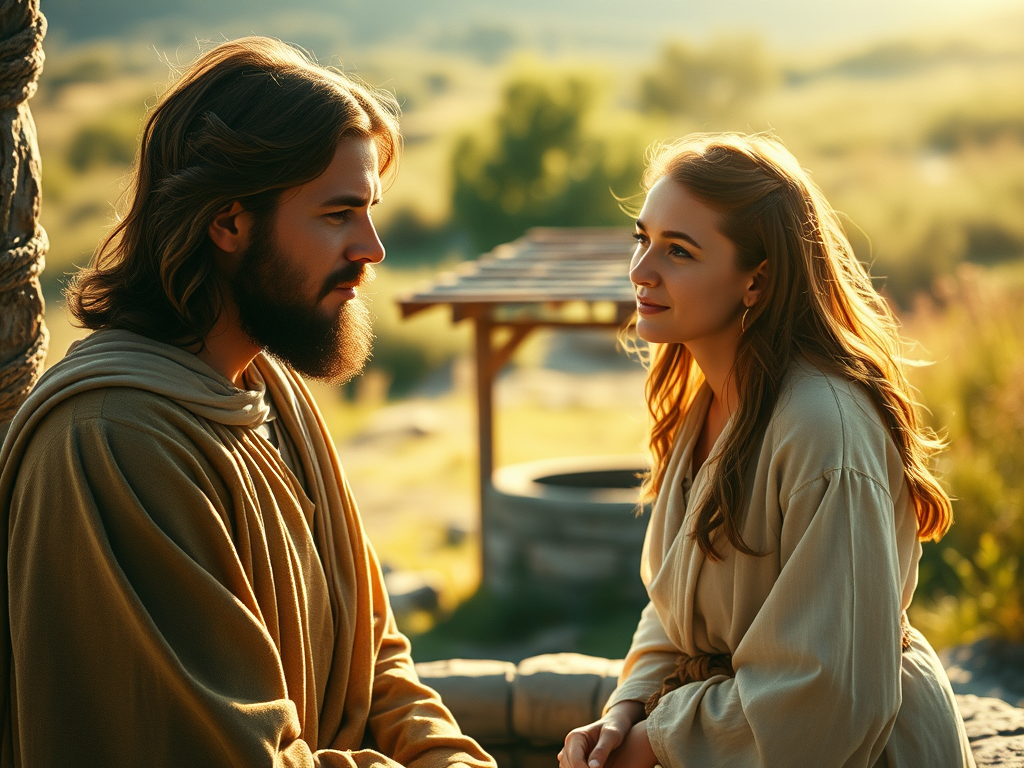
Main Theme: John recounts the encounter between Jesus, the woman at the well, and the people of the Samaritan city of Sychar.
Read in Class: John 4:5-15. Ask the class the identify the main idea of this passage.
Study: How did Jesus use this opportunity to open a dialogue with the woman at the well? How does Jesus begin witnessing to this woman?
Apply: Read John 7:37-38. What is Jesus saying to us in these verses, and how do we experience what He is promising here?
Share: Your friend asks, “What are some of the taboos in your own culture that could hamper your witness to others? How do we learn to transcend them?” What do you tell your friend?
Study: How did Jesus respond to the woman’s request? What truth in Ezekiel 36:25-27 was Jesus trying to bring home to the woman?
Apply: In John 4:16 Jesus gets very personal with the woman to make her aware of her need for healing. How do we react when a friend or maybe even a sermon in church may expose an area where we need healing? Do we become defensive, or do we acknowledge our need for healing?
Share: Your friend asks, you how God has taken away your heart of stone and given you a heart of flesh? What do you tell your friend?
Read in Class:John 4:16-26. Ask the class to define the main idea of this passage.
Study: What did Jesus do to show this woman that He knew her deepest secrets, and how did she respond? How did Jesus reveal His identity to her?
Apply: What should this story tell us about why the gospel needs to break down the barriers that we humans create with each other?
Share: Your friend mentions how you can see a friend you have not seen in years, and once you get back together it was like you were never apart. Could it be because you had been together “in the Sprit” even while you were apart? What do you tell your friend?
Read in Class: John 4:27-42. Ask the class to define the main idea of this passage.
Study: What surprising action did the woman take?
Apply: What happened following this encounter, and what does it teach about how the gospel can be spread?
Share: What should this story tell us about how powerful the witness of even one person can be? How powerful a witness are you to what Jesus has done in your life? Who can you share your story with this week?


 In Light of The Cross