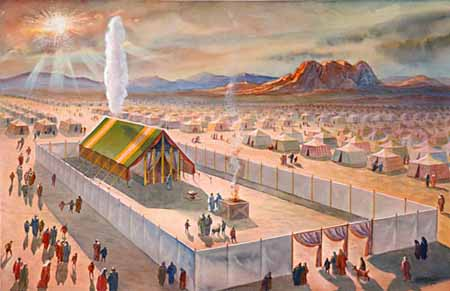
13: The Tabernacle-Sabbath School Lesson Teaching Plan

Prepared by William Earnhardt, for Sabbath School class, 27 September 2025.

Main Theme: The sanctuary demonstrated God’s closeness to humanity and revealed the greatest truths to them, which is how He saves those who come to Him in faith.

Read in Class: Exodus 31:13 and Exodus 35:1-3. Ask the class to define the main idea of this passage.

Study: What truth was reiterated to the people here in the context of the building of the sanctuary?

Apply: The Jews have a saying: More than Israel kept the Sabbath, the Sabbath kept Israel. Though we as Adventists probably wouldn’t express it like that, what important role does the Sabbath have in the life of our church family?

Share: Your friend asks you if warming up food on an electric stove, or even turning a light switch on, counts as starting a fire on the Sabbath. What is the principle behind the law not to build a fire on the Sabbath? Are we still keeping the principle of the law when we turn on a stove or a light?

Read in Class: Exodus 35:4-9 and Exodus 36:1-7. Ask the class to identify the main idea of these passages.

Study: What important lessons are here for us today?

Apply: What spiritual gifts have you received when you were filled with the Holy Spirit? Remember that the spiritual gifts can flourish only when you cultivate the fruits of the Spirit in your life (Gal. 5:22-23).

Share: Your friend asks how she can know what her spiritual gifts are. What do you tell your friend?

Read in Class: Exodus 40:34-38. Ask the class to share the main idea of this passage.

Study: How did the Israelites discern God’s presence?

Apply: What are ways that, even now, you can experience the presence of God? Why is it important that you do so?

Share: Your friend says that sometimes she feels God is with her, but other times she does not. She asks how to know if God is with her or not. Is it safe to just go by our feelings? How would you answer your friend from the Bible?

Read in Class: John 1:14. Ask the class to share the main idea of this passage.

Study: How is Christ’s incarnation compared to the tabernacle?

Apply: Read in Revelation 21:1-3. Looking at what we have been promised in Jesus, how can we learn to endure to the end?

Share: What new truths and insights did you gain as you studied this quarter’s lesson?

11: Apostasy and Intercession-Sabbath School Lesson Teaching Plan

Photo by Pixabay on Pexels.com

Prepared for Sabbath School Class, Sabbath, 13 September 2025.

Main Theme: Whatever the reasons for this terrible apostasy, we can learn lessons about the sinfulness of humanity and the mercy of God.

Read in Class: Exodus 32:1-6. Ask the class to identify the main idea of this passage.

Study: How was it possible for Aaron’s leadership to fail so spectacularly?

Apply: How could Aaron, a leader, have been so weak? In what ways might Aaron have sought to justify in his own heart his terrible actions?

Share: Your friend says that her church has an excellent pastor because he always does whatever makes the whole church happy. Is whether ot not a pastor makes everyone happy a good way to determine if the pastor is doing a good job or not? How does the story of the golden calf help you answer your friend? What do you tell your friend?

Read in Class: Exodus 32:7-14. Ask the class to identify the main idea of this passage.

Study: Why did God send Moses back to the camp of Israel?

Apply: What are some things, or even people and ideas, that could become idols to us today? How do we guard against idolatry in today’s world?

Share: Your friend asks why Moses was interceding for these people when all they did was cause him trouble? Why go to such great lengths to save such a troublesome group? What do you tell your friend?

Read in Class: Exodus 32:15-29. Ask the class to identify the main idea of this passage.

Study: What was Moses’ reaction to God’s threat to destroy Israel?

Apply: What should this story teach us about the power of intercessory prayer? Whom should you be praying for right now?

Share: Your friend asks if the apostasy was Aaron’s fault for making the golden calf, or the people’s fault for encouraging Aaron instead of stopping him? Who should have been holding whom accountable? Aaron, the People, or both? What do you tell your friend?

Read in Class: Exodus 32:30-32. Ask the class to identify the main idea of this passage.

Study:  How far did Moses go in his intercessory prayer for sinners?

Apply: Moses was willing to lose out on heaven to save others and honor God’s name? How far should we be willing to go to save others and honor God? See also Romans 9:1-3.

Share: How do you share the truth with others, so as to save them from apostasy without coming across as self-righteous or “holier-than-thou?” See Galatians 6:1-5.

10: The Covenant and the Blueprint-Sabbath School Lesson Teaching Plan

Prepared by William Earnhardt for the Sabbath School class, 6 September 2025.

Main Theme:  We love God, and out of that love, we obey Him.

Read in Class: Exodus 24:3, 7-17. Ask the class to identify the main idea of this passage.

Study: What roles do the reading of the Word of God and the sprinkling of blood play in the ratification of the covenant between God and His people? What amazing experience were the children of Israel given here?

Apply: Dwell more on the story of these very privileged men, even sons of Aaron. What warning should this give to us, as Adventists, who, with the light we have been entrusted with, are indeed privileged?

Share: Your friend tells you she has promised God several times that she would quit an addiction, but keeps going back to it. After so many broken promises, she is ready to give up. What do you tell your friend? Hint: 2 Peter 1:4.

Read in Class: Ezekiel 36:24-30. Ask the class to identify the main idea of this passage.

Study: How does obedience take place in our lives?

Apply: If we have been promised the power to obey, why do we find it so easy to fall into sin anyway?

Share: Your friend asks you, “How do you build a resolve to follow God?” What do you tell your friend?

Read in Class: Exodus 25:1-9. Ask the class to identify the main idea of this passage.

Study: What crucial, practical, and theological truths are seen in these verses?

Apply: 1 Corinthians 6:19 tells us that our bodies are supposed to be a temple for the Holy Spirit to dwell in. How do you make sure that your body is an appropriate temple for the Holy Spirit to dwell in?

Share: Your friend tells you, in Great Controversy, page 488, Ellen White says, “The subject of the sanctuary and the investigative judgment should be clearly understood by the people of God.” Your friend asks you why it is so important, especially since Adventists are the only people who even teach the doctrine of an investigative judgment. What do you tell your friend?

Read in Class: Exodus 31:1-11. Ask the class to identify the main idea of this passage.

Study: What special assistance did God give so that all the tabernacle’s details and related services would be prepared and built in a beautiful and proper way?

Apply: The phrase “mercy seat” comes from one Hebrew word, whose root meaning is “to atone.” Why, then, would this “mercy seat” be set right over God’s law? What hope should we see in this fact?

Share: How does your understanding of the sanctuary help you share the Gospel, and what object lessons from the sanctuary do you like to use?

9: Living the Law-Sabbath School Lesson Teaching Plan

Photo by Sora Shimazaki on Pexels.com

Prepared by William Earnhardt for the Sabbath School class, August 30, 2025.

Main Theme: God gave us practical instructions for daily living.

Read in Class: Exodus 21:12-19. Ask the class to share the main idea of this passage.

Study: What specific regulations were given regarding Hebrew slaves, homicide, and bodily injuries?

Apply: Though in most of the world the evil practice of institutionalized slavery has, for the most part, been abolished, some of its principles still exist, and what can we do, in our own limited sphere, to fight against these principles?

Share: Your friend asks you if you know the signs of someone being a victim of human trafficking, and what to do if you suspect someone is a victim. What do you tell your friend? Hint: See Signs of Trafficking on Shared Hope.

Read in Class: Exodus 22:16-26. Ask the class to share the main idea of this passage.

Study: What issues were dealt with in these laws and how?

Apply: How graceful and patient are you when others reject some of the truths of God’s words, of Jesus Himself? 

Share: Your friend asks you how you think foreigners should be treated in your country. What do you tell your friend?

Read in Class: Matthew 5:38-48. Ask the class to identify the main idea of this passage.

Study:  How does Jesus interpret the meaning of the retaliation law? How should we apply it today?

Apply: How should the realization that one day justice will come help you deal with all the injustice that we see in the world now?

Share: Your friend asks you if you find it hard to pray for and bless your enemies. She asks if it’s even practical to expect us to love our enemies in real life. What do you tell your friend?

Read in Class: Deuteronomy 32:35 and Romans 12:19. Ask the class to identify the common thread in these passages.

Study: What promise and command are found in these verses, and how are they closely related?

Apply: What are the ways we can learn to love in the way we are commanded to? Why does it always include “death to self?”

Share: Can you think of someone in your past whom you may need to forgive? Could you please reach out to them this week and share the same amazing grace that God has given to you? Remember, while some things are unforgivable, God’s grace makes the unforgivable forgivable.

8: Covenant at Sinai-Sabbath School Lesson Teaching Plan

Photo by Mido Makasardi u00a9ufe0f on Pexels.com

Prepared by William Earnhardt, for Sabbath School Class, 23 August 2025.

Main Theme: God calls out to all of us; our eternal destiny depends on our response.

Read in Class: Exodus 19:1-8. Ask the class to share the main idea of this passage.

Study: What did God promise them here, at the base of Mount Sinai?

Apply: Imagine being God’s “special treasure”! What special privileges would that encompass? What special responsibilities would you have?

Share: Your friend says that when Jesus died on the cross, He made a new covenant with His people, which was no longer based on the law. What do you tell your friend? Hint: See Was the Law or the Covenant Given at Sinai Changed at the Cross?

Read in Class: Exodus 19:9-25. Ask the class to share the main idea of this passage.

Study: How did God prepare Israel to receive the Ten Commandments?

Apply: How do you understand the idea of the Ten Commandments as an expression of God’s love? What does that mean? How is God’s love revealed in them?

Share: Your friend notes that in Exodus 19:10, the people are told to wash their clothes in preparation for keeping the commandments. Your friend asks if this is why in Revelation 22:14, some translations say, “wash their robes,” while others say “keep the commandments.” What is the parallel between “washing our robes” and “keeping the commandments?” What do you tell your friend?

Read in Class: Exodus 20:1-17. Ask the class to share the main idea of this passage.

Study: What are the principles of the Decalogue, and how is it organized?

Apply: in John 14:15, Jesus says, “If you love me, keep my commandments.” Why is it important to keep the commandments out of love, rather than just to receive a reward? How can we be sure we are not just doing it for the sake of the latter?

Share: Your friend says that she heard that God’s biddings are His enablings, and that His commands are actually promises. Is that true? If so, can you explain to your friend why?

Read in Class: James 1:23-25 and Romans 3:20-24. Ask the class to share the main idea of these passages.

Study: What is he saying, and how do these words help us realize what the function and importance of the law is, even though it cannot save us?

Apply: How should we apply the meaning of “Christ is the end of the law” in Romans 10:4?

Share: Your friend says that faith abolishes the law. What do you tell your friend? See Romans 3:31.

7:The Bread and Water of Life-Sabbath School Lesson Teaching Plan

Photo by Kseniya Buraya on Pexels.com

Prepared by William Earnhardt, for Sabbath School Class, 16 August 2025.

Main Theme: Along the journey to Canaan, God had to teach Israel over and over to trust and obey.

Read in Class: Exodus 15:22-27. Ask the class to identify the main idea in this passage.

Study: After crossing the Red Sea, what was the background to the first miracle performed?

Apply: What trials and struggles have you brought upon yourself? What comfort can you get in knowing that God will still work on your behalf if you cooperate with Him?

Share: Your friend asks, what was the significance of the branch that made the water sweet? What do you tell your friend? Hint: See A Tree Makes a Bitter Life Sweet Again.

Read in Class: Exodus 16:1-15, 26, 35. Ask the class to identify the main idea of this passage.

Study: What was the cause of the Israelites’ grumbling, and what followed?

Apply: People like to eat. We were created to like to eat. The rich abundance of food, growing out of the ground (our original diet), reveals not only that God wants us to eat, but that we are to like what we eat, too. How, though, can this wonderful gift, that of food (and our liking to eat it), be abused?

Share: Your friend says that her pastor told her the sabbath was never observed by God’s people until the law was given on Mt. Sinai. What do you tell your friend?

Read in Class: Exodus 18:13-18, 21. 25-26. Ask the class to identify the main idea of this passage.

Study: What major steps in the history of the nation took place here?

Apply: Moses could have just brushed off the old man and told him to mind his own business. He didn’t. What important lessons can we learn from his willingness to listen to this person who wasn’t even a Hebrew?

Share: Your friend, who is the head elder of his church, says he would like to delegate more of his responsibilities to others, but is afraid others may not do as good a job as he does, or may do things totally different from what he is used to. What do you tell your friend?

Read in Class: 1 Corinthians 10:11, John 6:31-35, 51. Ask the class to share the main idea of this passage.

Study: What reason does Paul give for these events to have been recorded? What truths are revealed here for us as Christians?

Apply: What symbols in the story of Moses point us to Christ? How do these symbols help us in our relationship with Christ?

Share: Your friend asks you how the story of Moses helps us share the plan of salvation. What do you tell your friend?

6: Through The Red Sea-Sabbath School Lesson Teaching Plan

Prepared by William Earnhardt, for Sabbath School class, August 9, 2025.

Main Theme: The excellent and miraculous ways God provided for and delivered Israel foreshadow how God will deliver us in the last days, and how He already delivered us from sin at the cross.

Read in Class: Exodus 12:31-36. Ask the class to identify the main idea of this passage.

Study: What strange request does Pharaoh make and why, even as he gives permission for them all to leave?

Apply: How often have we “repented” of actions only because of their consequences and not because those acts were themselves wrong? Why is that not true repentance? How can we learn to be sorry for the sins that, in a sense, we “get away with,” at least in the short term?

Share: Your friend notes that the passage we just read says the Lord caused Israel to gain favor in the sight of the Egyptians. Does this mean in the last days, or even during the time of trouble, God will cause God’s people to gain the favor from some of those who are in the world? What do you tell your friend?

Read in Class: Exodus 13:17-14:12. Ask the class to identify the main idea of this passage.

Study: How did God guide the Israelites when they left Egypt, and what happened next?

Apply: Think of the last time you faced a terrible situation. What was your first reaction: faith in God or a lack of faith? What lessons should you have learned from that situation that could help you the next time another comes (and come it will)?

Share: Your friend asks, Why do people have such a hard time believing in God even after all He has done for them? What do you tell your friend?

Read in Class: Exodus 14:13-31. Ask the class to identify the main idea of this passage.

Study: Despite their lack of faith, what did God do for the children of Israel?

Apply: In the good times, do we thank God enough for His care and protection? What can we do to keep from panicking like Israel did in this passage?

Share: Your friend asks, when trials and tribulations come, how are we supposed to know when to act and when to be still? What do you tell your friend?

Read in Class: Exodus 15:1-21. Ask the class to identify the main idea of this passage.

Study: What is the content of Moses’ song?

Apply: What is the link between the Song of Moses and the song of the Lamb? See Revelation 15:1-4.

Share: Your friend asks, Why are Moses and Miriam singing after the Egyptians have been destroyed? Shouldn’t they be sad instead? What do you tell your friend?

5: Passover-Sabbath School Lesson Teaching Plan

Photo by Kaan Durmuu015f on Pexels.com

Prepared by William Earnhardt, for Sabbath School Class, August 2, 2025.

Main Theme: The Passover not only led to Israel’s freedom from Egyptian bondage but was also a shadow of our freedom from the bondage of sin.

Read in Class: Exodus 11:1-10. Ask the class to summarize this passage.

Study: What warning did God give before executing judgment upon Egypt?

Apply: If we can’t get the perfect balance (which we can’t), why is it better to err on the side of mercy instead of justice? Or is it?

Share: Your friend says that Romans 2:4 tells us it is the goodness of God that leads us to repentance. So where in all of these plagues did Pharaoh see God’s goodness, so he could be led to repentance? What do you tell your friend?

Read in Class: Exodus 12:1-23. Ask the class to identify the main idea of this passage.

Study: What specific instructions does God give to Moses and Aaron before Israel leaves Egypt? What was the Lord going to do for them when the final plague came? What does all this symbolize?

Apply: What role does blood play in the celebration of this new festival? What does the fact that it took the blood of Jesus, God Himself, to atone for sin teach us about how bad sin really is?

Share: Your friend asks, why God wanted to lamb to be in the home 4 days before killing it? What do you tell your friend?

Read in Class: Exodus 12:24-28. Ask the class to identify the main idea of this passage.

Study: What important point was being made here?

Apply: In what ways did retelling the story of the Passover benefit the speaker as well as the hearer? How does it help us to share sacred stories with others?

Share: What amazing sacred stories or experiences do you or your family enjoy sharing over and over again?

Read in Class: Exodus 12:29-30. Ask the class to identify the main idea of this passage.

Study: Why did God focus on the firstborn? (See also Heb. 11:28.)

Apply: In what ways have you suffered from others’ sins? Or what are ways others have suffered from your sins? What is our only hope?

Share: You friend asks, where do we see the good news of the Gospel in all these plagues, especially the last one? What do you tell your friend?

4: The Plagues-Sabbath School Lesson Teaching Plan

Photo by David McEachan on Pexels.com

Prepared by William Earnhardt, for Sabbath School class, July 26, 2025.

Main Theme: God had to send some strong persuasions for Pharaoh to let God’s people go.

Read in Class: Exodus 7:8-15, 22. Ask the class to identify the main idea of this passage.

Study: What lessons are here in this first confrontation between the God of the Hebrews and the gods of Egypt?

Apply: How can we allow the Lord to have sovereignty over any of the “gods” seeking supremacy in our lives?

Share: Your friend asks you how to make sure we do not harden our own hearts against doing God’s will and prepare yourself to make right choices. What do you tell your friend?

Read in Class: Exodus 7:14-8:19. Ask the class to identify the main idea of this passage.

Study: What happened in these plagues?

Apply: Think how hard Pharaoh’s heart was. Repeated rejection of God’s prompting only made it worse. What lessons are here for each of us about the constant rejection of the Lord’s prompting?

Share: Your friend asks you why God kept hardening Pharaoh’s heart. What do you tell your friend? For a hint see Redemption in Romans.

Read in Class: Exodus 8:20-9:12. Ask the class to identify the main idea of this passage.

Study: What does this account teach about however great may be the manifestations of God’s power and glory, humanity still has freedom to reject Him?

Apply: Pharaoh’s problem wasn’t intellectual; he had enough rational evidence to make the right choice. Instead, it was a problem of his heart. What should this tell us about why we must guard our hearts?

Share: Your friend asks how do we know when something bad is happening because it is a judgment from God or if it is just a part of life? What do you tell your friend?

Read in Class: Exodus 9:13-10:29. Ask the class to summarize this passage.

Study: How successful are these plagues in getting Pharaoh to change his mind?

Apply: How can we guard against the pride Pharaoh exhibited? What portions of Scripture encourage us to be humble and teachable?

Share: Your friend says that if God just performed more modern-day miracles everyone would believe. How do we know that is not so? What do you tell your friend?

3: Rough Start-Sabbath School Lesson Teaching Plan

Photo by Ir Solyanaya on Pexels.com

Prepared by William Earnhardt for Sabbath School Class, July 19, 2025.

Main Theme: Moses and the command to lead God’s people out of Egypt—about as clear a call from God as anyone could have. Indeed, it included miracles, as well as God Himself speaking directly to Moses and letting him know exactly what He wanted Moses to do. How much easier, then, could it have been for Moses, knowing that he had been called by God and even given a specific task?

Read in Class: Exodus 5:5-23. Ask the class to summarize this passage.

Study: What were the immediate results of Moses and Aaron’s first recorded encounter with Pharaoh? Put yourself in the place of these men as they confronted Moses and Aaron. Why would they say what they did?

Apply: What are some better ways you and others might be able to deal with local church leaders when disagreements arise, as they inevitably do?

Share: Can you share an experience you had where things did not get off to a great start but ended wonderfully?

Read in Class: Exodus 5:22-6:8. Ask the class to identify the main idea of this passage.

Study: What is God’s response to Moses, and what important theological truths are revealed here?

Apply: What passages of Scripture give you hope when things seem to be going rough?

Share: Your friend asks, “What other Bible characters have cried out in complaint before God, and with good reasons? Why is it OK, at times, to pour out your soul to God and even complain about your situation? Why, though, must you always do it in faith and in trust?” What do you tell your friend?

Read in Class: Exodus 6:9-13. Ask the class to summarize this passage.

Study: What happened next, and what lessons can we take from this story about times of disappointment and struggle in our lives?

Apply: Think through the phrase, “I will take you as My people, and I will be your God” (Exod. 6:7, NKJV). Though the context was corporate, how does this apply to each one of us individually, and how should this relationship be manifested in our daily lives? (See also 2 Cor. 6:16.)

Share: How do you respond when people don’t seem to be listening to you, especially when what you have to say is very important?

Read in Class: Exodus 6:28-7:7. Ask the class to summarize this passage.

Study: How does the Lord deal with Moses’ objection?

Apply: Moses ran out of excuses for not following what God had called him to do. What excuses might we use to try to get out of what we know God wants us to do?

Share: Your friend asks what it means that Moses was a God to Pharaoh? What do you tell your friend? How might this concept be applied today?