Study: What do these passages suggest about God’s understanding in comparison to our own?
Apply: Though, yes, there is much that we don’t know, why is it crucial to focus now on what we do know and to follow what we know—as opposed to obsessing over what we don’t know?
Share: Your friend says his pastor said we should not worry about things we read in the Bible that are not salvation issues. Your friend asks what is meant by salvation issues? What do you tell your friend?
Study: What do these verses teach us about the way we ought to approach Bible prophecy?
Apply: What has been your experience with those who use only certain selected texts to try and make their point about, say, the state of the dead? Or even the Sabbath? What is the best way to respond?
Share: Your friend asks if Seventh-day Adventists have any traditions, good or bad, that cannot necesarrily be supported by Scripture? What do you tell your friend?
Study: How does Daniel 7:24 help us understand Daniel 7:7 and how does Revelation 1:20 help us understand Revelation 1:16? Does this show us that the Bible inteprets itself for us?
Apply: Even if some symbols and prophecies remain mysteries, how can focusing on what we do understand strengthen our faith?
Share: Your friend asks why God speaks in symbols instead of just being more literal or forthright? What do you tell your friend?
Study: What does this teach about God’s promises to give us a new heart?
Apply: How do you apply Jesus’ words in John 3:1-21 help you understand the idea of a new birth and a new heart?
Share: Your friend says that since we are saved by grace there is no real reason to keep the law. What do you tell your friend?
Read in Class: James 2:1-9. Ask the class to identify the main idea of this passage.
Study: What crucial messages are we given here?
Apply: Dwell more on the idea of loving the world as Christ loved the world. How might this help us better understand the concept of Christian perfection and how we are made fit for eternal life?
Share:Romans 2:4 tells us it is the goodness of God that leads us to repentance. How can you show others the goodness of God in His law, so they can be led to repentance?
While some folks say, things aren’t what they used to be, I say, yes, but they never were what they are now.
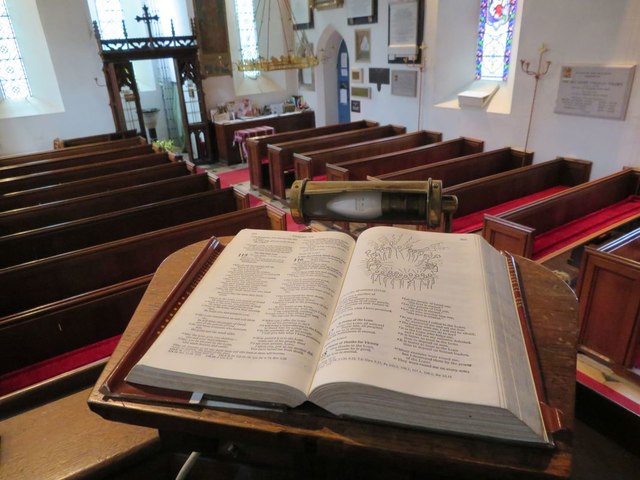
I am a historian by nature. When I visited the Litchfield Congregational church, pictured below, built in Connecticut in 1721, I tried to imagine all the sin-weary souls who had come to hear the Gospel preached for over three centuries inside those consecrated walls.
Photo by William Earnhardt
Later, when I went to see the Rays and Red Sox play at old Fenway Park, it was not enough to watch the game. I had to picture what it must have been like for a father taking his son out of school to attend a game back in 1912. Millions of people with memories of that old ball park, and my mind wanted to capture them all. I walk by an old high school building built in 1927 in Tampa, and I have to stop and try to imagine all the scenes that may have taken place. All the loves and relationships that began on that campus. I stand on the sidewalk, looking at an old glass window. I ask myself, on the last day of school in 1942 did a young man stand where I stand now, and glance for the last time at a young girl he had a crush on standing in the window, before leaving to join the war, never to return?
In 1991 I drove to a remote little town in extreme western Oklahoma, to preach. When I arrived at the church, I went downstairs to get water. While downstairs I saw several Sabbath School classrooms, all totally vacant and abandoned. The elderly couple who invited me home for lunch explained that all those rooms were packed with children back in the day. But they all grew up and moved away to find jobs. The husband was the school master back in the day, but had since retired for decades, and, with no children around any more, the only traces of the school were distant memories. I remember a feeling of sadness coming over me as I thought of the hollow classrooms once full of life. I can’t say if it was the evangelist or the historian in me that made me wish there was a way to fill those classrooms with lively children again.
Over the years those hollow classrooms occasionally haunt my mind. Of course in my lifetime, I have seen changes in my own childhood church. It still has a thriving church school and Sabbath School department, but when my friends and I go home to visit, we remember days gone by when the church was much fuller. But I have to keep in mind that when we were kids our church was The Adventist Church in the area. Today there are several Adventist churches in the area, and there really is no “The” Church now. This is where the evangelist in me wars with the historian in me. The historian in me wants to re-create the church I grew up in. I want to go home again. The evangelist in me rejoices that there are new churches, and the gospel is being preached all over the area now, instead of in just one place. I understand my childhood church is slightly smaller now because people are spreading out to other churches to share the gospel beyond my little neighborhood.
Now my mind looks back to those empty Sabbath School classrooms in the middle of nowhere in Western Oklahoma. Is it really sad that the kids grew up and moved on to bigger places where they could find jobs? Not if moving gave them more opportunities to share Jesus with those in need! Now I look back at those empty classrooms in a different way. Maybe the primary Sabbath School teacher did not realize it at the time, but she was doing a lot more than teaching the children in her small town about Jesus. She was training them to be missionaries and take the Gospel from those little rooms and spread it all over the world! The historian in me looks into those vacant rooms and sees a church that died. The evangelist in me looks into those hollow rooms and sees scores of children leaving those sacred halls to share the Gospel in new places, meeting people around the world who need Jesus.
The church is a movement, not a history museum. The church is a people and not an old building standing out in a field where there used to be a town. While reality tells me that many of the kids probably left the church, I am sure many stayed in the church as well.. Many of the children who filled those old Sabbath School classrooms in western Oklahoma took the church with them when they moved away. The Sabbath School class did not die in those classrooms in western Oklahoma; the class just outgrew its walls! They grew all over the world. I look back now and realize children with whom I sat in Primary Sabbath School class in my home church are now scattered from the South Pacific Islands to New England and beyond. And you know what’s cool? We left four walls we used to meet in, but we never left the church. We took it with us. Just as importantly, we never left each other. We are in touch on Facebook and Sabbath School Net, where we still share ideas from theology to evangelism strategies. And of course we still get together personally when we can. A couple years ago, a former classmate, now a teacher, helped me put my Bible curriculum together while living 1200 miles away. You see, our little Sabbath School classroom did not die. Just the opposite. We grew so big we exceeded the boundaries of our four little walls.
I believe it to be the same with the little classrooms in a small town in Western Oklahoma. If I ever get a chance to return, and I hope I do, I will go downstairs and look into those empty classrooms again. This time instead of trying to imagine a class that once was, I will see a class that still is and even more. I will see a classroom that has grown into something much bigger and greater than it ever was. I won’t see a class that died in a little room. I will see a class that grew all over the world to help people all over the world who need Jesus.
When I think of my experience in the church, I realize in one sense, I can never go home again. The building I worshiped in as a child will never be what it was. That’s just fine. It was never meant to stay what it was. It was meant to grow. It was meant to grow beyond those walls into the rest of the world where people need Jesus. My church is now all over the word. So in one sense, I can never go back to my home church again. In an even more real sense, my home church is all over the world now and is everywhere I go. And the even greater reality is, that I’ve never been home and never will be until Jesus comes. While the historian in me wants to reminisce about the way the church used to be, the evangelist in me says to keep growing the church. It’s not finished yet!
Main Theme: As we have seen, love and justice go together; they are inseparable. God loves justice. Accordingly, if we love God, we will love justice, as well.
Study: How does Jesus Answer the lawyers question? How do Jesus’ answers to the rich young ruler’s questions relate to His answers to the lawyer’s question in Matthew 22?
Apply: Though we might not all be called to sell all that we have, as was this rich young ruler, what might you, personally, be clinging to that if you don’t give up, could lead to your eternal ruin?
Share: Your friend says, so we don’t have to keep the Ten Commandments anymore. All we have to do is love God and our neighbor. What do you tell your friend?
Study:According to the prophet Zechariah in this passage, what does God decry? How does it and the sin of idolatry relate to the two great commandments?
Apply: Read 1 John 4:20-21. How do you explain why love for God cannot be separated from love for others? How do you understand this unbreakable link?
Share: Your friend says that we can become legalistic when observing the letter of the law, but can we also be legalistic when doing acts of compassion? Why or why not? What do you tell your friend?
Study: How do these passages express God’s concern for justice in the world? What does Jesus teach here about what is most important? What do you think He means when He refers to “weightier matters”?
Apply: What would our families and churches look like if we focused on Micah 6:8 and intentionally put it into practice in both word and deed? In whatever context you are in, how could the application of these principles be made manifest better?
Share: Your friend asks, “If you were to focus on the “weightier matters” today, what would that look like as opposed to whatever “tithe of mint and anise and cummin” we might be focusing on instead?” What do you tell your friend?
Read in Class: Luke 10:25-37. Have the class identify the main idea of this passage.
Study: What is this passage saying in light of the cry of the prophets for mercy and justice and of the kinds of injustices that different people groups have inflicted on “others” throughout human history?
Apply: What can we learn from the life and ministry of Jesus about reaching out to those in need? Even if we can’t perform miracles as He did, for many hurt people how could our help be deemed “miraculous” enough?
Share: Your friend says the story about the Good Samaritan does not apply today, because it can actually be dangerous helping people in today’s world? What do you tell your friend? How can we help bring others to repentance and salvation by showing God’s goodness in our community today?
Share: Your friend asks you if the third angel’s message about the mark of the beast can be tied to the cross? What do you tell your friend? How can you share the goodness of God in the third angel’s message.
Read in Class: Isaiah 5:1-4. Ask the class what is the main idea of this passage?
Study: Who is speaking in these verses? Whom is Isaiah speaking about? Whom do the vineyard and vineyard owner represent? What is the significance of the actions of the vineyard owner on behalf of the vineyard? What is the result?
Apply: When you look at the cross, where God offered Himself as a sacrifice for all our sin, how do His words, “What more could have been done to My vineyard that I have not done in it?”—take on an utterly amazing significance?
Share: Your friend says some people were brought up in better environments than others, and so some have a better chance to be saved than others. Some have no chance at all. What do you tell your friend?
Study: What more could God do than what He has done to save us?
Apply: Whose “griefs” and “sorrows” did Christ bear on the cross? What should this tell us about all that God has done for us and what salvation has cost Him?
Share: Your friend asks you, how you know Christ has born your griefs and sorrows? What do you tell your friend?
Study: What do these passages teach us about God being vindicated in the cosmic conflict, especially at the end?
Apply: What assurance do you have that God has done everything possible to help you experience His love and truth?
Share:2 Peter 3:9 tells us God wants everyone to come to repentance. Romans 2:4 says it is the goodness of God that leads us to repentance. How can you share God’s goodness this week with someone so they may be led to repentance and salvation?
Peter was therefore kept in prison, but constant prayer was offered to God for him by the church. Acts 12:5 NKJV
When Peter was arrested and put in prison for the sake of the Gospel, the church asked God to intervene and free Peter, which He did. Some may wonder how intercessory prayers work. Does it make a difference? First, I don’t necessarily know how it works, but I know it does. When I flip the light switch on, I can’t explain electricity how it lights up the bulb, but I know it does. I don’t have to understand how the switch makes a light bulb turn on, but that does not keep me from turning on the light.
Do intercessory prayers work? Yes, they do. When my mother was dying and was unconscious, I prayed for God to wake her up just long enough for me to tell her I loved her one more time, and that is exactly what happened. A few years ago, I baptized a mother and her three children, while the husband and father thought baptism was the craziest thing in the world. The family and I prayed for the husband and father, and a year later I baptized him too. Others have told me how a spouse or a loved one accepted Jesus as their Savior after 30 or 40 years of intercessory prayer. I remember a friend in Oklahoma gave a testimony about how she left the church as a teenager, but her mother kept praying for her. Years after her mother died, she came back to Jesus. When she was rebaptized her aunt told her, that her mother made her promise to “take over” praying for her when she died. That story has always stirred my heart, as well as affirming the power of intercessory prayer. I remember praying for my friend whom I will call Anne, who had left our small group Bible study and the church. Every night I prayed, “Lord please send your Holy Spirit to work upon Anne’s heart.” After weeks of praying, she called me and told me she was coming back to Jesus because she felt “The Holy Spirit working on her heart.”
Intercessory prayer works, but again how? Like I’ve previously stated, I don’t understand everything but considering this week’s Sabbath School Lesson we are learning there are parameters in the great cosmic battle between Christ and Satan. Satan claims this world as his own, and while I know well that this is my Father’s world, there are rules to the battle. Temporarily, at least, there is some validity to Satan’s claim to this planet. Why else would he be allowed in those meetings with the other sons of God in Job 1 and 2? In John 14:30 and John 16:11 Jesus refers to Satan as the prince of this world.
In Matthew 8:29 in the NLT the demons accuse Jesus of “interfering” with them. While I am sure Jesus was not breaking any rules, that does give us a hint that there are parameters in the cosmic battle. God cannot intervene where He is not invited, as that would be using force and manipulation, as opposed to love. In Revelation 3:20 Jesus stands knocking at the heart’s door but does not force His way in as that would not be love. We have to open the door to let Him in. This is where intercessory prayers come in. When we pray as members of humanity on behalf of humanity for God to intervene in the lives of humanity, He now has an invitation and is not using force. If Satan protests God’s involvement in meddling with human hearts, God can tell Satan, “I am not using force or manipulation. I have been invited to intervene.”
This is why Jesus encourages us in Matthew 18:19 -20 that when we gather together in His name He is there to work powerfully to grant our requests, Just as he answered Elijah’s powerful prayers. See James 5:14-18. Being gathered in his name does not mean we have to be gathered in a certain building. We may be in separate hemispheres and be gathered in His name.
In Matthew 6:10 Jesus prays for His Father’s will to be done on earth as it is in heaven. In Revelation 12:7-9 Satan was cast out of heaven. When we pray as humanity on behalf of humanity, it opens the way for God to cast Satan out of our hearts, homes and communities. The human heart still has free choice, but God can intervene on behalf of humanity within the parameters of the cosmic battle without using force and manipulation, as He has been invited to intervene just as Elijah prayed for God’s intervention in his day.
Elijah witnessed a great miracle on Mount Carmel when he prayed for God to intervene with the Baal worshippers in 1 Kings 18. What are some amazing things you have witnessed after praying for God’s intervention?
Main Theme: This week’s lesson explores the parameters of both sides in the battle between Christ and Satan.
Read in Class: Daniel 10:1-14. Define the main idea of this passage.
Study: What do these verses teach that is relevant to the cosmic conflict? What do you make of the angel sent by God being “withstood” for twenty-one days?
Apply: How have you experienced the limits of working only through the principles of love and not coercion? What lessons did you learn about the limits of power?
Share: Your friend asks, Why did the angel get withstood 21 days? Why didn’t God’s angel immediately get the king of Persia to begin the process of delivering God’s people? What do you tell your friend?
Read in Class:Revelation 13:1-8. Have class define the main idea of this passage.
Study: What does this reveal about the extent of the dragon’s jurisdiction?
Apply: However hard for us to see it now, in the end good will eternally triumph over evil. Why is it so important that we never forget this wonderful promise?
Share: Your friend asks you why the world leaders in Jesus’ day crucified Jesus for claiming to be God, and then years later instead of crucifying the beast who claims to be God, the world leaders worship the beast who claims to be God. What do you tell your friend?
Study: What principles of the great controversy do we see unveiled here?
Apply: Job found himself in the middle of the great controversy between Christ and Satan. In What ways has the reality hit you that you are in the midst of the Cosmic Battle between Christ and Satan? How does it comfort you knowing God put limits on what Satan could do to Job?
Share: Your friend says it was not fair for God to let Satan harass Job in a conflict Job had nothing to do with? What do you tell your friend?
Read in Class:Mark 6:5, and Mark 9:29. Ask the class to define the common thread in these passages.
Study: What do these texts display about how even divine action might be integrally related to factors such as faith and prayer?
Apply: Noah preached in his day only to save 7 other people in the end. There were people that Jesus could not work with miracles with. How should this comfort us when the success of our ministry seems to be limited, while not letting us use it as an excuse for failure?
Share: In Matthew 6:10 Jesus prays for His Father’s will be done on earth as it is in heaven. In heaven Satan was cast out. Your friend asks if our prayers can also limit Satan’s working in our homes, churches and communities? What do you tell your friend? How can you pray this week for your community in light of the cosmic conflict?


 In Light of The Cross