Main Theme: Who were some of these people, and why did they testify as they did to the identity of Jesus?
Read in Class: John 12:1-8. Ask the class to define the main idea of this passage.
Study: What was the significance of Mary’s actions here? How was this a witness to who Jesus really was?
Apply: Jesus knew what was in the heart of Mary and the heart of Judas. He knows what’s in your heart, as well. What should this truth tell us about the need of Christ as our righteousness, transforming us and covering us, as well?
Share: Your friend says that she wishes she had millions of dollars so she could help the poor. What do you tell your friend?
Read in Class: John 18:38 and John 19:4-22. Ask the class to define the main idea of these passages.
Study: How is Pilate’s verdict connected to the theme of John’s Gospel?
Apply: What can we learn from Pilate’s example about the dangers of allowing popular sentiment, even pressure, to keep us from doing what we believe is right?
Share: Your friend asks you if you can think of others in the Bible or life today who have “unwittingly” testified about Jesus? What do you tell your friend?
Read in Class:John 20:19-31. Ask the class to identify the main idea of this passage.
Study: What can we learn from the story of Thomas about faith and doubt? What major mistake did Thomas make?
Apply: Do you only put your faith in what you can feel or see? Can you think of a time when you put your faith in something you could feel or see and were still disappointed?
Share: If someone were to ask you Why do you believe in Jesus? what would you say?
And all the people who belong to this world worshiped the beast. Revelation 13:8 NLT
Sadly, many put their confidence in popular opinion, while the Bible tells us the vast majority of the world will worship the beast.
Interestingly while Jesus claimed to be God, the majority accused Him of blasphemy and had Him crucified for making such a claim. Later the beast claims to be God, but instead of accusing him of blasphemy, the majority worships him. Truth is clearly not a popularity contest.
Occasionally, at church or the Adventist school where I teach Bible and evangelism, someone will ask me, “What do we believe about such and such?” My response has always been, “I don’t know what you believe, but here is what I and many Seventh-day Adventists believe,” and I show them in the Bible what I believe and why. I am not going to tell someone what they believe. That is not teaching. That’s brainwashing. Besides, truth is not truth just because everyone in the Adventist church believes it. Truth is not a popularity contest in the church or the world. Truth is truth only if the Bible supports it.
During the Dark Ages, when people did not have access to the Bible, people trusted their priests to tell them what they believed, and because of that there was a lot of brainwashing going on.
Even before the Dark Ages, priests abused their authority and tried to brainwash people into believing whatever they believed. This happened in Jesus’ day when those in “authority” were trying to capture Jesus.
When the Temple guards returned without having arrested Jesus, the leading priests and Pharisees demanded, “Why didn’t you bring him in?”
“We have never heard anyone speak like this!” the guards responded.
“Have you been led astray, too?” the Pharisees mocked. “Is there a single one of us rulers or Pharisees who believes in him? John 7:45-48 NLT
The guards experienced and heard the Word of God speaking to them and believed. Since the Pharisees did not want to believe, they mocked at this. In John 7 the Pharisees misconstrued Scripture to try and prove their point, but amazingly, instead of hanging their hat on Scripture, they hung it on the fact that none of the rulers or leaders believed. Is truth a popularity contest? If everyone else believes something is it right, and if no one else believes it, then is it wrong? Is that how it works?
The number of people who believe something simply because everyone else believes it is staggering. Take the state of the dead for example. Years ago I attended the funeral of a dear Adventist saint. Her family believed in the immortality of the soul and asked the Adventist preacher doing her funeral to “put her in heaven now.” The pastor replied that he could not do that since it simply is not true. However, he told them he believed in liberty of conscience and freedom of speech so if one of them wanted to stand up and say she was in heaven, they could. So, one of the family members stood up and talked about how her grandmother was now in heaven. I remember she kept saying “we cling to this!” Very emphatically, yet she gave no Scriptural reference other than that is what everyone believes. So, I am not sure exactly what she was clinging to other than popular belief. In 1 Thessalonians 4:13-18 Paul tells us to “comfort each other with these words” about the resurrection. Sadly, instead of comforting each other with the words Paul told us to use to comfort each other, many people use phrases about going straight to heaven when you die that are nowhere in the Bible and Paul nor anyone else ever suggested that we use. Sadly those phrases have been used so often that people believe it because they have heard it so many times.
When it comes to Sabbath keeping, I have heard so many people say that Sunday must be the true day because the whole world can’t be wrong. They forget that at the time of the flood only 8 people were right! Truth is not a popularity contest.
And the people of Berea were more open-minded than those in Thessalonica, and they listened eagerly to Paul’s message. They searched the Scriptures day after day to see if Paul and Silas were teaching the truth. Acts 17:11 NLT
Like the temple guards, the Bereans were interested in new ideas if they were found in Scripture. They didn’t believe something because Paul and Silas believed it or because a ruler did. On their own they searched the Scriptures daily to find the truth.
I have heard Seventh-day Adventists telling their Baptist and Methodist friends to search the Bible for themselves because their pastors could be wrong. I have watched some of the same Seventh-day Adventists listening to their own favorite Adventist preachers, without bothering to search the Scriptures, because, after all, their pastor is Adventist, so he is automatically right, right? Wrong! We all make mistakes, as we all continue to learn and grow.
Let’s not be like the foolish Pharisees in John 7, who hung their hats on how many people believed or did not believe something. Truth is not a popularity contest. Let’s search the Scriptures ourselves to find truth.
You may study this week’s Sabbath School lesson here.
Main Theme: This week’s lesson looks at some of those who witnessed and testified about Jesus. In each of these incidents, some aspects of who Jesus really is are revealed, and together they create a deeper vision of Jesus, the Messiah.
Study: How does John the Baptist compare himself to Jesus? What are some things John Said about the Messiah that may have surprised his listeners?
Apply: How can we learn the lesson of humility before both God and humanity? What can we learn from the example of John here about humility of the soul?
Share: Your friend asks you how you came to realize that Jesus is the Messiah and your personal Savior? What do you tell your friend?
Read in Class: John 6:51-71. Ask the class to summarize this passage.
Study: What did Jesus say that people had trouble accepting?
Apply: What can we learn from this story about the fact that the majority is usually wrong? Why must we remember this, especially with the aspects of our faith that are unpopular with the majority—even the majority of Christians?
Share: Your friend asks, what did Jesus mean by “eat my flesh and drink my blood?” What do you tell your friend?
Study: What does the Father say about Jesus, and what does Jesus say about the Father?
Apply: Read 2 Peter 1:16-21. How would we know the truth about Jesus as our atoning sacrifice unless it were revealed to us? Why, then, is knowing the Bible and what it teaches about Jesus so crucial?
Share: Your friend asks, “How can I know if God is well pleased with me?” What do you tell your friend?
Read in Class:John 7:37-53. Ask the class to summarize this passage.
Study: When Jesus spoke to the Jews attending the Feast of Tabernacles, what was the response of many in the crowd?
Apply: In John 7:47-48, the leaders imply that the people should not believe in Jesus since the leaders don’t believe in Him. How much influence do you allow leaders to have over what you believe? See Truth is not a Popularity Contest.
Share: In your sphere of influence what has been your testimony about Jesus? Is there someone you can share your testimony with this week?
Jesus saw Nathanael coming toward Him, and said of him, “Behold, an Israelite indeed, in whom is no deceit!” John 1:47 NKJV
We don’t hear much about Nathanael before or after this story. Nathanael does not go on to be a world renowned preacher. If he wrote anything it was never published in the Cannon. There is no record of him parting the waters, or calling fire down from heaven. By all accounts he was just an ordinary guy, but wow, what an awesome affirmation he received from God. Before Nathanael met Jesus, Jesus already knew him by name and publicly recognized his integrity. I am more than happy to just remain a common ordinary guy, so long as I can hear Jesus one day say about me what He said about Nathanel. Such an affirmation coming from God means way more to me than all the worldly accomplishments and fame this world can give.
Nathanael is not the only “ordinary guy” that God knew by name and held in high esteem. In Exodus 31:1-6 God calls out Bezalel and Aholiab by name as the “construction workers” he wanted working on the temple. He even said they were filled with His Spirit, so God not only fills priests and pastors with His Spirit, He fills people in all walks of life. In Nehemiah 3:1-32 Nehemiah calls out several construction workers by name, who made repairs in rebuilding Jerusalem. A few weeks ago, Florida, where I live was hit by two hurricanes. Linemen came from all over the country, and even some from Canada to help restore electricity to our communities. All our churches were praying for these linemen. In Revelation 1:20 we see how Jesus holds His ministers in His hands, but I realized that God also knew these linemen by name and held them in His hands as well.
The world may have some kind of hierarchy, but we all stand on level ground at the foot of the cross and in the presence of God. God does not esteem us according to our fame or worldly status. We may be just ordinary folk to the world, but still be precious in the eyes and in the hands of God. I would gladly trade all the praise and esteem this world has to give just to hear Jesus say about me, “Behold, a man indeed, in whom is no deceit!” By God’s grace, no matter what our positions or worldly titles may be, no matter how common or ordinary we may appear, we may all hear Jesus tell us,
“Well done, good and faithful servant; you were faithful over a few things, I will make you ruler over many things. Enter into the joy of your lord.” Matthew 25:21 NKJV
You may study this week’s Sabbath School lesson here.
In Genesis 2:16-17 ESV God says, “of the tree of the knowledge of good and evil you shall not eat, for in the day that you eat of it you shall surely die.” We all know Adam and Eve did not die the day they ate of the forbidden fruit. Man has been trying to make excuses for God ever since.
Some say, well they began to die. However that is not what God said. He did not say you will begin to die the day you eat of the fruit. He said you will die in the day you eat of the fruit. Others say, they died spiritually that day. I don’t even know what the means! Sounds profound enough, I guess, but what does it mean? Besides, God did not say you will die spiritually the day you eat of the fruit. He said you will die – drop dead the day you eat of it. So what kept Adam and Eve from dropping dead the day they ate of the fruit?
Instead of trying to make up weak excuses for God, let’s let God’s Word explain itself. He does not need any help from us to get out of this jam. We find the answer at the other end of the Bible. Revelation 13:8 tells us Jesus was the Lamb slain from the foundation of the world. There is our answer! God did not need us bailing Him out by making up our own theories about beginning to die or dying spiritually that day. Revelation 13:8 lets us know that Jesus’ death on the cross had already taken effect. God calls things that are not yet, as though they already were. Just like I can cut and paste, just as I am writing this post in Microsoft Word, God can cut and paste through time and eternity and put the cross at the foundation of the world.
Jesus is truly the Savior of the whole world, as His sacrifice sustains not only the believer but the unbeliever as well. Adam and Eve were not believers; they were running from God. But they still had their breath that day because of the cross of Christ and the Lamb slain from the foundation of the world. God told Abraham in Genesis 12:3, “and in thee [Abraham’s Seed which was Christ] shall all families of the earth be blessed.” Notice God said all families will be “blessed,” or benefit from the cross. That includes Christians, Jews, Muslims, and atheists. They all benefit the same way Adam and Eve did.
The reason Adam and Eve did not drop dead the same day they ate the fruit was because Jesus was the Lamb slain from the foundation of the world, and His death had already taken effect. The reason we do not drop dead the same day we sin, is because of the cross of Christ as well.
Believer and unbeliever benefit from the cross. This is what John was talking about in 1 John 2:2 ESV. He writes, “He is the propitiation for our sins, and not for ours only but also for the sins of the whole world.” John was writing to believers when he said “not for ours only,” the believers, but the whole world! An inspired writer, 1,800 years after John, echoes the same sentiments.
“To the death of Christ we owe even this earthly life. The bread we eat is the purchase of His broken body. The water we drink is bought by His spilled blood. Never one, saint or sinner, eats his daily food, but he is nourished by the body and the blood of Christ. The cross of Calvary is stamped on every loaf.” – Ellen White, Desire of Ages, page 660.
Every breath we breathe is brought to us courtesy of the cross. People curse God with the very breath that He died to give them!
This idea of Jesus beginning our redemption even at creation runs all through the Bible.
Then the King will say to those on his right, “Come, you who are blessed by my Father, inherit the kingdom prepared for you from the foundation of the world.” 9Matthew 25:34 ESV)
… even as he chose us in him before the foundation of the world, that we should be holy and blameless before him. In love. (Ephesians 1:4 ESV)
in hope of eternal life, which God, who never lies, promised before the ages began (Titus 1:2)
Yes! Jesus created the tree He knew would be used to make the old rugged cross. Even at creation He was beginning our redemption. He died to give us probationary time. Not a probationary time to see if God will accept us – He already has accepted us from the foundation of the world – but time to see if we will accept Jesus and His life-changing love.
If we choose to accept His love, Jesus tells us in John 11:26 ESV, “everyone who lives and believes in me shall never die. Do you believe this?.” Sure, we may fall asleep like Lazarus did, but God will not abandon us in the grave. We will not experience the death and God abandonment that Jesus experienced for us on the cross when He cried out, ‘My God, My God, why have you forsaken me!”
The cross echoes throughout time and space from every corner of eternity, telling us God is love! The Gospel begins at creation.
You may study this week’s Sabbath School Lesson here.
Main Theme: This week’s lesson will begin with the Prologue (John 1:1-18) and summarize its major themes. These themes will then be looked at in other places in John’s Gospel, as well.
Read in Class:John 1:1-5, 14. Ask Class to define the main point of these passages.
Study: What are these verses telling us that Jesus, God Himself, did—and why is this truth the most important truth that we could ever know?
Apply: Why is the full deity of Christ such an important part of our theology? What would we lose if Jesus were, in any way, a mere created being?
Share: Your friend says, If Jesus knew Lucifer was going to sin, and cause Him to have to die on the cross, why did He even bother creating Him? Jesus should have only created people who would use their free choice to obey Him. What do you tell your friend?
Read in Class:John 1:9-13. Have the class define the main idea of this passage.
Study: What harsh reality is John depicting here about how people respond to Jesus?
Apply: In what ways might we, even those of us in the church reject Jesus today? How do we make sure we are not rejecting Him?
Share: Your friend asks you How has your life changed by becoming a son or a daughter of God? What do you tell your friend?
Study: How do these texts repeat the theme of belief/unbelief found in the prologue?
Apply: In what ways do you live out your faith in Jesus, as opposed to merely holding an intellectual assent to Him as the Messiah? Why it is important to know the difference?
Share: Your friend asks, why Isaiah says that God blinded peoples eyes and hardened their hearts? What do you tell your friend? See Matthew 7:21-23.
Read in Class: John 17:1-5. Ask the class to define the main point of this passage.
Study: What did Jesus mean when He said, “Father, the hour has come; glorify your Son that the Son may glorify you” (ESV)?
Apply: Think about what it means that it took such a drastic thing, God Himself on the cross, to save us from sin. What should this tell us about just how bad sin really is?
Share: How can you use your influence to help those around you believe in Jesus as the Messiah and Savior of the world?
Main Theme: This week’s lesson looks at three of the greatest signs of Jesus’ divinity. What is striking is that, in every case, some people did not believe the miracle or perceive its significance. For some, it was a time of turning away from Jesus; for others, a time for deepening blindness; and for others, a time to plot Jesus’ death. And for others—a time to believe that Jesus was the Messiah.
Read in Class: John 6:1-14. Ask the class the summarize this passage.
Study: What parallels can be found here between Jesus and Moses? That is, what did Jesus do here that should have reminded the people of the deliverance that their ancestors had received through the ministry of Moses?
Apply: Read Isaiah 53:4-6 and 1 Peter 2:24. What great truth do these texts teach about Jesus as the Lamb of God? How does His divinity tie into this truth, and why is this truth the most important truth we can ever know?
Share: Your friend asks, you how God has provided for you in a way that helped you see His miraculous power? What do you tell your friend?
Read in Class:John 6:26-36. Ask Class to summarize this passage.
Study: How did the people respond to Jesus’ miracle of feeding the multitude, and how did Jesus use this to try to teach them who He was?
Apply: How can we avoid getting caught up in material things at the expense of the spiritual?
Share: Your friend from church complains that some people only come to church when there is fellowship lunch and they don’t even bring anything. All some people come to church for is the socials and food. What do you tell your friend?
Read in Class: John 19:1-16. Ask clas to summarize this passage.
Study: What did the disciples think was the cause of this man’s blindness, and how did Jesus correct their false beliefs?
Apply: What should this story tell us about the dangers of being so blinded by our own beliefs and traditions that we can miss important truths right before our own eyes?
Share: Your friend says there seems to a lot of division in our world today. How can we tell if someone is a good person or not when we keep hearing rumors all the time? How do we know what to believe about people? What do you tell your friend?
Read in Class: John 11:38-44. Ask the class to define the main point of this passage.
Study: What did Jesus do that supported His claim?
Apply: What hope does the divinity of Christ give you concerning death? Why are both his humanity and divinity so crucial in validating your hope?
Share: Your friend says he is sure Jesus was a good man, but He was not God? What do you tell your friend?
“For Christ’s love compels us…..” 2 Corinthians 5:14 NIV
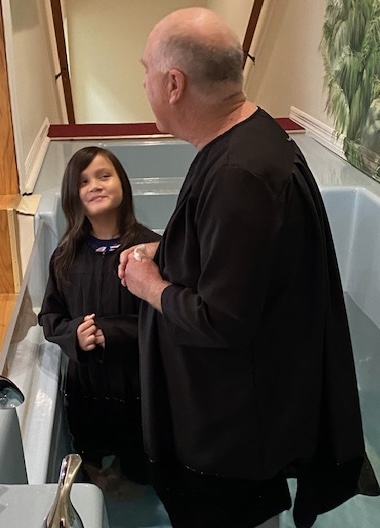
Around the world, some children get baptized and are given a celebration dinner with nice gifts.
Around the world, other children get baptized and get beaten by their parents and disowned by their family.
Around the world this month, some pastors will be given warm greeting cards, with beautiful gifts.
Around the world this month, other pastors will be persecuted and killed for sharing the Gospel.
It’s not a fair world, is it? One child being celebrated by her family when being baptized, and another child being disowned by her family when baptized. One pastor is lauded by his church family while another pastor is condemned by his church family while both are doing the same job. This is where we need to remember why we do what we do. Is it for gifts and rewards? Is it for praise and appreciation? Or does the love of Christ compel us to be baptized and share the gospel with the world? These words of Jesus are for anyone who follows Him. They are for free United States citizens as well as those in communist countries.
Then He said to them all, “If anyone desires to come after Me, let him deny himself, and take up his cross daily, and follow Me. Luke 9:23 NKJV
I was baptized over 50 years ago, and since then have totally lost my baptism certificate. I think of this every time I baptize someone and given them their certificate. But Christ did not give his followers certificates. He did not give them a nice Hallmark card congratulating them for their decision. He did not give them a nice devotional book as a gift. He gave them a cross to go die on.
It is not the fear of punishment, or the hope of everlasting reward, that leads the disciples of Christ to follow Him. They behold the Saviour’s matchless love, revealed throughout His pilgrimage on earth, from the manger of Bethlehem to Calvary’s cross, and the sight of Him attracts, it softens and subdues the soul. Love awakens in the heart of the beholders. They hear His voice, and they follow Him.-Ellen White, Desire of Ages, Page 480.
I have shared the story before how years ago I was at an awards banquet for literature evangelists, when I fist started canvassing. I was mesmerized by the plagues and trophies –I wanted one so bad. So I went and worked hard all year to earn my trophy, and by the ed of the year I had led my conference in sales. I was so disappointed when the conference canceled the awards ceremony that year! I became bitter. But a while after that I found myself in an old cemetery. As I walked around, reading the words on each gravestone, I felt the Holy Spirit asking me, “Why are you alive today, William?” After considering this question and all the suffering that is going on in the world, I realized I was not alive to win trophies and awards. I was alive to share the hope of the Gospel with a hurt and dying world. The words of an old hymn suddenly had new meaning,
Till my trophies at last I lay down; I will cling to the old rugged cross,
Alone in that cemetery that day I understood, Jesus was not handing out plaques and trophies. He was not handing out gift cards and greeting cards. He handed me a cross to die on. In that cemetery I gained a clear vison of my calling. Trophies, plaques and gift cards can’t forgive sins or heal broken hearts. They can’t give hope to a dying world. I picked up my cross to follow Jesus.
Later I became a Bible Worker and served many years in three conferences, until one day a couple of years back I got a call from the Florida Conference to pastor a three-church district. Many of my friends and family celebrated this call. I greatly appreciated the encouragement. However I realized once again, I have been given a cross. My three congregations have been very wonderful to me. They encourage me when I do well, and they are graceful when I fail. Either way – no matter how I do – they love me because Jesus’ love is in their hearts. I realize not all pastors have loving congregations. While I am being loved even though I made a big mistake other pastors are being persecuted while doing exactly what was right.
This month is pastor appreciation month around the world. As a pastor who is loved unconditionally by God and my three churches, I encourage us all this month to be mindful of those who are serving under persecution. Let’s also remember those who serve as lay pastors while also working at a vocation to support themselves instead of being paid by the church. They work hard for their churches and do just as good a job as full time conference paid pastors. They make a sacrifice by working hard at a vocation and then also working hard for their church. Let’s also remember the children who are being persecuted for their faith in Jesus. There are children who have tasted persecution for their faith, like this pastor has never tasted. I have a comfy job as a pastor in the United States, while there are children who could preach sermons about their personal experiences with persecution that would put me to shame. And yes, please give what you can in ways of support to these worthy ministers. Since I am already spoiled, and have way more than I deserve, for pastor appreciation month instead of giving gifts to me, please send a donation to the Seventh-day Adventist Chinese Union Mission (You will probably want to click on or touch the “EN” at the top right corner. of the page to see the English-language site.) On the donation link there is a section called “other.” I have been told by a pastor near that area that you can write, “persecuted missionaries” in that section and they will get it to help those being persecuted.
I can’t speak for all pastors in the United States, but what I need more than anything is words of inspiration and to know that you are praying for me. As far as gift cards go, there are persecuted pastors around the world who need and deserve your monetary gifts much more than I do. Let’s make sure all the pastors, lay pastors, missionaries, and lay evangelists get the love and support they need this month and always.
You may study this week’s Sabbath School Lesson here.
Last week we were looking at how Jesus not only made and taught disciples, He was a disciple of the Father. Jesus gave us the perfect model for being a disciple. Last week we saw Jesus modeled being a disciple by reflecting the image of God, which we saw can only be done by community as God is community.
No wonder why Satan wants to divide and isolate us! Satan knows love is community and the image of God is reflected only through community. It is also by community that we grow into the image of God. In isolation we grow selfish and self-focused. In community we get on each other’s nerves and drive each other crazy sometimes as part of the growth process. During this process it is tempting to want to run away sometimes and be alone, and that may actually be a momentary solution, but not for the long haul. It may be the brother or sister who is rubbing you the wrong way who is actually polishingyour character for heaven.
Sometimes it is tempting to pray that the person annoying us would just go away, but consider this: Saul was a humble man when he became king, but later ego got in the way and destroyed him. When Saul became king no one gave him any trouble. Is that why he became proud and finally let his ego destroy him? I ask this, because when David is anointed king he has opposition from Saul, which kept David humble and may have ended up saving his soul. The person we think Satan sent as a curse may be the person God sent to keep us humble in order to save our soul for eternity.
When tempted to pray that those bothering us would just go away let’s keep in mind,
Joseph did not try to get rid of his brothers. His brothers tried to get rid of Joseph.
David did not try to get rid of Saul. Saul tried to get rid of David.
Mordecai did not try to get rid of Haman. Haman tried to get rid of Mordecai.
Jesus did not try to get rid of the pharisees. The Pharisees tried to get rid of Jesus.
In each case it is the unconverted person who is trying to get rid of the converted person, so keep that in mind whenever you are tempted to pray that God would get rid of someone. Discipleship is all about reflecting the character of God, and God is love and love is community. Love is also seeking to save the lost.
for the Son of Man has come to seek and to save that which was lost.” Luke 19:10 NKJV
Jesus did not spend all his time with church people. He spend His time with some pretty rough sinners. He mentored them, ate with them and taught them to follow Him. I imagine if Jesus were here on earth today His cell phone contact list would be filled with names and numbers of unchurched people. Look at your cell phone contact list. How many unchurched people are on your list? This may give you an idea as to how well you are following the Model Disciple. How many unchurched people do you invite to your home? What is your attitude towards sinners in your church?
A while back I was teaching a new believers Sabbath School class, and a young man showed up who was obviously unchurched. In sharing with us his struggles he used a four letter word. Most all of my class were so tuned in to his feelings that they did not take special note of the four-letter word. One member later talked to me and encouraged me to let him know we don’t use that word here. Which do you find more concerning? A Sabbath school class with an unchurched man who accidentally lets one bad word slip, or a Sabbath school class where you never have to worry about hearing a foul word because that class would never dare allow an unchurched person to attend?
My point is that discipling the way Jesus discipled may not always be pretty. Being pretty is not the goal. Seeking and saving the lost is the goal. There are a lot of difficult unchurched people who are seeking for Jesus.
Often we regard as hopeless subjects the very ones whom Christ is drawing to Himself.-Ellen White, Christ Object Lessons, Page 72
There may be some apparently hopeless subjects in your community that the other churches in your area have spurned and turned away. Is your church ready to pray, “Jesus please send us all the hopeless outcasts the other churches in our community don’t want to deal with. Please send them to us Jesus and let our church love the people the other churches in our community refuse to love.”
Jesus told His disciples,
Go therefore and make disciples of all the nations, baptizing them in the name of the Father and of the Son and of the Holy Spirit, teaching them to observe all things that I have commanded you; and lo, I am with you always, even to the end of the age.” Amen. Matthew 28:19-20 NKJV
This means way more than reaching out to our Catholic and Protestant brothers and sisters with the truth about the Sabbath. It means reaching out to a secular society cutting and drugging themselves. It means reaching out to them with the good news about the Savior. To follow our Model Disciple we must reach out to and disciple apparently hopeless people just like our Model Disciple, Jesus did.
You may study this week’s Sabbath School Lesson here.
As we near the end of studying the life of Christ in the book of Mark, we see how Jesus taught His disciples and told them to make disciples, but did it ever occur to us that Jesus was a disciple? Jesus was a disciple of His Father, and in Jesus’ public life and private life He modeled being a disciple. Peter and James and John were discipled by Jesus while He was here on earth. That is great, but since Jesus is not here on earth anymore, I learn more by how Jesus was a disciple of His Father, while He was here on earth, but His Father was up in heaven. After all, Jesus is up in heaven. So, I can’t follow the exact model of Peter, James and John, who were being discipled while Jesus was here on earth, but I can follow the model of Jesus as He was a disciple while His Father was in heaven. So let’s look at how Jesus modeled being a disciple.
Jesus said to him, “Have I been with you so long, and yet you have not known Me, Philip? He who has seen Me has seen the Father; so how can you say, ‘Show us the Father’? John 14:9 NKJV
As a Disciple of the Father, Jesus showed us the image of His Father. There is a reason the second commandment tells us not to make graven images. God does not want His character reflected through things. He created us in His image so that we can reflect His character. The whole purpose of God’s last day Seventh-day Adventist Church is to do way more than just be a remnant of the New Testament church. The plan of Salvation and the great controversy go back even further. It;s God’s plan that the Seventh-day Adventist Church will hep restore the image of God in mankind, from every tribe, nation, tongue and people to how it was before the fall. Just as Jesus showed us the Father, we are to show Jesus to the world.
The story goes of a group of pastors in a Romanian prison years before it opened up to the Gospel. Of course they were talking about Jesus, and the guards got tire of it. Finally one guard said, “I will let you say one more sentence about your God, and then you not be allowed to speak of Him again.” One prisoner, knowing the guards would be watching him, came up with the best sentence he could. He told the guards, “Jesus is like me.” When I read this I could not believe a human would say such a thing. But the more I thought about it, I thought this is exactly what Christianity should be. We should not be calling ourselves Christians in vain. This is what the third commandment is all about. Disciples of Christ are to do more than believe in Christ. Notice Jesus never told His disciples to accept Him. He told them to pick up their cross and follow Him to death. As Jesus reflected the image of His Father, He modeled for us what we should be as disciples. We are to reflect the image of Jesus to the world.
All of the Gospels are excellent study material on how to be a disciple of Jesus, but Jesus gave some extra special instruction in the sermon on the mount on what being a disciple of Jesus is all about. In that sermon Jesus said,
Let your light so shine before men, that they may see your good works and glorify your Father in heaven. Matthew 5:16 NKJV
Notice Jesus did not tell His disciples to merely make sure the world sees what they believe. Rather He told them to make sure the world sees their good works so their Father in heaven would be glorified. Romans 2:4 tells us it is the goodness of God that leads us to repentance. A church with a last day message to the world needs to make sure the world sees the goodness of God that will lead them to repentance and salvation.
But He answered and said, “It is written, ‘Man shall not live by bread alone, but by every word that proceeds from the mouth of God.’ ” Matthew 4:4 NKJV
When tempted Jesus used no special powers. He modeled for us how a disciple of God handles temptation. Every time Jesus was tempted or tried He referred to the Scriptures. The same Scriptures that Jesus used are available to us. Jesus showed us how to be a disciple just like He was a disciple of the Father.
And when He had sent the multitudes away, He went up on the mountain by Himself to pray. Now when evening came, He was alone there. Matthew 14:23 NKJV
Before we can live like Jesus we need to pray like Jesus. Jesus modeled for us the balance we need between “the mountain and the multitude.” Jesus was the Model Disciple of the Father. Later in Matthew 14 Jesus walks on water, but so does Peter, until he takes his eyes off Jesus and looks at the waves. I wonder if Peter had continued praying like Jesus, if he would have been able to continue standing on the water like Jesus?
And He took with Him Peter and the two sons of Zebedee, and He began to be sorrowful and deeply distressed. Then He said to them, “My soul is exceedingly sorrowful, even to death. Stay here and watch with Me.” Matthew 26:37-38 NKJV
Jesus asks His three closest friends to disciple with Him. He had to disciple in community. He could not disciple in isolation. Why? Remember, as disciples we are to reflect the image of God. In Genesis 1:26-27 God said, “Let us make man in our image.” And He made us male and female. What relevance does this have to us? First, God is speaking not as an isolated Being but as a community consisting of the Father, Son and Holy Spirit. God is not an isolated Creature. He is community. When God created us to be in His image, He created us to be community. God is community so it is impossible for us to reflect His character of Community while in isolation. Jesus needed His three closest friends because He could not be the Model Disciple by Himself. The importance of this truth is seen by the fact that when His three closes friends fell asleep on Him, and angel had to come down from heaven to disciple with Him. See Luke 22:43. It was simply impossible for Jesus to disciple in isolation, and it is impossible for you to disciple in isolation as well. As isolated individuals we cannot reflect the character of a communal God. We also cannot reflect the character of God with just one gender. God created males and females to be in His image, One gender alone cannot reflect the image of God.
This reminds of a popular passage in the Adventist world,
Christ is waiting with longing desire for the manifestation of Himself in His church. When the character of Christ shall be perfectly reproduced in His people, then He will come to claim them as His own.-Ellen White, Christ Object Lessons, Page 69,
Christ is not merely wanting His character reproduced in His church so that they can earn heaven by perfection. There is a great controversy going on regarding the character of God. Satan hs misrepresented God’s character and so many people are rejecting Him. Christ wants to perfectly reproduce His character or image in the church so the church can give God proper representation in the great controversy. Jesus wants the church to reflect the image and goodness of God so the world will know God is love. One isolated person cannot reflect the character of God. God is love. Love is community, together as a community of believers we show God’s love and mercy by being patient and understanding of each other’s faults and weaknesses. We strengthen one another where the other one is weak. As a church community we reflect the image of God. This is why Jesus had to model discipleship within a community of other disciples.
Next week we will see How Jesus modeled being a disciple, by mentoring the unchurched.
You may study this week’s Sabbath School lesson here.





 In Light of The Cross