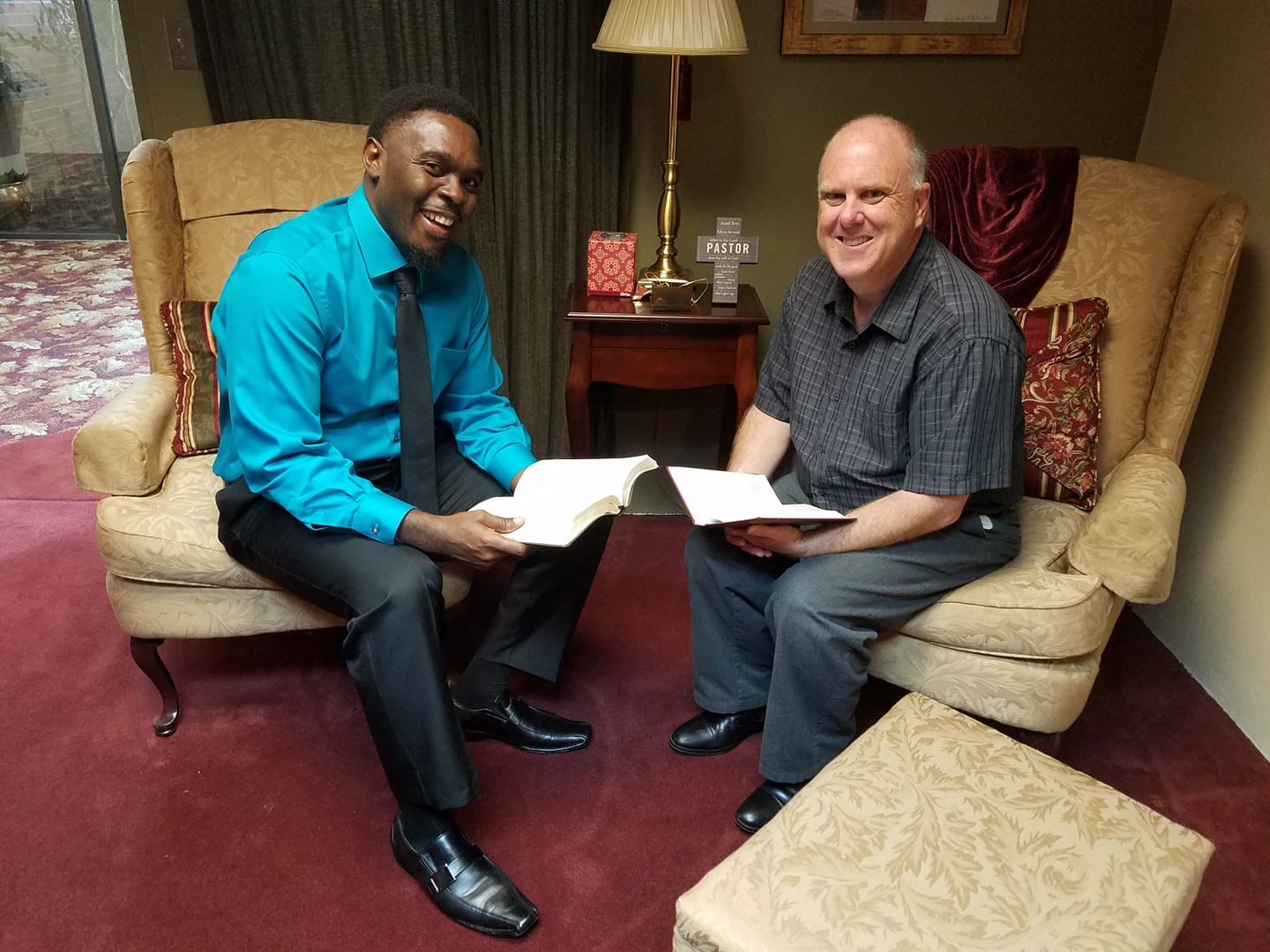
Mentoring or Grooming

A while back I was watching my favorite show at the time, Unsolved Mysteries. This episode was about a young boy who was mentored by a young man. Since it was Unsolved Mysteries, where we’re often told to call their phone number to catch the bad guys, I was bracing myself for the turn in the story, when the man would harm the boy. That time never came. Instead the boy, now grown, was using the show to find his mentor, to thank him for being such a great friend in his time of need. It turned out to be a heart warming story about an adult mentoring a child.

Sadly the media often shares the horror stories which have made a few of my friends, both male and female, afraid to mentor children, even though they would make amazing mentors.. The horror stories, sadly mostly true, that get passed from church to church, scare legitimate mentors away from helping children as well. They do not want their intentions to be misconstrued.

A while back in a school I was working with, I heard an excellent discussion about child safety, which mentioned grooming. Grooming is where an adult with ill intentions, over time gains the trust of a child, only to abuse that trust. During the talk, it occurred to me, exactly why some would-be great mentors refuse to mentor. Is it possible to them, mentoring and grooming look alike? After all Satan has to have his counterfeit for everything good. He knows how vitally important mentoring is, so he wants his counterfeit, grooming to look like mentoring. This gives him a double victory. He can destroy innocent lives through grooming, and make good people afraid to mentor for fear they will be considered groomers. As a matter of fact, before I started writing this, I Googled, “Mentoring and grooming,” and found this website saying that grooming and mentoring are synonyms! That gave me a hunch that I may be on to something.

So I thought it might be a good idea if potential mentors could have a clear picture of mentoring, and a clear picture of grooming, so they could tell them both apart. I realize I am not an authority on the subject, so I would like to paint a picture of both just to get the ball rolling, and hopefully some people a lot more skilled than I am can chime in and agree or disagree and add some insight. Here goes:

Mentoring: A coach works with a group of children and other adult coaches to give each child a sense of belonging to the group and community. When a particular child needs extra coaching, the parents and/or child approaches the coach, and the coach gives the extra instruction on the group site, only as requested and needed. The goal of the coach is to get the child back into the group mainstream. The coach networks to get the child the help he/she needs. If Sally needs extra help memorizing her Sabbath School memory verse, the coach will share tips, like word associations, and then encourage other students and/or coaches to practice with Sally. The coach wants Sally to feel like she is a valued part of the community, and trains Sally to be a useful and healthy member of the group and community. Regardless of the genders of the mentor and child, regardless of how long the mentor has known the child, regardless of how close the mentor is to the family, the mentor will never under any circumstances allow themselves to be alone with the child. Mentoring is community driven and social in nature.

Grooming: A coach meets a child in a group, but then isolates the child from the group, under the guise that the child needs extra and “special” training that only the coach can give. The coach may even claim that Sally should not be working with others, as she may become “confused” by the tips others may give her along with the tips the coach provides. The coach wants Sally to feel like she is special when she is alone with the coach, instead of feeling special to the entire group. Instead of training Sally to be a healthy member of the group and community, the coach teaches Sally to rely on her/him and the special instruction only she/he can give. The coach may even suggest time alone to properly mentor Sally but remember, Regardless of the genders of the mentor and child, regardless of how long the mentor has known the child, regardless of how close the mentor is to the family, a legitimate mentor will never under any circumstances allow themselves to be alone with the child. A groomer plans on being alone with the child at some point even if it is in several years. The legitimage mentor has no plans or intentions of ever being alone with the child-ever. Grooming is one-on-one driven, and is isolating in nature.

I hope together, we can give a clear picture of what healthy mentoring looks like, as boys and girls can use, not one or two, but many positive male and female mentors in their lives. The more the merrier-and the healthier!

You may study this week’s Sabbath School lesson here.

8: Teaching Disciples, Part 2-Sabbath School Lesson Teaching Plan

Prepared by William Earnhardt, for Sabbath School class, August 24, 2024.

Main Theme: Jesus’ lessons prepare us for the challenges of discipleship.

Read in Class: Mark 10:1-16, Genesis 1:27 and Genesis 2:24. . Define he main idea of these passages.

Study: How did the Pharisees try to trap Jesus with their question? What did Jesus teach in these passages about the sacredness of marriage and family, including children?

Apply: How does your church family encourage and mentor married couples and their children?

Share: Your friend says she would love to work with the kids in Adventurers, but with so much in the media today concerning teachers and kids, she does not want to be falsely accused of anything, so she has decided not to participate. What do you tell your friend? See Coaching and Mentoring Vs. Grooming.

Read in Class: Mark 10:17-31. Define the main idea of this passage.

Study: What crucial lessons about faith and the cost of discipleship­—for anyone, rich or poor—is revealed here?

Apply: Read Romans 6:1-11. How do these verses describe the reality of letting go of selfish ambition and following Jesus.

Share: Your friend asks, why did Jesus ask the young ruler to sell all that he had? Why not just some of what he had or even just half? What do you tell your friend?

Read in Class: Mark 10:32-45. Define the main idea of this passage.

Study: How do these verses reveal the continued ignorance of the disciples regarding not only Jesus’ mission but what it means to follow Him?

Apply: What does it mean as a Christian to be a “servant” to others? That is, how do you manifest this principle in your daily interaction with people?

Share: Your friend asks you if you can name a leader who has led with a servant’s heart? What do you tell your friend?

Read in Class: Mark 10:46-52. Define the main idea of this passage.

Study: How did Bartimaeus react to Jesus’ passing by?

Apply: In what ways have you at times cried out, “Jesus, Son of David, have mercy on me!”? What happened, and what did you learn from this experience?

Share: Can you think of someone who could use Jesus’ help this week? How can you be the hands of Jesus in helping that person this week?

7: Teaching Disciples Part 1-Sabbath School Lesson Teaching Plan

Photo by Angela Chacu00f3n on Pexels.com

Prepared by William Earnhardt, for Sabbath School class, August 17, 2024.

Main Theme: This section of the second Gospel is marked off by the healing of two different blind men, one at the middle of Mark 8:1-38 and the other at the end of Mark 10:1-52. These miracle “bookends” illustrate dramatically how discipleship includes spiritual insight regarding who Jesus is and where He is going. As His teachings challenged the twelve disciples about two thousand years ago, so they continue to confront disciples today with the deep cost, and benefit, of following Jesus.

Read in Class: Mark 8:22-30. Define the main idea of this passage.

Study: Why did it take Jesus two touches to heal the blind man, and what lessons came out of this account?

Apply: What does this story teach us about times when it’s important not to say some things, however true they might be?

Share: Your friend asks you if it has ever taken you a while to understand something in Scripture. What do you tell your friend?

Read in Class: Mark 8:31-38. Define the main idea of this passage.

Study: What does Jesus teach here about the cost of following Christ?

Apply: “ ‘He who loves his life will lose it, and he who hates his life in this world will keep it for eternal life’ ” (John 12:25). How have you experienced the reality of these words?

Share: Your friend asks you if there was ever a time when you had to make a public stand or confession for Jesus, maybe even when no one else was standing up for Jesus? What do you tell your friend?

Read in Class: Mark 9:1-27. Summarize this story.

Study: What did Peter, James, and John see one night with Jesus?

Apply: In what situations, if any, have you had to cry out, “ ‘I believe; help my unbelief’ ”? What did you learn from those experiences?

Share: Your friend asks what led to the disciples lack of faith in this story. What do you tell your friend?

Read in Class: Mark 9:30-41. Define the main idea in this passage.

Study: What is different about Jesus’ second prediction of His death and resurrection (compare with Mark 8:31)? Also, what do the disciples argue about, and what instruction does Jesus give?

Apply: What is the biblical idea of greatness in contrast to the world’s idea? Which one are you striving for?

Share: Your friend says, we may not come right out and say we are the greatest, but in what ways or actions do people try to say they are the greatest today?

Did Jesus say in Mark 7 That we can eat Pork?

Food doesn’t go into your heart, but only passes through the stomach and then goes into the sewer.” (By saying this, he declared that every kind of food is acceptable in God’s eyes.) Mark 7:19 NLT

First let me say that I am explaining this with the NLT instead of the KJV, because most of our friends will be asking about this passage after reading it from the NLT and we can properly explain it using the NLT, so let’s do so. 

In Mark 7 the religious leaders are asking Jesus why He does not have His disciples follow the man -made tradition of washing of hands before eating. Jesus replies by defending the Old Testament Scriptures over man-made traditions. 

Jesus replied, “You hypocrites! Isaiah was right when he prophesied about you, for he wrote, ‘These people honor me with their lips, but their hearts are far from me.Their worship is a farce, for they teach man-made ideas as commands from God.’ Mark 7:6-7 NLT 

Jesus is using the Old Testament as the standard against man made traditions. So it is very clear that Jesus is not doing away with any Old Testament teachings about eating pork or not. He would not defend the Old Testament and condemn man made traditions and then turn around and do away with the commands in Leviticus 11 all the same breath. That would not make sense. The context in both Jesus and the Pharisees’ minds is ceremonial washing and not pork. Jesus explains that it is not what goes in and out of our bodies that makes us clean or not but what comes out of the heart. Jesus finishes by saying, 

Food doesn’t go into your heart, but only passes through the stomach and then goes into the sewer.” (By saying this, he declared that every kind of food is acceptable in God’s eyes.) Mark 7:19 NLT

Now in the KJV Mark 7:9 ends with “purging all meats” While the NLT says “every kind of food.” The NLT is actually more accurate here. The word  that the KJV used for meat is the Greek word, “bromata.” Bromata simply means food. It does not necessarily mean flesh. So the NLT is right, Jesus said the food that comes out of your body is clean regardless if you did the traditional washing of hands or not. Again clean or unclean flesh is clearly not the issue here. Again Jesus would not exalt the Old Testament over the traditions of man and then turn around and do away with what the Old Testament taught. He is doing away with the traditions of man. Again, “bromata” simply means food not flesh of any kind though it could include flesh I suppose. So Jesus is declared all foods clean regardless of the traditional washing. When the NLT says every food is acceptable in God’s eyes it is absolutely accurate. Pork was never considered food in this context either by Jesus or the pharisees. We have to keep things in context. When you tell your kids there is no school today so you can do whatever you want, it goes without saying that they still can’t rob a bank. When you said “anything” the context was automatically understood. Likewise when it says “thus purging all meats” in the KJV or “declared that every kind of food is acceptable in God’s eyes,” the context is automatically understood that the food is clean regardless if one did the ceremonial washing or not. The Ceremonial washing does not make the food clean or unclean. The context in this story has absolutely nothing to do with pork or other unclean flesh being made clean. Matthew makes the context even more abundantly clear. 

For from the heart come evil thoughts, murder, adultery, all sexual immorality, theft, lying, and slander.These are what defile you. Eating with unwashed hands will never defile you.” Matthew 15:20 NLT

Matthew 15:19-20 makes the context in Mark 7:19 abundantly clear that Jesus is talking about washing with unclean hands and not about pork. Again pork was not the issue to any of the parties participating in the discussion taking place in Mark 7 and Matthew 15

If Jesus had declared pork clean in Mark 7 then I would really be confused why later, in Acts 10 Peter was still following the regulations in Leviticus 11. And even then Peter makes the context of the vision of Acts 10 abundantly clear in Acts 10:28 NLT “But God has shown me that I should no longer think of anyone as impure or unclean.”  Peter tells us the context of the vision was clearly about Jews and gentiles and not clean and unclean flesh foods. While stressing the importance of context, I should also point out that in 1 Corinthians 8 when Paul is saying you can eat whatever you want, 1 Corinthians 8:1 makes food sacrificed to idols as the abundantly clear context. Again eating pork never crossed Paul’s mind while he was speaking or writing. 

Regardless if we are Jew or gentile, before the cross or after the cross we all have the same stomachs, and we don’t need just the Bible to tell us how unhealthy pork is. Just ask your doctor. My doctor, who is not even an Adventist had a video playing in the waiting room, telling us that pork triples your chances of heart disease. Let’s close by looking at this the same way we should look at every Bible teaching, in the light of the cross. In Romans 12:1-2 we are told to offer our bodies as a living sacrifice. Just as Jesus gave His body for us on the cross, we give our bodies to Christ as a living sacrifice. Paul tells us in 1 Corinthians 10:31 that whatever we eat or drink we should do for the glory of God. That includes way more than just eating pork or not. This is a challenge for all of us, including myself especially. Let’s live and eat and drink in the light of the cross, and eat and drink to have healthy bodies to help us spread the Gospel of Jesus. 

You may sutdy this week’s Sabbath School Lesson here.

You may study more about healthy living in light of the cross here.

6: Inside Out-Sabbath School Lesson Teaching Plan

Photo by Pixabay on Pexels.com

Prepared by William Earnhardt for Sabbath School Class, August 10, 2024.

Main Theme: In Jesus’ teachings He put the Scriptures above man made traditions.

Read in Class: Mark 7:1-23. Discuss the main idea of this passage.

Study: What relevant truths are presented here? What did Jesus say causes contamination of a person?

Apply: Might we have some “traditions” that perhaps conflict with the principles of God’s law? If so, what might they be?

Share: Your friend says that according to this story we have just read, that it is okay to eat pork? What do you tell you your friend? How might Matthew 15:20 help clarify things for your friend? See also, Does Mark 7 Tell us it is Okay to eat Pork?

Read in Class: Mark 7:24-30. Discuss the main idea of this passage.

Study: What important lessons are found in this story?

Apply: Why is prejudice against other races and nationalities contrary to the teaching of Jesus? How can we seek to be purged of this evil?

Share: Your friend says that Jesus appears to be a little prejudice Himself in this story? Your friend asks why He was acting the way He was. What do you tell your friend?

Read in Class: Mark 7:31-37. Discuss the main idea of this passage.

Study: Who was brought to Jesus, and what did Jesus do for him?

Apply: What do you do with the gifts you have been given regarding hearing and speaking (for they are gifts)? How are you using them?

Share: Your friend asks why Jesus told people not to tell about the wonderful things he did for them. What do you tell your friend?

Read in Class: Mark 8:11-21. Define the main idea of this passage.

Study:  What approach by the Pharisees deeply disappointed Jesus? What had the disciples forgotten, and what point did Jesus make from this?

Apply: How can we learn to keep our hearts and minds open to the reality of God and to His love? Dwell on all the evidence that we have been given for God and for His love. At times, though, why does it seem so easy to doubt?

Share: What portion of this week’s Bible study do you think may be important to share with someone this week? How might you share this teaching with someone this week?

5: Miracles Around the Lake-Sabbath School Lesson Teaching Plan

Photo by Bri Schneiter on Pexels.com

Prepared by William Earnhardt, for Sabbath School Class, August 3, 2024.

Main Theme: Jesus can perform any kind of miracle that we need.

Read in Class: Mark 4:35-41. Have the class define the main idea of this passage.

Study: What happens in this story, and what lessons can we take from it about who Jesus is?

Apply: Think about the power of God. How can you learn to lean on this power and to trust it in all things in your life?

Share: Your friend asks, why Jesus rebuked the disciples lack of faith, while they actually had the faith to beg Him to calm the storm? What do you tell your friend? See Do you Have Enough Faith NOT to ask Jesus to Calm the Storm?

Read in Class: Mark 5:21-43. Define the main idea of this passage.

Study: What characteristics particularly stand out about Jairus? What interrupts the progress toward Jairus’s house?

Apply: The disciples asked Jesus how He knew someone touched him, while so many people were incidentally running into Him in the crowd. What is the difference between brushing up against Jesus and reaching out to touch Him? How can we apply incidentally running into Jesus or actually touching Him in our prayer and devotional life?

Share: Your friend asks why Jesus said the girl was not dead but sleeping, when it says He raised her from the dead? What do you tell your friend?

Read in Class: Mark 6:1-6. Discuss the main idea of this passage.

Study:  Why did Jesus’ hometown people reject Him?

Apply: Have you ever experienced rejection by your own friends, family or even church? Did this expereince draw you closer to Jesus? How did it help you mature in your faith?

Share: Your friend asks why Jesus’ own family and townfolks rejected Him? What do you tell your friend?

Read in Class: Mark 6:34-52. Define the main idea of this passage.

Study: What was the problem Jesus and His disciples confronted, and how was it solved?

Apply: What should this story tell us about why a correct understanding of prophecy is important? If a false understanding of Christ’s first coming led to disaster for some, how much more so could a false understanding do the same for some in regard to His second?

Share: Can you share a time when you thought you may not have enough and God still worked a miracle to provide for you?

Do you Have Enough Faith NOT to ask Jesus to Calm the Storm?

Something always bothered me about the story about Jesus calming the storm, and why Jesus asked His disciples where their faith was? I thought they were showing faith when they asked Him to calm the storm. Then one day it finally dawned on me. Let’s look. 

As evening came, Jesus said to his disciples, “Let’s cross to the other side of the lake.” So, they took Jesus in the boat and started out, leaving the crowds behind (although other boats followed).  But soon a fierce storm came up. High waves were breaking into the boat, and it began to fill with water. Jesus was sleeping at the back of the boat with his head on a cushion. The disciples woke him up, shouting, “Teacher, don’t you care that we’re going to drown?” When Jesus woke up, he rebuked the wind and said to the waves, “Silence! Be still!” Suddenly the wind stopped, and there was a great calm. 40 Then he asked them, “Why are you afraid? Do you still have no faith?” Mark 4:35-40 NLT

First it is important to notice that it was Jesus’ idea to cross the lake. Many times, we are following Jesus’ leading, but when things start to go wrong and we run into problems we start doubting our calling. I remember when I was living in Texas and got the call to be a Bible Worker in Florida. Everything seemed to be working out perfectly so I felt it was God’s will to go. While I was in the middle of what I considered to be a smooth transition, my aunt said something that surprised me. She said, “You are going to run into problems in Florida. But God will still be with you.” Her words proved true. Without going into detail not everything went as smooth at first as I thought it would. But God was with me and got me through those storms, until finally I was sailing on peaceful seas. When Jesus calls us, He is aware of the storms ahead. Sometimes He calls us into the storm. The question we need to ask ourselves, is not “Will everything work out smoothly?” The only question we need to ask ourselves is, “Did Jesus call me?” 

This leads me to why Jesus asked the disciples about their faith after He calmed the storm. I always thought He was questioning if He could calm the storm but that clearly was not the case. They knew He could calm the storm. That is why they were calling on Him. I believe what Jesus was really asking was, “Don’t you have any faith? Why did you need me to calm this storm? Why couldn’t you just ride this storm out with me?” 

If Joseph had never been sold and betrayed by his family, his dream of being a ruler never would have come true. If Naomi’s husband and sons had never died, she never would have gone back to her homeland with Ruth, where Ruth became an important role in the lineage of the Savior. If the early church had never been persecuted it never would have had to flee to spread the Gospel in foreign lands. It is often the storms of life that get us to where we need to be. Sailboats move by the wind, and if there is no wind there is no progress. Instead of asking Jesus to calm every storm our way, we need to have the faith to ride out the storm with Jesus and have enough faith to let Jesus take us wherever the storm needs to take us. 

A while back a friend shared with me an experience where his family abandoned him as a very small child by the side of the road. It was heartbreaking. As an adult my friend asked Jesus where He was when his family abandoned him at such an early age. He told me God opened his eyes, and immediately he relived the scene where He was abandoned, except this time He saw Jesus walking beside him on the side of the road, smiling at him with love. Not too long after that I went through a stressful situation, nothing like being abandoned by family or friends, but to me a storm, nonetheless. As I prayed about my “storm” one morning, I remembered my friend’s testimony. This may sound silly, but I just spent a few moments imagining myself in the boat with Jesus in the middle of the storm. I imagined Jesus and me just sitting together in the bottom of the boat smiling at each other, while the boat was tossed about on the waves and the disciples were all freaking out. I imagined Jesus smiling and winking at me assuring me everything was going to be okay, and there was no reason to freak out with the disciples. This gave me peace in the middle of the storm and of course everything worked out fine in the end. 

Recently I was on an airplane that hit some turbulence. I and many of the other passengers have experienced turbulence on a plane before so it did not alarm any of us. We just kept listening to our music and reading our books. I reminded myself I should stay just as calm when life hits turbulence. I should remain calm, and just ride out the storm with Jesus. Having enough faith to believe Jesus can calm the storm is one thing. Having enough faith to not ask Jesus to calm the storm, and just ride it out with Him is even greater. 

You may study this week’s Sabbath School lesson here.

Restoring Biblical Respect Between Pastors and Their Church Families

Care for the flock that God has entrusted to you. Watch over it willingly, not grudgingly—not for what you will get out of it, but because you are eager to serve God. Don’t lord it over the people assigned to your care, but lead them by your own good example. And when the Great Shepherd appears, you will receive a crown of never-ending glory and honor. 1 Peter 5:2-4 NLT

A Google search will confirm for you that in the United States respect for pastors is at an all time low. Part of this is because respect for the Bible itself is at an all time low. However, we have all at one time or another had a pastor who abused his position and influence and abused the flock he was entrusted to care for. This is very unfortunate for the entire Christian community. Speaking as someone who has spent plenty of time in the church as a lay member, and plenty of time as a full time Bible worker and now pastor, I have seen the damage this does to both sides. Lay members have been betrayed at the hands of their “protector.” That is damaging enough, but the damage continues when a young new pastor comes in and is disrespected with abusive behavior by those who were abused by a previous pastor now taking it out on the new pastor, who only came to love and to serve.

Again, having spent plenty of time on both sides, I know lay members who have been mistreated and outright abused by a pastor. This breaks my heart as a sacred trust has been betrayed. I also meet with and pray with younger pastors who are coming into the ranks and are being treated disrespectfully and yes, even abused by their lay members, because of what a pastor in their recent or distant past did to them. This breaks my heart also, as new pastors are being shunned and disrespected while only wanting to love and serve their church family. And something very Biblical and important for us to remember is, just as an abusive father does not diminish the respect that belongs to a loving father, just as an abusive teacher does not diminish the respect that belongs to a loving teacher, so an abusive pastor does not diminish the respect that is due to a loving pastor. Don’t throw away the eleven disciples just because there was a Judas.


Moses was the meekest of men, but He still was called by God to lead. And God dealt with those who disrespected His servant/leader. I rub shoulders with many new young pastors who want to serve God and lead their flock humbly as Moses did, but before they can even begin an older lay member, who had a bitter experience with another pastor in the distant past never gives the new pastor a chance. The lay member tells the new pastor “This is my turf.” Now the lay member who was mistreated by a previous pastor’s abuse is now carrying the same abuse and mistreatment on to the new pastor. Now the abused lay member is now abusing the new pastor. Fact is that the church is God’s turf. And God has led both the lay member and pastor to serve together on God’s turf.


So how do we bring this cycle of mistreatment and disrespect to an end? How do we restore the respect that is due to both the pastor and the lay member?
First, I believe we all need to,

Make allowance for each other’s faults, and forgive anyone who offends you. Remember, the Lord forgave you, so you must forgive others. Colossians 3:13 NLT

Even when being mistreated we sometimes need to relax. Sometimes we accuse a pastor or even lay member of abusing their position or stepping outside their bounds when in reality they were only trying to go the extra mile to help. Keep in mind also we have not all had the best role models when it comes to those in “authority.” A while back, I was sharing with a couple of teachers something one of my teachers did in a classroom way back in the day, that would be considered outright abuse today, but back in my school days it was never even questioned. While leaders should be able to follow the example of their leaders, the fact is it may not always be best. Sometimes we follow the example of others, thinking it’s best when it is not. The fact that we have not always been given the best examples, and the fact that we all make well meaning mistakes should encourage us all to follow the counsel in Colossians 3:13.

As iron sharpens iron so a friend sharpens a friend. Proverbs 27:17 NLT

Another way to make sure we all serve and lead well together is to have open and frank conversations. I have discovered it is very important to have expectation meetings and follow up on those meetings to see if expectations are being met. A new pastor needs to sit down with the board members and department leaders and discuss openly and candidly what each one expects from the other. Also discuss how each one sees his or her own role. In some churches the pastor picks the hymns, in other churches the organist does. The pastor and organist need to sit down and discuss who picks the hymns in this church. And if the organist picks the hymns she should not get bent out of shape if the pastor decides to change the hymn at the last second, though it would be wise for him to know first if she even knows how to play it. And if the pastor chooses the hymns, he should not get all bent out of shape if the organist says she had to change it because she can’t play it or maybe she already knows the congregation can’t sing it.

That’s just one example but you get the picture. We need to have open and frank conversations about our roles and expectations. At the same time, we must be flexible and forgiving. But being flexible and forgiving does not mean avoiding conversations that need to take place. The pastor and congregation can have great respect for one another when Phillipians 2:3 is carried out by all involved.

Don’t be selfish; don’t try to impress others. Be humble, thinking of others as better than yourselves. Phillipians 2:3 NLT

In a perfect church the pastor respects the congregation, and the congregation respects the pastor. If either one stops respecting the other the church will become very unbalanced and unhealthy. By being humble and forgiving, by having candid and open conversations about expectations, and not avoiding conversations that need to take place, we can restore the respect and cooperation that is needed between pastors and their flock.

You may study this week’s Sabbath School lesson here.

4: Parables-Sabbath School Lesson Teaching Plan

Photo by LilacDragonfly on Pexels.com

Prepared by William Earnhardt, for Sabbath School class, July 27, 2024.

Main Theme: Jesus used parables to help His listeners relate to the Gospel.

Read in Class: Mark 4:1-9. Discuss the main idea of this passage.

Study: What are the different soils like, and what happens to the seed that falls on them?

Apply: What are some other spiritual lessons that we can learn from nature?

Share: Your friend asks, you if you have ever seen any fruit from the spiritual seeds you have planted. What testimonies can you share with your friend?

Read in Class: Mark 4:10-20. Discuss the main idea of this passage.

Study: Why did Jesus teach in parables, and how did Jesus interpret the parable of the sower?

Apply: Consider your own life. Are any characteristics of the path, the rocky ground, or weedy ground creeping into your experience? This could happen more subtly than you realize. What choice can you make to change, if need be?

Share: Your friend asks why Jesus did not want those on the outside to understand the parables? What do you tell your friend? Hint: 1 Corinthians 2:14.

Read in Class: Mark 4:21-25. What are the main ideas of these passages?

Study:  What is Jesus’ special emphasis in the parable of the lamp? What lesson is Jesus conveying with the parable of the measuring basket?

Apply: How can we better understand the principle that with what measure you use, it will be measured to you? Think about it in all your dealings with others.

Share: Your friend asks why the one has little has even that taken away from them? What do you tell your friend?

Read in Class: Mark 4:26-32. What are the main ideas of these passages?

Study: What is the primary focus of each parable?  What is the important stress of the parable of the mustard seed?

Apply: “ ‘And this gospel of the kingdom will be preached in all the world as a witness to all the nations, and then the end will come’ ” (Matthew 24:14). Consider what the “church” was like when Jesus made that prediction. Why is this such a remarkable and faith-affirming prediction?

Share: Your friend asks you how you are currently sowing the Gospel seeds. What do you tell your friend?