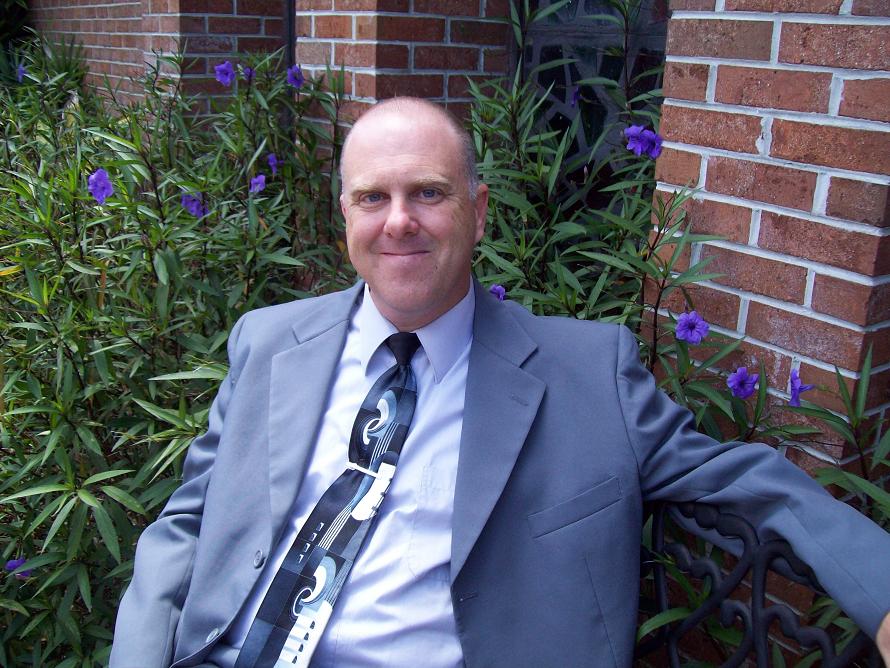
I am writing today from the beautiful Tampa Bay area.
Matthew 14; Walking on Water
 I am writing today from the beautiful Tampa Bay area.
When we read about Jesus walking on the water in Matthew 14, we often think that is something He was able to do only because He was God. I remember looking at a greeting card a while back that read, “Some people say I think too much of you, just because I worship the water you walk on.” I have even joked about walking on water because years ago in Oklahoma, I walked across a frozen lake. All joking aside though, Jesus did not do anything that He did not also make possible for us to do as well. Jesus rose raised the dead but so did Peter in Acts 9. Jesus shares His victories over sin and evil with us, and lets us experience the same victories in our lives.
Notice in John 14:10 Jesus attributes His success to His relationship with the Father. Believest thou not that I am in the Father, and the Father in me? the words that I speak unto you I speak not of myself: but the Father that dwelleth in me, he doeth the works.
Notice in John 14:12 that when we enter into a relationship with Him and the Father that the same success is possible for us. Verily, verily, I say unto you, He that believeth on me, the works that I do shall he do also; and greater [works] than these shall he do; because I go unto my Father.
In the story of Jesus and Peter walking on the water in Matthew 14, folks are quick to point out that Peter started to fall in the water when He took his eyes off Jesus, but they fail to point out that he was walking on water, just like Jesus was, so long as he kept His eyes on Jesus. Peter did walk on water! Before Jesus is recorded walking on water, earlier in chapter 14 we see Him spending quality time in prayer alone with the Father. I wonder, if Peter had spent that time in prayer, could he too have walked without falling into the water? Before we can begin to walk like Jesus we must first learn to pray like Jesus.
For a Desire of Ages study on how we can experience the same victories Jesus had click here.
Matthew 13; An Enemy Has Done This
 I am writing today from the beautiful Tampa Bay area.
Another parable put he forth unto them, saying, The kingdom of heaven is likened unto a man which sowed good seed in his field:But while men slept, his enemy came and sowed tares among the wheat, and went his way. But when the blade was sprung up, and brought forth fruit, then appeared the tares also. So the servants of the householder came and said unto him, Sir, didst not thou sow good seed in thy field? from whence then hath it tares? He said unto them, An enemy hath done this. The servants said unto him, Wilt thou then that we go and gather them up? But he said, Nay; lest while ye gather up the tares, ye root up also the wheat with them. Let both grow together until the harvest: and in the time of harvest I will say to the reapers, Gather ye together first the tares, and bind them in bundles to burn them: but gather the wheat into my barn. Matthew 13:24-30
What catches my eye as I read this story today, is the fact that not only had the man sowed seed in his field, but so had an enemy. God places people in our lives but the enemy places people in our lives too. Much prayer is needed to tell the difference. As a Bible Worker, I have learned over the years, that while God places people in my path who really need me, that Satan will also place people in my path just to waste my time, and keep me from the people who really want my help. This is where we need to be wise as serpents and harmless as doves. How can one tell the difference? In Matthew 5:6 Jesus has a blessing for those who are hungry. I have learned that I cannot make people hungry for the gospel. So I look for those who God is making hungry and I minister to them, while I continue to pray for and befriend those whom God has not been able to make hungry yet. Jesus did the same thing. In John 5:17 Jesus says, “My Father worketh hitherto, and I work.” Jesus worked with people whom His Father was already working with. I have seen too often, those who are hungry and thirsty for righteousness, left to starve, while the church goes out trying to entertain people who are not even interested in spiritual things. We have an obligation to those who do not care about spiritual things, but not at the expense of those who already have a desire to be taught the Word of God.
We must remember too, that we cannot help everyone. Jesus is their Savior and not me. I have seen many people get into unhealthy relationships, and they defend the relationship by saying they are trying to save the other person. I assure them that they are not a savior. Jesus will be that person’s Savior. Unhealthy relationships do no good to either party. Here we must pray for wisdom and be willing to walk away from someone who is wasting our time and keeping us from helping someone who really needs and wants our help.
Matthew 12; Did Jesus say He Would be in the Grave Three Nights?
 I am writing tonight from the beautiful Tampa Bay area.
Then certain of the scribes and of the Pharisees answered, saying, Master, we would see a sign from thee.
But he answered and said unto them, An evil and adulterous generation seeketh after a sign; and there shall no sign be given to it, but the sign of the prophet Jonas: For as Jonas was three days and three nights in the whale’s belly; so shall the Son of man be three days and three nights in the heart of the earth. Matthew 12:38-40
This text has perplexed many people since Jesus was not in the grave for three nights. Some try to move His crucifixion back to Thursday so they can fit him into the grave for three nights. Remember when William Miller thought the earth was the sanctuary mentioned in the 2300 day prophecy of Daniel 8:14? He thought at the end of the 2300 days Jesus would return and cleanse the earth with fire. He had the time right but the place wrong. Nowhere in the Bible does it say the earth is the sanctuary. Likewise in Matthew 12:40 many scholars have the time right but the place wrong. Now maybe we should not be so hard on William Miller for his mistake. Fact is, nowhere in the Bible does it refer to the grave as being the heart of the earth. After all Jesus was not even buried in the earth but placed in a small cave. This verse can also be translated “in the midst of the earth” or in the “middle of the earth.”
When Jesus prayed, “Thy will be done in earth as it is in heaven,” He was not referring to “in earth” as the grave but the midst of the earth where all the people are. If you take the day for a year in Bible prophecy mentioned in Ezekiel 4:6, you have Jesus preaching the gospel for three years in the midst of the earth where all the people are.
The sign of Jonah is not so much about the time anyway. We miss what this verse is really saying when we get all wrapped up trying to explain what three days and three nights mean. The point is, the religious leaders were asking Jesus for a sign while the sinners had already accepted Him. In the story of Jonah the men who throw Jonah overboard prayed to God and believed. The wicked inhabitants of Nineveh believed. The only person who kept rejecting God in his life was the prophet Jonah! Everyone else believed. Jesus is simply saying it is the same now. Sinners believe and accept Him but the religious leaders wont. It is just like it was in the days of Jonah.
How sad that Satan has been able to distract so many people with the “three nights” when that simply has nothing to do with Jesus’ point in this verse. Lets all take heed, lest we like Jonah or the Pharisees have a heart of unbelief while those with less light than we have freely accept Jesus as Savior and Lord.
Matthew 11; Hope For Those Who Doubt
After Jesus had finished instructing his twelve disciples, he went on from there to teach and preach in the towns of Galilee.
2 When John, who was in prison, heard about the deeds of the Messiah, he sent his disciples 3 to ask him, “Are you the one who is to come, or should we expect someone else?”
4 Jesus replied, “Go back and report to John what you hear and see: 5 The blind receive sight, the lame walk, those who have leprosy[b] are cleansed, the deaf hear, the dead are raised, and the good news is proclaimed to the poor. 6 Blessed is anyone who does not stumble on account of me.”
7 As John’s disciples were leaving, Jesus began to speak to the crowd about John: “What did you go out into the wilderness to see? A reed swayed by the wind? 8 If not, what did you go out to see? A man dressed in fine clothes? No, those who wear fine clothes are in kings’ palaces. 9 Then what did you go out to see? A prophet? Yes, I tell you, and more than a prophet. 10 This is the one about whom it is written:
“‘I will send my messenger ahead of you,
who will prepare your way before you.’[c]
11 Truly I tell you, among those born of women there has not risen anyone greater than John the Baptist.. Matthew 11:1-11 NIV
Here is hope for all of us. If John the Baptist had doubts, no wonder we have doubts too. However Jesus still affirmed the ministry of John the Baptist even though he was weak and doubted. What a wonderful Savior we have!
Read more on John the Baptist in Matthew 11 here.
Matthew 10; Peace at Any Cost?
Think not that I am come to send peace on earth: I came not to send peace, but a sword. Matthew 10:34.
The peace that Christ calls His peace, and which He bequeathed to His disciples, is not a peace which prevents all divisions; but it is a peace which is given and enjoyed in the midst of divisions. The peace that the faithful defender of the cause of Christ has is the consciousness that he is doing the will of God and reflecting His glory in good works. It is an internal rather than an external peace. Without are wars and fightings through the opposition of avowed enemies, and the coldness and suspicion of those even who claim to be friends. {UL 220.2}
Christ enjoins upon His followers to “love your enemies, . . . do good to them that hate you, and pray for them which despitefully use you and persecute you” (Matthew 5:44). He would have us love those who oppress us and do us harm. We must not express in words and acts the spirit they manifest, but improve every opportunity to do them good. {UL 220.3}
But while we are required to be Christlike toward those who are our enemies, we must not, in order to have peace, cover up the faults of those we see in error. Jesus, the world’s Redeemer, never purchased peace by covering iniquity, or by anything like compromise. Though His heart was constantly overflowing with love for the whole human race, He was never indulgent to their sins. He was too much their friend to remain silent while they were pursuing a course which would ruin their souls–the souls He had purchased with His own blood. He was a stern reprover of all vice, and His peace was the consciousness of having done the will of His Father, rather than a condition of things that existed as the result of having done His duty. {UL 220.4}
He labored that man should be true to himself in being all that God would have him, and true to his higher and eternal interest. Living in a world marred and seared with the curse brought upon it by disobedience, he [man] could not be at peace with it unless he left it unwarned, uninstructed, and unrebuked. This would be to purchase peace at the neglect of duty. {UL 220.5}
Everyone who loves Jesus and the souls for whom He died will follow after the things that make for peace. But His followers are to take special care lest in their efforts to prevent discord, the truth is surrendered, lest in warding off divisions, they make a sacrifice of its principles. True brotherhood can never be maintained by compromising principle. As surely as Christians approach the Christlike model, . . . so surely will they experience the strength and venom of that old serpent the devil.– Manuscript 23b, July 25, 1896, “How to Secure Peace.” {UL 220.6}
Matthew 9; Two Groups of Church People

I am writing today from the beautiful Florida Keys.
And, behold, they brought to him a man sick of the palsy, lying on a bed: and Jesus seeing their faith said unto the sick of the palsy; Son, be of good cheer; thy sins be forgiven thee. Matthew 9:2
Luke gives a little more detail; “And it came to pass on a certain day, as he was teaching, that there were Pharisees and doctors of the law sitting by, which were come out of every town of Galilee, and Judaea, and Jerusalem: and the power of the Lord was [present] to heal them. And, behold, men brought in a bed a man which was taken with a palsy: and they sought [means] to bring him in, and to lay [him] before him. And when they could not find by what [way] they might bring him in because of the multitude, they went upon the housetop, and let him down through the tiling with [his] couch into the midst before Jesus. And when he saw their faith, he said unto him, Man, thy sins are forgiven thee. Luke 5:18-20
Here we see the doctors of the law and Pharisees, the religious big shots sitting around with Jesus in a house. How important they must have felt to be able to debate theology with Jesus, or on the other hand, thought how important He must feel to be able to debate theology with them. Meanwhile some people show up who have been bringing people to Jesus. Notice they could not get in because of the people blocking the way. Who was blocking the way? The big shots, who wanted to sit around and debate theology. Here we have to groups of people. One group is in the church, but blocking the way for others to come. Do we do the same today? Do we block people out who are not as old as us, rich as us, who just don’t think exactly like us? The second group were out bringing someone to Jesus. The man may not have even had faith, but when Jesus saw their faith He healed him. So this man, may not have been like the others who brought him to Jesus. The people bringing him to Jesus were not bent on getting the man to think exactly like them, they were just bent on bringing him to Jesus! Also the people bringing him to Jesus were not about to let the so called religious big shots keep this man away from Jesus.
So which group are in? Are you sitting in church, maybe even next to Jesus, but to you the church is just an exclusive club? Or are you in the second group, where you are busy bringing people to Jesus?
Notice too, they were willing to tear the house apart to get him in to meet Jesus. How much do we read into that if anything at all? Of course our standards and doctrine cannot be altered. However, I sadly remember being a Bible Worker in a church long ago that was made up mostly of older people. A young couple joined our church, and I began Bible studies with their teenage cousin and a few of her friends. Three of them got baptized with her! They did not stay long though. They wanted to become active in the church and the older people became threatened by their presence. One older lady in the church actually told me, “William, don’t let these kids take over our church!” I was shocked! What made this lady think it was her church in the first place! I thought it was God’s church! Sadly these teenagers did not last long in the church. Sadly that church is still struggling to exist even today. Isn’t it our calling to bring people to Jesus?
Matthew 8; He Healed The Loneliness With His Hands

I am writing tonight just south of Beautiful Naples, Florida.
And, behold, there came a leper and worshipped him, saying, Lord, if thou wilt, thou canst make me clean. And Jesus put forth [his] hand, and touched him, saying, I will; be thou clean. And immediately his leprosy was cleansed. Matthew 8:2-3
Have you ever really looked at your hands? Ever thought about your hands writing their own auto-biography? They have quite a story to tell. Think of all the places they have been. My hands? My hands have been frostbitten as they built a snowman. My hands have been burnt as I put them in the hot sand. My hands have shook hands with people at church in Seattle Washington and patted little kids on the head in Peru. My hands have handled a baseball right after Hank Aaron signed it. My hands have held the hands of a dying friend in Texas. My hands have held a baby just hours after it was born. (I wont tell you about the mess the baby made in hands and how the parents laughed.) My hands have held over 100,000 UPS packages, Kayak paddles, golf clubs and baseball bats, Bibles, friend’s hands, dirt, sand, rocks, footballs, baseballs, soccer balls too but I got a penalty for that.
Take a look at your own hands sometime. They have quite a story to tell. Hands are important. When Jesus healed the leper in Matthew 8 He used His hands. Now Jesus did not use His hands to heal the leprosy. He healed the leprosy with His words, “be thou clean.” Jesus used His hands to heal something else. You see the leper was banished from society including his family. No hugs from his wife or kids. No shaking hands with friends. Jesus healed the leprosy with his words, but when Jesus touched him with His hands He healed his loneliness.
Jesus wanted to heal the whole man. Jesus knew that for the man to be physically healthy he must also be emotionally and socially healthy. It was the same with Adam. Think about this, God said it was not good for Adam to be alone. Now at that point Adam had a relationship with God. But God made man so that he needed more than just God. Adam needed a community as well. God created Eve so together they could create a community to meet their social needs that not even God could meet alone. God created us to be a part of a social community and not just to be monks or hermits.
I also like the way Jesus healed the man immediately. I love what the Desire of Ages has to say about that: “The work of Christ in cleansing the leper from his terrible disease is an illustration of His work in cleansing the soul from sin. The man who came to Jesus was “full of leprosy.” Its deadly poison permeated his whole body. The disciples sought to prevent their Master from touching him; for he who touched a leper became himself unclean. But in laying His hand upon the leper, Jesus received no defilement. His touch imparted life-giving power. The leprosy was cleansed. Thus it is with the leprosy of sin,–deep-rooted, deadly, and impossible to be cleansed by human power. “The whole head is sick, and the whole heart faint. From the sole of the foot even unto the head there is no soundness in it; but wounds, and bruises, and putrefying sores.” Isaiah 1:5, 6. But Jesus, coming to dwell in humanity, receives no pollution. His presence has healing virtue for the sinner. Whoever will fall at His feet, saying in faith, “Lord, if Thou wilt, Thou canst make me clean,” shall hear the answer, “I will; be thou made clean.” Matthew 8:2, 3, R. V. {DA 266.1}
In some instances of healing, Jesus did not at once grant the blessing sought. But in the case of leprosy, no sooner was the appeal made than it was granted. When we pray for earthly blessings, the answer to our prayer may be delayed, or God may give us something other than we ask, but not so when we ask for deliverance from sin. It is His will to cleanse us from sin, to make us His children, and to enable us to live a holy life. Christ “gave Himself for our sins, that He might deliver us from this present evil world, according to the will of God and our Father.” Galatians 1:4. And “this is the confidence that we have in Him, that, if we ask anything according to His will, He heareth us: and if we know that He hear us, whatsoever we ask, we know that we have the petitions that we desired of Him.” 1 John 5:14, 15. “If we confess our sins, He is faithful and just to forgive us our sins, and to cleanse us from all unrighteousness.” 1 John 1:9. {DA 266.2}
Matthew 7; Moral Authority

I am writing today from the beautiful Tampa Bay area.
And it came to pass, when Jesus had ended these sayings, the people were astonished at his doctrine: For he taught them as one having authority, and not as the scribes. Matthew 7:28-29
This verse makes it clear, that while the scribes were all full of themselves because of their supposedly exalted positions, that in reality they had no authority or influence over the people. Why? Because, while an organization had given them a title of authority, they still had no moral authority. I like the way The Message Bible translates this verse. “When Jesus concluded his address, the crowd burst into applause. They had never heard teaching like this. It was apparent that he was living everything he was saying—quite a contrast to their religion teachers! This was the best teaching they had ever heard.”
I remember growing up as a teen, wanting to follow Jesus, that there were older people that I looked up to and had spiritual relationships with, not because they had a title or position in the community, but because I sensed they truly walked with God. I also remember I chose them as my mentors, they did not choose me. I was not alone. A few years ago, I went to a youth leadership workshop. I am sorry I don’t remember the name of the man giving the workshop, but he confirmed that even today, children choose their own mentors. A child may belong to a church with three pastors and a youth director, but may feel more comfortable sharing their burdens with the church janitor. Chances are the janitor has an intimate relationship with God that the youth want to find. The janitor has moral authority when his or her life is harmony with God’s Word.
Last week I was in a youth evangelism council meeting, where a video by Andy Stanley was shown, where he talked about moral authority. He put a label on a concept that the Holy Spirit had been revealing to me for some time. Stanley calls it “moral authority.” I had never thought of that label before. Authority does not come from a title or position, it comes from character. In heaven, Lucifer wanted God’s authority but did not want His character. Problem is, the authority comes from the character. While Lucifer, like the rest of us can never be God nor should we seek to be God, we should be seeking His character instead of his power. Where there is no morality there is no authority. Your authority is limited to your morality, regardless of any position or title you may or may not have. In other words there are people with influence that have no position, and there are people with positions that have no influence. This is why many of them seek to use force and manipulation when they can’t lead naturally. Meanwhile there are others who lead, while using no titles, positions, force or manipulation, but are quite successful, because, they have moral authority.
Position does not give holiness of character. It is by honoring God and obeying His commands that a man is made truly great. {Conflict and Courage, p. 189}
Matthew 6; The Lord’s Prayer
 I am writing today from the beautiful Tampa Bay area.
And when thou prayest, thou shalt not be as the hypocrites are: for they love to pray standing in the synagogues and in the corners of the streets, that they may be seen of men. Verily I say unto you, They have their reward. But thou, when thou prayest, enter into thy closet, and when thou hast shut thy door, pray to thy Father which is in secret; and thy Father which seeth in secret shall reward thee openly. Matthew 6:5-6
Jesus endorses both public and private prayer, but there is a difference. Public prayers should be simple and brief. In our private prayers we share more specifically what is on our hearts. For example, if Aunt Jane has started drinking and running around with men again we do not need to bring that up in public prayer. When we do this it is nothing more than gossip. We save this news for Jesus’ ears only. Also our private prayers have no time restraint. Jesus spent all night in personal prayer but did not spend all night in public prayer. When we have the morning prayer for church and pray a long prayer what we are telling everyone is that we have no personal prayer life, so we have to make up for it by making long public prayers. Jesus’ public prayers were very brief because He had a personal prayer life outside of public speaking.
But when ye pray, use not vain repetitions, as the heathen [do]: for they think that they shall be heard for their much speaking. Matthew 6:7
A vain repetition is when we recite words that do not come from the heart. Songs as well as prayers can be vain repetitions if we are not singing from the heart. God wants us to share our hearts with Him not just our lips. I love the way one author puts it:
“Keep your wants, your joys, your sorrows, your cares, and your fears before God. You cannot burden Him; you cannot weary Him. He who numbers the hairs of your head is not indifferent to the wants of His children. “The Lord is very pitiful, and of tender mercy.” James 5:11. His heart of love is touched by our sorrows and even by our utterances of them. Take to Him everything that perplexes the mind. Nothing is too great for Him to bear, for He holds up worlds, He rules over all the affairs of the universe. Nothing that in any way concerns our peace is too small for Him to notice. There is no chapter in our experience too dark for Him to read; there is no perplexity too difficult for Him to unravel. No calamity can befall the least of His children, no anxiety harass the soul, no joy cheer, no sincere prayer escape the lips, of which our heavenly Father is unobservant, or in which He takes no immediate interest. “He healeth the broken in heart, and bindeth up their wounds.” Psalm 147:3. The relations between God and each soul are as distinct and full as though there were not another soul upon the earth to share His watchcare, not another soul for whom He gave His beloved Son.” – Steps to Christ, p. 100
Remember God wants a relationship with us. He is not a vending machine, where we just tell Him what we want, get it and go. Also while many wonder why they do not get there requests in the time they would like there may be many reasons (See Psalm 66:18) but the biggest reason may be as simple as we are not God’s boss!
Let’s take a look now at the model prayer Jesus gave us. This prayer does not need to be repeated word for word. Many recite this prayer with no thought and thus it too becomes a vain repetition.
Our Father which art in heaven, Hallowed be thy name. Matthew 6:9
We begin by acknowledging Who we are talking to. Yes He is our friend but He is also ruler of the universe and more than capable of handling any problem we may have.
Thy kingdom come. Thy will be done in earth, as [it is] in heaven. Matthew 6:10
God drove Lucifer out of heaven and He can do the same here on earth. God’s will can be done in our hearts, homes, and communities, as we pray for God’s will to be done in those places as well as in heaven.
Give us this day our daily bread. Matthew 6:11
Jesus never asked for anything just for Himself. He also asked for the blessings of others as well as Himself. When Daniel’s prayer was answered in Daneil 2 it was not only his own life that was saved but that of all the wise men as well. When the disciples prayed Jesus to save them from the storm at sea, it was not just their boat that was saved from the storm but all those around them on the sea as well.
And forgive us our debts, as we forgive our debtors. Matthew 6:12
Again no self or pride in Jesus’ prayer. He does not pray “forgive everyone else but as you know I have never sinned.” No, there is no pride in His prayer. Pride may allow us to pray on our knees while we are still standing in our heart.
And lead us not into temptation, but deliver us from evil: For thine is the kingdom, and the power, and the glory, for ever. Amen. Matthew 6:13
Christ’s prayer concludes with again reaffirming Who it is we are praying to and acknowledging that He is more than able to care for all our needs.
 In Light of The Cross