Video: Meet me at the Cross: As Though He had Never Been
Video: Meet me at the Cross, Jesus Called Judas Friend
Video: Meet me at the Cross, Did Jesus Abolish the law When He Died?
Video: Meet me at the Cross, Gethsemane
Video: Meet me at the Cross, Destroying Satan’s Dictatorship
13: Wait on the Lord-Sabbath School Lesson Teaching Plan

Prepared by William Earnhardt, for Sabbath School class, March 30, 2024.
Main Theme: Waiting does not mean that we do nothing. It means we look forward to our hope as we keep doing the tasks at hand.
Read in Class: Psalm 27:14 and Psalm 131:1-3. Define the main idea of these passages.
Study: What do these passages teach us about our relationship with God, and what He wants us to do?
Apply: What are some things you are waiting for now from God? How do we learn to wait in faith and in trust, especially when what we are praying for hasn’t yet come?
Share: Your friend says that it souns like God wants us to be like a small child waiting and trusting Him all the time, but He also wants us to grow up in Christ. How can you be mature, indapendant and responsible while still being like a little child? What do you tell your friend?
Read in Class: Pslam 126:1-6. Define the main idea of this passage.
Study: What gives strength and hope to God’s people? What is being said here, in this context, that we can apply to our own lives today?
Apply: Dwell on some times when you clearly and unmistakably saw the Lord working in your life or in the lives of others. How can you draw hope from those experiences for whatever you might be going through now?
Share: Your friend says he has so many unanswered prayers and is getting tired of “waithing” on the Lord. What do you tell your friend?
Read in Class: Pslam 92:1-15. Define the main idea of this passage.
Study: What two aspects of the Sabbath day are highlighted in this song for the Sabbath day?
Apply: What great hope is offered to us in Psalm 92:1-5, and how can we, even right now, take comfort in what it says?
Share: Your friend says he has to take a job working on the Sabbath because he has a family to feed. He says its his God-given job to provide for his family, so he can’t be expected to just wait around for some miracle to put food on is family’s table. What do you tell your friend?
Read in Class: Psalm 30:5 and 2 Peter 1:19. Define the common thread on these passages.
Study: What time of day is symbolically portrayed as the time of divine redemption and why?
Apply: What happened in the morning here in Mark 16:1-8 and why is that so important to us?
Share: Your friend says, “Since Ecclesiastes 9:5 says the dead know nothing, in one aspect thier wait for the resurection is over.” Do you agree or disagree with the idea your friend is sharing? Is so, how? If not why?
Video: Meet me at the Cross-“Wherever the Gospel is Preached”
A New Song And a New Prayer
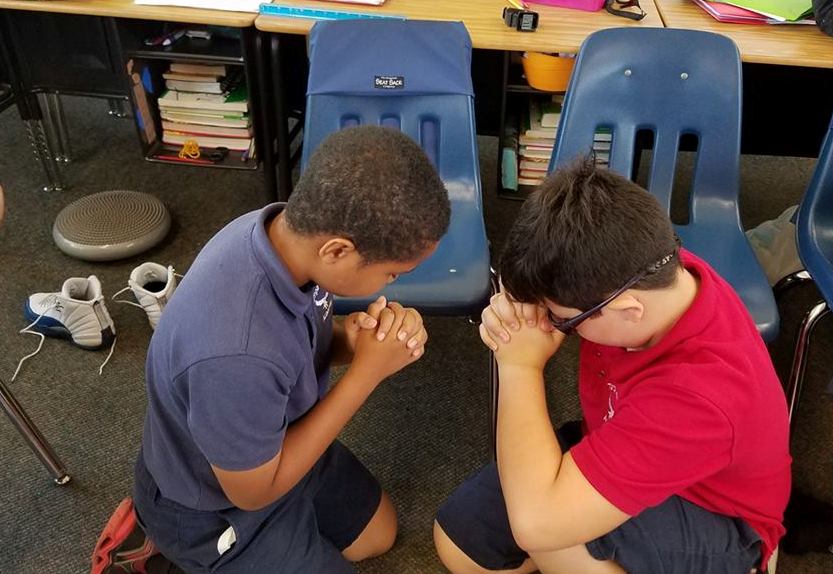
He has given me a new song to sing, a hymn of praise to our God. Many will see what he has done and be amazed. They will put their trust in the Lord. Pslam 40:3 NLT
My parents told me that one Sabbath morning when I was two years old, the elder kept praying and praying in church, and I got tired of kneeling on my two-year-old little knees, so I finally stood up on the pew and started shouting, “Amen! Amen! Amen!”
Even at two years old I must have realized that public prayers are supposed to be brief. Well, let me tell you something, I have felt like doing that a few times since then.
“Our prayers in public should be short…” (Ellen White, Prayer, p. 176)
In recent years I have been kneeling in congregational prayer for what felt like an eternity, and have thought to myself during the long drawn-out prayer, “Why doesn’t the elder praying just ask if he can preach sometime instead of turning his prayer into a sermon?”
Jesus mentored His disciples to pray longer prayers in private. In Gethsemane the night of His arrest, in Matthew 26:36-46, He even asked them to pray for Him. Jesus led by example, in long personal prayers, sometimes lasting all night (Luke 6:12). He also taught that prayers should be genuine and not rehearsed.
“When you pray, don’t babble on and on as people of other religions do. They think their prayers are answered merely by repeating their words again and again.” Matthew 6:7 NLT
When we pray we are to talk to God as to a friend. I heard of an elderly Bible worker, who when driving to Bible studies, would make sure nothing was in the passenger seat, because He pictured God sitting there, riding with Him to the Bible study as he prayed and drove. (I hope he kept his eyes open as he prayed and drove!)
Many times in my Bible studies I ask people to have the opening prayer, and many are shy and say they don’t know how. I never pressure anyone to do anything they don’t feel comfortable doing, but several have been surprised how easy it is when I tell them how. One man, who had already heard me pray many times, told me he wanted to pray but did not know what to say. I told him, “Just say “Dear heavenly Father, please send your Holy Spirit to be with us in this Bible study. In Jesus’ name, amen.” His eyes opened wide and he smiled when he realized how easy it was.
God wants us to talk to Him as a friend. He does not wanting us just babbling the same words over and over. He wants to have a real conversation with us. The psalmist talks about singing a new song (Psalm 40:3) and a song is like a prayer, since songs and prayers are stories of our experiences. Just as God enjoys new songs, He also enjoys new prayers.
While Jesus mentored His disciples to pray in private, He also mentored them to pray in public. He gave them a model prayer, not to be repeated over and over word for word, but as a model for us to form our own prayer. God loves creativity. Not every song has to be sung the same way and neither does every prayer have to be prayed the same way. While Jesus prayed long private prayers, notice how short His public prayer is.
Our Father in heaven, may your name be kept holy. Matthew 6:9 NLT
Jesus starts by addressing His Father and setting a tone for reverence and awe. Our prayers may also be prayed with confidence knowing our requests are reaching the throne of the universe.
May your Kingdom come soon. May your will be done on earth, as it is in heaven. Matthew 6:10 NLT
I have a friend who was taught long ago by his parents to always ask people how their day was, and listen to them, before going on about yourself and your day. You may think you had a tough day, but before you dive into your prayer, telling God all about your heartaches, have you ever asked God how His day went? God sees way more heartaches in one day than we will see in a lifetime. We want God’s will to be done and His kingdom to come soon, not just to end our suffering, but to end God’s suffering, as He suffers not just with you and me, but with everyone in the world who suffers.
Give us today the food we need, Matthew 6:11 NLT
When Daniel asked for God to reveal the king’s dream to him, Daniel did not save himself only, he saved the lives of all the king’s men (Daniel 2:24). In Mark 4:39 Jesus calms the storm at the disciples’ request, but the sea was not only calmed for their tiny boat. All the other boats on the water benefited from the calmness. Jesus does not pray for Himself alone to have food. He prays for everyone to have the food they need. There is no selfishness in Jesus’ prayer. There is no selfishness in any genuine prayer.
“and forgive us our sins, as we have forgiven those who sin against us.” Matthew 6:12 NLT
Jesus could have prayed, “Father forgive everyone else for their sins, but as you know, I have never sinned,” but again there is neither self nor pride in Jesus’ prayer.
And don’t let us yield to temptation, but rescue us from the evil one. For yours is the kingdom and the power and the glory forever. Amen. Matthew 6:13 NLT
Jesus overcame by asking for the Father’s help along with everyone else. We can ask for His help and overcome as well. Jesus ends His prayer the way He began, by exalting the Father, Who gives us the confidence we need in our personal lives and ministry when we worship and follow Him.
May His will be done, and may it begin with us.
You may study this week’s Sabbath School Lesson here.
 In Light of The Cross
