Main Theme: The sanctuary demonstrated God’s closeness to humanity and revealed the greatest truths to them, which is how He saves those who come to Him in faith.
Study: What truth was reiterated to the people here in the context of the building of the sanctuary?
Apply: The Jews have a saying: More than Israel kept the Sabbath, the Sabbath kept Israel. Though we as Adventists probably wouldn’t express it like that, what important role does the Sabbath have in the life of our church family?
Share: Your friend asks you if warming up food on an electric stove, or even turning a light switch on, counts as starting a fire on the Sabbath. What is the principle behind the law not to build a fire on the Sabbath? Are we still keeping the principle of the law when we turn on a stove or a light?
Study: What important lessons are here for us today?
Apply: What spiritual gifts have you received when you were filled with the Holy Spirit? Remember that the spiritual gifts can flourish only when you cultivate the fruits of the Spirit in your life (Gal. 5:22-23).
Share: Your friend asks how she can know what her spiritual gifts are. What do you tell your friend?
Read in Class: Exodus 40:34-38. Ask the class to share the main idea of this passage.
Study: How did the Israelites discern God’s presence?
Apply: What are ways that, even now, you can experience the presence of God? Why is it important that you do so?
Share: Your friend says that sometimes she feels God is with her, but other times she does not. She asks how to know if God is with her or not. Is it safe to just go by our feelings? How would you answer your friend from the Bible?
Read in Class:John 1:14. Ask the class to share the main idea of this passage.
Study: How is Christ’s incarnation compared to the tabernacle?
Apply: Read in Revelation 21:1-3. Looking at what we have been promised in Jesus, how can we learn to endure to the end?
Share: What new truths and insights did you gain as you studied this quarter’s lesson?
Main Theme: This week, we study how Moses, through knowing and following God’s instructions, was growing in his walk with the Lord.
Read in Class:Exodus 33:12-17. Ask the class to share the main idea of this passage.
Study: What did Moses ask the Lord to teach him? Why did he demand God’s presence to guide them?
Apply: Do you know God, or do you just know about Him? What is the crucial difference between the two?
Share: Your friend says that Romans 2:4 tells us the goodness of God leads us to repentance. Your friend asks how God revealed His goodness in the book of Exodus. What do you tell your friend?
Read in Class:Exodus 33:18-23. Ask the class to share the main idea of this passage.
Study: How did God answer Moses’ request to see His glory?
Apply: How much time do you spend focusing on the Cross and what it tells you about the character of God?
Share: Your friend asks, How does your church reflect the glory of God to others. What do you tell your friend?
Read in Class:Exodus 34:6-9. Ask the class to identify the main idea of this passage.
Study: How did God reveal His glory to Moses?
Apply: How can we preach a merciful and forgiving God without it being confused with what is referred to as “cheap grace?”
Share: Your friend says that to reflect the proper balance of God’s holiness and compassion, we should be conservative towards ourselves and liberal towards others. Do you agree with your friend? Was Jesus conservative towards Himself while being liberal towards others? What do you tell your friend?
Read in Class: Exodus 34:29-35. Ask the class to share the main idea of this passage.
Study: What was the cause of Moses’ radiant face?
Apply: What areas of your character need to reflect the character of God better? Probably every area, right? However, how can focusing on the Cross, and what it means, give you encouragement and assurance of salvation?
Share: Tell about someone who reflected God’s glory to you like Moses did to Israel.
Where there is no counsel, the people fall; But in the multitude of counselors, there is safety. Proverbs 11:14 NKJV
As iron sharpens iron, so a man sharpens the countenance of his friend. Proverbs 27:17 NKJV
As we study this week’s Sabbath School lesson, about the apostasy of Israel, including Aaron, their priest, I am reminded of a vital lesson. We cannot assume a pastor or any church leader is doing a good job just because they are making everyone happy. After all, the greater majority of the people were delighted with Aaron while he was leading them into apostasy. The point was made that Aaron should not have allowed the people to worship an idol, much less help them make one. With the majority being in the wrong, Aaron should have stood for the right, even if all alone.
The greatest want of the world is the want of men—men who will not be bought or sold, men who in their inmost souls are true and honest, men who do not fear to call sin by its right name, men whose conscience is as true to duty as the needle to the pole, men who will stand for the right though the heavens fall. –Ellen White, Education, Page 57.
Being a pastor, I also see the problem from another angle. While the pastor may chair the church board, the pastor answers to the church board, and the church board answers ultimately to the church at large. In other words, while the pastor holds the church accountable, the church also holds the pastor accountable. Accountability works both ways.
So, as we study the apostasy of Israel when they made and worshiped the golden calf, we see a total breakdown of accountability. Not only was Aaron not holding the people accountable, but the people were not holding Aaron accountable. The problem was that no one was holding anyone accountable. Here is where we see how crucial accountability is to both laity and leaders.
The other day, I was having a conversation with a young couple, when the husband said something so profound that I had never heard a husband say before. He said one of the reasons he wanted to find someone to marry was that he needed someone to be accountable to. In a world where everyone is told to mind their own business, not to judge or criticize, and to let others do as they please, this young man realized he could not be all that God expects him to be without offering accountability. Having someone to be accountable to helps to keep us out of trouble and focused on our lofty goals.
In order for a church to stay out of trouble and focused on their lofty goals they need leaders who will hold them accountable. At the same time in order for church leaders to stay out of trouble and focused on their lofty goals they need a church body that will hold them accountable. While the pastor may advise the board, the pastor should also consider the board members as his advisors as well. The pastor should not consider it a weakness or be embarrassed to seek counsel from his church family. On the contrary the wisdom in Proverbs tells us we are all here to sharpen each other, and there is wisdom in having many counselors.
There was a time when I was embarrassed to ask the church for guidance, not because of my ego, but because I felt like I was being paid to know what was right, and if I was not right or did not know what was right then I was not earning my paycheck. Later I realized my job is not so much to always be right or know on my own what is right, as much as it is to find what is right. We actually gain the confidence of our church family when we quickly discern our mistakes and make corrections. Meanwhile I have watched other pastors shipwreck their own ministry by pretending to be infalible instead of accepting the counsel, mercy and forgiveness their congregations so willingly offered. It broke my heart recently, when some friends told me about a pastor in their church who made a mistake, and instead of accepting their forgiveness and invitation for reconciliation, he resigned claiming to be above reproach.
For marriage to work, both the wife and the husband need to offer accountability to each other. In the church, not only does the congregation need to provide accountability to the pastor, but the pastor also needs to offer accountability to his congregation. Aaron and Israel’s apostasy with the golden calf is an unfortunate example of what happens when neither congregation nor pastor holds the other accountable. While Aaron should have stopped the people from committing apostasy, the people should have stopped Aaron from committing apostasy. Accountability works both ways.
You may study this week’s Sabbath School lesson here.
Main Theme: Whatever the reasons for this terrible apostasy, we can learn lessons about the sinfulness of humanity and the mercy of God.
Read in Class:Exodus 32:1-6. Ask the class to identify the main idea of this passage.
Study: How was it possible for Aaron’s leadership to fail so spectacularly?
Apply: How could Aaron, a leader, have been so weak? In what ways might Aaron have sought to justify in his own heart his terrible actions?
Share: Your friend says that her church has an excellent pastor because he always does whatever makes the whole church happy. Is whether ot not a pastor makes everyone happy a good way to determine if the pastor is doing a good job or not? How does the story of the golden calf help you answer your friend? What do you tell your friend?
Read in Class:Exodus 32:7-14. Ask the class to identify the main idea of this passage.
Study: Why did God send Moses back to the camp of Israel?
Apply: What are some things, or even people and ideas, that could become idols to us today? How do we guard against idolatry in today’s world?
Share: Your friend asks why Moses was interceding for these people when all they did was cause him trouble? Why go to such great lengths to save such a troublesome group? What do you tell your friend?
Read in Class: Exodus 32:15-29. Ask the class to identify the main idea of this passage.
Study: What was Moses’ reaction to God’s threat to destroy Israel?
Apply: What should this story teach us about the power of intercessory prayer? Whom should you be praying for right now?
Share: Your friend asks if the apostasy was Aaron’s fault for making the golden calf, or the people’s fault for encouraging Aaron instead of stopping him? Who should have been holding whom accountable? Aaron, the People, or both? What do you tell your friend?
Read in Class: Exodus 32:30-32. Ask the class to identify the main idea of this passage.
Study:How far did Moses go in his intercessory prayer for sinners?
Apply: Moses was willing to lose out on heaven to save others and honor God’s name? How far should we be willing to go to save others and honor God? See also Romans 9:1-3.
Share: How do you share the truth with others, so as to save them from apostasy without coming across as self-righteous or “holier-than-thou?” See Galatians 6:1-5.
Main Theme: We love God, and out of that love, we obey Him.
Read in Class: Exodus 24:3, 7-17. Ask the class to identify the main idea of this passage.
Study: What roles do the reading of the Word of God and the sprinkling of blood play in the ratification of the covenant between God and His people? What amazing experience were the children of Israel given here?
Apply: Dwell more on the story of these very privileged men, even sons of Aaron. What warning should this give to us, as Adventists, who, with the light we have been entrusted with, are indeed privileged?
Share: Your friend tells you she has promised God several times that she would quit an addiction, but keeps going back to it. After so many broken promises, she is ready to give up. What do you tell your friend? Hint: 2 Peter 1:4.
Read in Class:Ezekiel 36:24-30. Ask the class to identify the main idea of this passage.
Study: How does obedience take place in our lives?
Apply: If we have been promised the power to obey, why do we find it so easy to fall into sin anyway?
Share: Your friend asks you, “How do you build a resolve to follow God?” What do you tell your friend?
Read in Class: Exodus 25:1-9. Ask the class to identify the main idea of this passage.
Study: What crucial, practical, and theological truths are seen in these verses?
Apply: 1 Corinthians 6:19 tells us that our bodies are supposed to be a temple for the Holy Spirit to dwell in. How do you make sure that your body is an appropriate temple for the Holy Spirit to dwell in?
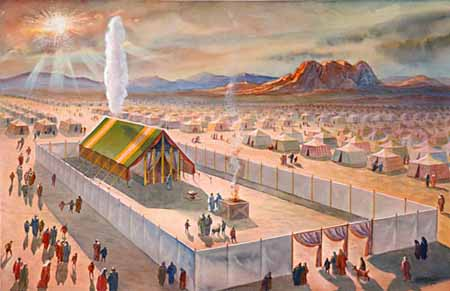
Share: Your friend tells you, in Great Controversy, page 488, Ellen White says, “The subject of the sanctuary and the investigative judgment should be clearly understood by the people of God.” Your friend asks you why it is so important, especially since Adventists are the only people who even teach the doctrine of an investigative judgment. What do you tell your friend?
Read in Class: Exodus 31:1-11. Ask the class to identify the main idea of this passage.
Study: What special assistance did God give so that all the tabernacle’s details and related services would be prepared and built in a beautiful and proper way?
Apply: The phrase “mercy seat” comes from one Hebrew word, whose root meaning is “to atone.” Why, then, would this “mercy seat” be set right over God’s law? What hope should we see in this fact?
Share: How does your understanding of the sanctuary help you share the Gospel, and what object lessons from the sanctuary do you like to use?
So Moses came and told the people all the words of the LORD and all the judgments. And all the people answered with one voice and said, ‘All the words which the LORD has said we will do. Exodus 24:3 NKJV
The difference between knowing and doing is vital. Remember, in the story in Matthew 25:31-46, Jesus did not invite people into His kingdom based on what they knew, but instead on what they did. In Mark 12, a scribe makes a profound comment that drew commendation from Jesus.
So the scribe said to Him, “Well said, Teacher. You have spoken the truth, for there is one God, and there is no other but He. And to love Him with all the heart, with all the understanding, with all the soul, and with all the strength, and to love one’s neighbor as oneself, is more than all the whole burnt offerings and sacrifices.” Now when Jesus saw that he answered wisely, He said to him, “You are not far from the kingdom of God.” Matthew 12:32-34 NKJV
While Jesus told the scribe he was not far from the kingdom of God He did not tell him he was already in the kingdom of God. Have you ever noticed or thought about that before? Why did his answer place the scribe near, but not in the kingdom of God? I think I found a clue in Jesus’ conversation with the lawyer in Luke 10.
And behold, a certain lawyer stood up and tested Him, saying, “Teacher, what shall I do to inherit eternal life?” He said to him, “What is written in the law? What is your reading of it?” So he answered and said, “ ‘You shall love the Lord your God with all your heart, with all your soul, with all your strength, and with all your mind,’ and ‘your neighbor as yourself.’ ” And He said to him, “You have answered rightly; do this and you will live.” Luke 10:25-28 NKJV
The clue I found is, Jesus said do this and you live. Jesus did not tell the lawyer, say this and you will live, or know this and you will live, but do this and you will live. I realize I am not telling you anything new as far as the fact that we all know we have to walk the walk and not just talk the talk. However, the reality of what we already know should really sober us up, when we realize that even after giving a profound answer, the scribe in Mark 12 was near but not yet quite in the kingdowm of God. The answer to the lawyer in Luke 10 was. ” do this and you will live.” The difference between knowing and doing is just as big as the difference between being near God’s kingdom and being in God’s kingdom.
And let us not grow weary while doing good, for in due season we shall reap if we do not lose heart. Therefore, as we have opportunity, let us do good to all, especially to those who are of the household of faith. Galatians 6:9-10
You may study this week’s Sabbath School Lesson here.
Main Theme: God gave us practical instructions for daily living.
Read in Class:Exodus 21:12-19. Ask the class to share the main idea of this passage.
Study: What specific regulations were given regarding Hebrew slaves, homicide, and bodily injuries?
Apply: Though in most of the world the evil practice of institutionalized slavery has, for the most part, been abolished, some of its principles still exist, and what can we do, in our own limited sphere, to fight against these principles?
Share: Your friend asks you if you know the signs of someone being a victim of human trafficking, and what to do if you suspect someone is a victim. What do you tell your friend? Hint: See Signs of Trafficking on Shared Hope.
Read in Class:Exodus 22:16-26. Ask the class to share the main idea of this passage.
Study: What issues were dealt with in these laws and how?
Apply: How graceful and patient are you when others reject some of the truths of God’s words, of Jesus Himself?
Share: Your friend asks you how you think foreigners should be treated in your country. What do you tell your friend?
Read in Class: Matthew 5:38-48. Ask the class to identify the main idea of this passage.
Study: How does Jesus interpret the meaning of the retaliation law? How should we apply it today?
Apply: How should the realization that one day justice will come help you deal with all the injustice that we see in the world now?
Share: Your friend asks you if you find it hard to pray for and bless your enemies. She asks if it’s even practical to expect us to love our enemies in real life. What do you tell your friend?
Study: What promise and command are found in these verses, and how are they closely related?
Apply: What are the ways we can learn to love in the way we are commanded to? Why does it always include “death to self?”
Share: Can you think of someone in your past whom you may need to forgive? Could you please reach out to them this week and share the same amazing grace that God has given to you? Remember, while some things are unforgivable, God’s grace makes the unforgivable forgivable.
Read in Class:Exodus 19:9-25. Ask the class to share the main idea of this passage.
Study: How did God prepare Israel to receive the Ten Commandments?
Apply: How do you understand the idea of the Ten Commandments as an expression of God’s love? What does that mean? How is God’s love revealed in them?
Share: Your friend notes that in Exodus 19:10, the people are told to wash their clothes in preparation for keeping the commandments. Your friend asks if this is why in Revelation 22:14, some translations say, “wash their robes,” while others say “keep the commandments.” What is the parallel between “washing our robes” and “keeping the commandments?” What do you tell your friend?
Read in Class:Exodus 20:1-17. Ask the class to share the main idea of this passage.
Study: What are the principles of the Decalogue, and how is it organized?
Apply: in John 14:15, Jesus says, “If you love me, keep my commandments.” Why is it important to keep the commandments out of love, rather than just to receive a reward? How can we be sure we are not just doing it for the sake of the latter?
Share: Your friend says that she heard that God’s biddings are His enablings, and that His commands are actually promises. Is that true? If so, can you explain to your friend why?
And when they came to Marah, they could not drink of the waters of Marah, for they [were] bitter: therefore the name of it was called Marah. And the people murmured against Moses, saying, What shall we drink? And he cried unto the LORD; and the LORD showed him a tree, [which] when he had cast into the waters, the waters were made sweet: there he made for them a statute and an ordinance, and there he proved them, And said, If thou wilt diligently hearken to the voice of the LORD thy God, and wilt do that which is right in his sight, and wilt give ear to his commandments, and keep all his statutes, I will put none of these diseases upon thee, which I have brought upon the Egyptians: for I [am] the LORD that healeth thee. Exodus 15:23-26 KJV
What was the significance of Moses putting a tree in the water? How did a tree make the water sweet? In 1 Peter 2:24, Peter refers to the cross as a tree.
who Himself bore our sins in His own body on the tree, that we, having died to sins, might live for righteousness—by whose stripes you were healed. 1 Peter 2:24 NKJV
In a world of hate and bitterness, Jesus died on a tree to save us from a bitter world. Sin has caused suffering and bitterness but Jesus was lifted up on the cross to make our lives sweet again. This is a story that looks simle in itself, but like many stories of the Exodus, it points us to the cross and the salvation we have in Jesus.
If life has made you bitter, Jesus is offering living water that can make your life sweet again.
Jesus answered and said to her, “Whoever drinks of this water will thirst again, but whoever drinks of the water that I shall give him will never thirst. But the water that I shall give him will become in him a fountain of water springing up into everlasting life.” John 14:13-14 NKJV
I would like to invite you to find the sweet life through fellowship with Jesus and other believers, by finding a Christ-centered Bible based church in your area. You can find one here.
You may study this week’s Sabbath School lesson here.
Main Theme: Along the journey to Canaan, God had to teach Israel over and over to trust and obey.
Read in Class:Exodus 15:22-27. Ask the class to identify the main idea in this passage.
Study: After crossing the Red Sea, what was the background to the first miracle performed?
Apply: What trials and struggles have you brought upon yourself? What comfort can you get in knowing that God will still work on your behalf if you cooperate with Him?
Share: Your friend asks, what was the significance of the branch that made the water sweet? What do you tell your friend? Hint: See A Tree Makes a Bitter Life Sweet Again.
Read in Class:Exodus 16:1-15, 26, 35. Ask the class to identify the main idea of this passage.
Study: What was the cause of the Israelites’ grumbling, and what followed?
Apply: People like to eat. We were created to like to eat. The rich abundance of food, growing out of the ground (our original diet), reveals not only that God wants us to eat, but that we are to like what we eat, too. How, though, can this wonderful gift, that of food (and our liking to eat it), be abused?
Share: Your friend says that her pastor told her the sabbath was never observed by God’s people until the law was given on Mt. Sinai. What do you tell your friend?
Study: What major steps in the history of the nation took place here?
Apply: Moses could have just brushed off the old man and told him to mind his own business. He didn’t. What important lessons can we learn from his willingness to listen to this person who wasn’t even a Hebrew?
Share: Your friend, who is the head elder of his church, says he would like to delegate more of his responsibilities to others, but is afraid others may not do as good a job as he does, or may do things totally different from what he is used to. What do you tell your friend?


 In Light of The Cross