Study: What do these passages teach us about our relationship with God, and what He wants us to do?
Apply: What are some things you are waiting for now from God? How do we learn to wait in faith and in trust, especially when what we are praying for hasn’t yet come?
Share: Your friend says that it souns like God wants us to be like a small child waiting and trusting Him all the time, but He also wants us to grow up in Christ. How can you be mature, indapendant and responsible while still being like a little child? What do you tell your friend?
Read in Class: Pslam 126:1-6. Define the main idea of this passage.
Study: What gives strength and hope to God’s people? What is being said here, in this context, that we can apply to our own lives today?
Apply: Dwell on some times when you clearly and unmistakably saw the Lord working in your life or in the lives of others. How can you draw hope from those experiences for whatever you might be going through now?
Share: Your friend says he has so many unanswered prayers and is getting tired of “waithing” on the Lord. What do you tell your friend?
Read in Class: Pslam 92:1-15. Define the main idea of this passage.
Study: What two aspects of the Sabbath day are highlighted in this song for the Sabbath day?
Apply: What great hope is offered to us in Psalm 92:1-5, and how can we, even right now, take comfort in what it says?
Share: Your friend says he has to take a job working on the Sabbath because he has a family to feed. He says its his God-given job to provide for his family, so he can’t be expected to just wait around for some miracle to put food on is family’s table. What do you tell your friend?
Study: What time of day is symbolically portrayed as the time of divine redemption and why?
Apply: What happened in the morning here in Mark 16:1-8 and why is that so important to us?
Share: Your friend says, “Since Ecclesiastes 9:5 says the dead know nothing, in one aspect thier wait for the resurection is over.” Do you agree or disagree with the idea your friend is sharing? Is so, how? If not why?
He has given me a new song to sing, a hymn of praise to our God. Many will see what he has done and be amazed. They will put their trust in the Lord. Pslam 40:3 NLT
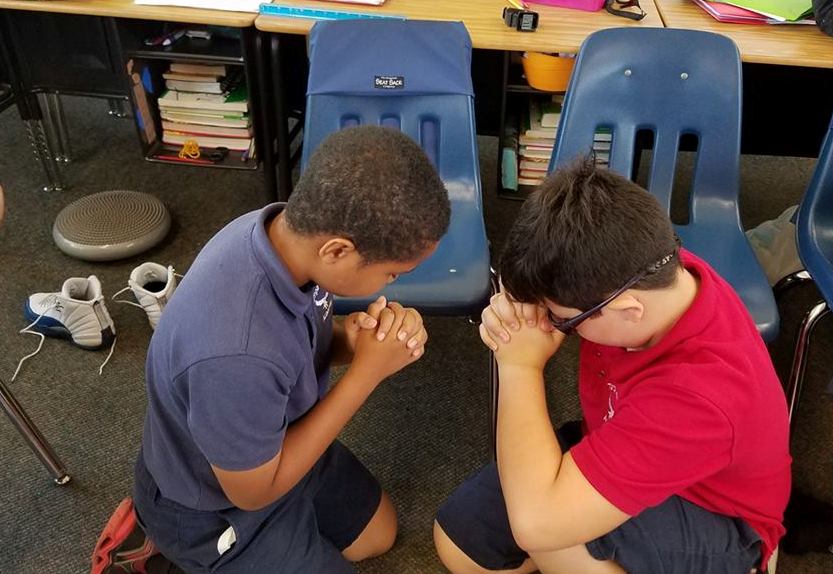
My parents told me that one Sabbath morning when I was two years old, the elder kept praying and praying in church, and I got tired of kneeling on my two-year-old little knees, so I finally stood up on the pew and started shouting, “Amen! Amen! Amen!”
Even at two years old I must have realized that public prayers are supposed to be brief. Well, let me tell you something, I have felt like doing that a few times since then.
In recent years I have been kneeling in congregational prayer for what felt like an eternity, and have thought to myself during the long drawn-out prayer, “Why doesn’t the elder praying just ask if he can preach sometime instead of turning his prayer into a sermon?”
Jesus mentored His disciples to pray longer prayers in private. In Gethsemane the night of His arrest, in Matthew 26:36-46, He even asked them to pray for Him. Jesus led by example, in long personal prayers, sometimes lasting all night (Luke 6:12). He also taught that prayers should be genuine and not rehearsed.
“When you pray, don’t babble on and on as people of other religions do. They think their prayers are answered merely by repeating their words again and again.” Matthew 6:7 NLT
When we pray we are to talk to God as to a friend. I heard of an elderly Bible worker, who when driving to Bible studies, would make sure nothing was in the passenger seat, because He pictured God sitting there, riding with Him to the Bible study as he prayed and drove. (I hope he kept his eyes open as he prayed and drove!)
Many times in my Bible studies I ask people to have the opening prayer, and many are shy and say they don’t know how. I never pressure anyone to do anything they don’t feel comfortable doing, but several have been surprised how easy it is when I tell them how. One man, who had already heard me pray many times, told me he wanted to pray but did not know what to say. I told him, “Just say “Dear heavenly Father, please send your Holy Spirit to be with us in this Bible study. In Jesus’ name, amen.” His eyes opened wide and he smiled when he realized how easy it was.
God wants us to talk to Him as a friend. He does not wanting us just babbling the same words over and over. He wants to have a real conversation with us. The psalmist talks about singing a new song (Psalm 40:3) and a song is like a prayer, since songs and prayers are stories of our experiences. Just as God enjoys new songs, He also enjoys new prayers.
While Jesus mentored His disciples to pray in private, He also mentored them to pray in public. He gave them a model prayer, not to be repeated over and over word for word, but as a model for us to form our own prayer. God loves creativity. Not every song has to be sung the same way and neither does every prayer have to be prayed the same way. While Jesus prayed long private prayers, notice how short His public prayer is.
Our Father in heaven, may your name be kept holy. Matthew 6:9 NLT
Jesus starts by addressing His Father and setting a tone for reverence and awe. Our prayers may also be prayed with confidence knowing our requests are reaching the throne of the universe.
May your Kingdom come soon. May your will be done on earth, as it is in heaven. Matthew 6:10 NLT
I have a friend who was taught long ago by his parents to always ask people how their day was, and listen to them, before going on about yourself and your day. You may think you had a tough day, but before you dive into your prayer, telling God all about your heartaches, have you ever asked God how His day went? God sees way more heartaches in one day than we will see in a lifetime. We want God’s will to be done and His kingdom to come soon, not just to end our suffering, but to end God’s suffering, as He suffers not just with you and me, but with everyone in the world who suffers.
When Daniel asked for God to reveal the king’s dream to him, Daniel did not save himself only, he saved the lives of all the king’s men (Daniel 2:24). In Mark 4:39 Jesus calms the storm at the disciples’ request, but the sea was not only calmed for their tiny boat. All the other boats on the water benefited from the calmness. Jesus does not pray for Himself alone to have food. He prays for everyone to have the food they need. There is no selfishness in Jesus’ prayer. There is no selfishness in any genuine prayer.
“and forgive us our sins, as we have forgiven those who sin against us.” Matthew 6:12 NLT
Jesus could have prayed, “Father forgive everyone else for their sins, but as you know, I have never sinned,” but again there is neither self nor pride in Jesus’ prayer.
And don’t let us yield to temptation, but rescue us from the evil one. For yours is the kingdom and the power and the glory forever. Amen. Matthew 6:13 NLT
Jesus overcame by asking for the Father’s help along with everyone else. We can ask for His help and overcome as well. Jesus ends His prayer the way He began, by exalting the Father, Who gives us the confidence we need in our personal lives and ministry when we worship and follow Him.
May His will be done, and may it begin with us.
You may study this week’s Sabbath School Lesson here.
Share: Dwell on God’s blessings in your life. If you were to share a new song, what would it be?
Read in Class: Pslam 15:1-5. Define the main idea of this passage.
Study: Who are the people worthy of worshiping in God’s presence?
Apply: ReadPsalm 24:3-6 and Pslam 101:1-3. How do our choices and how we spend our time help reveal to ourselves and others who or what it is that we worship and praise?
Share: Your friend tells you the things of this world keeps distracting her from Bible study and prayer. She asks how you keep from being distracted by the world? What do you tell your friend?
Read in Class: Psalm 96:1-13. Define the main idea of this passage.
Study: What manifold aspects of worship are mentioned in this psalm?
Share: Your friend asks how we can make sure our praise and worship does not just become another meaningless ritual? What do you tell your friend?
Read in Class: Psalm 40:6-8. Define the main idea of this passage.
Study: What is the best way to worship God?
Apply: According to John 4:23-24 what is the best way for us to worship God? How do you practice worshiping God in Spirit and in Truth?
Share: Can you think of someone who has not been to worship service in a while? Can you invite them this week to share the worship service with you next week?
Main Theme: The blessings of Zion overflow to the ends of the earth because the Lord’s person and grace exceed the boundaries of any holy place. Zion is the joy of all the earth affirming that the whole earth belongs to God.
Study: Who is blessed by being in God’s house and what exactly are those blessings?
Apply: What are some practical ways we can make being in God’s house here on earth a blessing?
Share: Your friend says ever since her divorce she does not feel accepted at church anynore. She prefers to just watch online sermons at home on the Sabbath. What do you tell your friend?
Read in Class: Psalm 87:1-7. Define the main idea of this passage.
Study: What is said about Zion that makes it such a wonderful place?
Apply: How does Zion’s readiness to adopt all people find its fulfillment in the church’s Great Commission to preach the gospel to every nation (Matthew 28:18-20)? How does this idea fit in with our call to preach the three angels’ messages?
Share: Your friend points out that Psalm 87:6 says that it will be noted who is born in Zion when being registered. Your friend says this means that God will take into consideration where each of us were born and raised when He judges us? Is that an accurate application? What do you tell your friend?
Read in Class: Psalm 46:1-11. Define the main idea of this passage.
Study: How is the world poetically depicted here? What is God’s response to violence and destruction in the world?
Apply: How do we learn to have peace and to trust God amid a world that, indeed, has so much turmoil?
Share: Your friend asks, “How has God been a very present help to you in times of trouble?” What do you tell your friend?
Read in Class: Psalm 125:1-5. Define the main idea of this passage?
Study: How are those who trust God portrayed here?
Apply: How are the righteous tempted and what can we learn from this description of temptation?
Share: Your friend says God is no longer with the Seventh-day Adventist church, because it has apostasized and become like Babylon. What do you tell your friend?
Now all these things happened to them as examples, and they were written for our admonition, upon whom the ends of the ages have come. 1 Corinthians 10:11 NKJV
Are there certain Bible characters you identify with more than others? Do you find yourself sympathizing with Joseph because you’ve been bullied by your brothers too? Have you ever felt your own boss was jealous of your success just like Saul was jealous of David? Have you ever felt alone like Elijah and cried out to God, “I am the only Christian left in my community?”
Isn’t it interesting how much we have in common with people who lived thousands of years ago on the other side of the planet? That’s because when we are studying history in the Bible or studying any kind of history, we are actually studying way more than just dates and famous events. We are studying human behavior. History keeps repeating itself on both sides of the globe because human nature is the same regardless of time or place.
One of my pastimes is trying to solve cold cases. Now I try (but not always) to avoid murder cases because I just don’t need to be filling my mind with that, but there are plenty of other cold cases and mysteries that are not so morbid. A few of the cases that intrigue me are from Australia. As I read about or watch the documentaries of these cold cases in Australia I am fascinated by how similar Australian daily life was 60 years ago with American life today. This reinforces my understanding that human nature is the same in every time and place. It also makes Australia very intriguing to me, and I hope to visit the country one day. There are no real historical places I want to visit, but I want to see the everyday places, churches and communities and meet the everyday people. I want to hear the stories of their lives and learn the lessons their experiences have taught them.
The Bible is God’s inspired Word with many examples for us to learn from, both by the stories of faith and the stories of disobedience. Just as we have much to learn from the characters in the Bible we have much to learn from one another. While our lives may be similar in some aspects, we all have different experiences that make our stories unique. While I have 30 years of experience as a Bible worker and pastor, a brand-new Bible worker may have encountered a situation I have never seen before. So even with my 30 years of experience I can still learn from a brand-new Bible worker.
We all need to study this Bible with humble hearts and learn all we can from the experiences of the Bible characters. We also need to be humble enough to learn all we can from each other. No matter how old or young we are, we all have had different experiences in different stages of our lives. I have friends in their teens who have already lost a parent, while I have friends who are retired and still have both their parents. When my retired friends finally lose a parent, there will be teenagers who have already experienced what they are just now experiencing. In their young lives they may have words of wisdom for my older friends.
Let’s be humble students of the Bible, and humble students of history so we can learn all we can to become the men and women of God that He wants us to be.
You may study this week’s Sabbath School lesson here.
Main Theme: Each generation of God’s people plays a small but significant part in the grand historical unfolding of God’s sovereign purposes in the great controversy.
Read in Class:Psalm 105. Define the main idea of this passage.
Study: What historical events and their lessons are highlighted in this psalm?
Apply: How should we, as Seventh-day Adventists, see ourselves in this line of people, from Abraham on? (See Galatians 3:29.) What lessons should we learn from this history?
Share: Your friend asks, why do we need to study the stories of the Old Testament when those laws don’t deal with us anymore. We are in the New Testament now? What do you tell your friend?
Read in Class: Psalm 106:1-23. Define the main idea of this passage.
Study: What historical events and their lessons are highlighted in this psalm?
Apply: Psalms 106:13 reads: “They soon forgot His works; they did not wait for His counsel” (NKJV). Why is that so easy for us to do in our own lives, as well?
Share: Your friend mentiones that Pslam 106:12 says they sang praises and Exodus 15 says Mirriam the prophetess led the people in singing and celebrating the Egytpians demise in the Red Sea. Why were they celebrating the death of the wicked? We aren’t supposed to celebrate anyone’s death are we? What do you tell your friend?
Read in Class:Psalm 80. Define the main idea of this passage.
Study: How are God’s people portrayed in this psalm, and what great hope do they plead for?
Apply: How have you experienced for yourself repentance as a return to God?
Share: Your friend says he has done too many bady things and it is too late in life for him to seek forgiveness and change his ways. What do you tell your friend?
Read in Class: Psalm 135. Define the main idea of this passage.
Study: What historical events are highlighted in the psalm? What lessons does the psalmist draw from them?
Apply: How can we make sure that we don’t have idols in our own lives? Why might idolatry be easier to do than we realize?
Share: Your friend says the reason history repeats itself is because human nature is the same regardless of place and time. Studying history is actually studying human nature. She asks what lessons history (In the Bible and even our history school books) has taught you, and how studying history has stopped you from repeating the mistakes of those we lived befroe us? What do you tell your friend?
Main Theme: In all the Psalms, through the psalmists’ laments, thanksgivings, praises, and cries for justice and deliverance, we can hear the echoes of Christ’s prayer for the salvation of the world.
Study: How was the Messiah treated by those He had come to save?
Apply: Jesus on the cross paid in Himself the penalty for every sin you have ever committed. How should the fact that He suffered on your behalf impact how you live now, that is, why you should find sin so abhorrent?
Share: Your friend asks you why Jesus had to suffer and die in order to save us? Why couldn’t God just forgive us without anyone having to die? What do you tell your friend?
Study: What is the Davidic covenant about? What seems to have endangered it?
Apply: Read Colossians 1:16; Colossians 1:20-22. What do these verses teach us about who Jesus was and what He has done for us? What promise can you take away from this for yourself?
Study: What do these passages tell us about Jesus being an eternal king and an eternal priest? How is Christ’s priesthood unique, and what great hope can we find in Christ’s heavenly priesthood?
Apply: Read Hebrews 7:20-28. What are some of the implications of Christ’s superior priesthood?
Share: Your friend asks, “How does Christ’s unique and superior priesthood according to the order of Melchizedek strengthen the certainty of salvation for God’s people?” What do you tell your friend?
For all our days have passed away in Your wrath; We finish our years like a sigh. The days of our lives are seventy years; And if by reason of strength they are eighty years, Yet their boast is only labor and sorrow; For it is soon cut off, and we fly away. Who knows the power of Your anger? For as the fear of You, so is Your wrath. So teach us to number our days, That we may gain a heart of wisdom. Psalm 90:9-12 NKJV
Inagine you are in the Twighlight Zone and you are having a conversation with your teenage self. What would you tell yourself? Here are just a few things I would tell the 15 year old version of me.
Be kind to your parents and family elders. You won’t understand their struggle until you are older and they are gone. Once you understand it will be too late to tell them you get it now, because they will be gone.
Be kind to your teachers who act like they are superior and so much smarter and better than you. They want you to think they have it all together and have arrived, but they are actually fighting insecurities and battles that go back to their own childhood. They cover it up well now so you can’t see it. But when you get older you will look back and see it. But it will be too late to do anything about it, because they will be gone by then.
Be kind to your peers. When you get older you will hear stories about how they were abused at home or at school in ways you can’t even imagine now. When you find out 20 or 30 years later, you will wish you had been kinder to them while you were growing up. You will tell yourself, If only I had known what they were going through I would have been more kind to them. Then you will realize you didn’t need to know what they were going through in order to be kind. You could just be kind.
Savor every bite of your grandmother’s cooking. You will never taste anything that good for the rest of your life.
Don’t stop writing in your journal. Your life may seem routine and mundane now but it will help you see things about yourself later that will help you grow.
Eat healthy food now, so when you get older, healthy food will be your comfort food.
Don’t worry about making stupid mistakes in front of people. The people who see your silly mistakes are just as human as you are. You don’t need to impress them.
Oh and just so you know, the kid you just made fun of in class will be at the airport at 2 am to pick you up, when you fly back home in about 35 years to see your mother right before she dies.
Also, you know you are pretty sure you know who made that generous anonynmus donation to your tuition? Well you’re wrong. Its actually someone you would never guess in a million years. So just be kind to everyone.
I know you were humiliated when the teacher caught you cheating on that test. Don’t worry, she does not think any less of you. The only way she knew you were cheating is because that’s how she cheated when she was in school and got caught. She knows you will never do it again, She’s an honest person now, and she knows you are too.
Learn how to manage your money wisely. Don’t let yourself feel inferior to those who may have more than you. Your self-worth has nothing to do with your bank account. Pay cash. If you can’t afford to pay cash for it, then you certainly can’t afford to pay interest on it as well. You can do without it until you can pay cash for it.
Find the beauty in people. By the time you see the beauty in a flashing star it’s already gone. People are flashing stars too. Don’t wait until they are gone before you realize how beautiful they are.
By the tine you realize how short life is, it will mostly be gone. Use your time wisely.
When you get older, there will be this thing called the Internet and Sabbath School Net. You’re going to love writing for Sabbath School Net, and you will meet a lot of wonderful people doing so!
Don’t let the excitement of youth cause you to forget your Creator…… Remember him before the door to life’s opportunities is closed and the sound of work fades. Now you rise at the first chirping of the birds, but then all their sounds will grow faint. Remember him before you become fearful of falling and worry about danger in the streets; before your hair turns white like an almond tree in bloom, and you drag along without energy like a dying grasshopper, and the caperberry no longer inspires sexual desire. Remember him before you near the grave, your everlasting home, when the mourners will weep at your funeral. Yes, remember your Creator now while you are young, before the silver cord of life snaps and the golden bowl is broken. Don’t wait until the water jar is smashed at the spring and the pulley is broken at the well. For then the dust will return to the earth, and the spirit will return to God who gave it……Fear God and obey his commands, for this is everyone’s duty. God will judge us for everything we do, including every secret thing, whether good or bad. Ecclesiastes 12:1-14 NLT
One last thing: Don’t worry about the future. Everything will turn out way better than you even dreamed possible!
So, if you talked to your younger self, what would you have to say? Please do tell.
You may study this week’s Sabbath School Lesson here.
Oh, give thanks to the Lord, for He is good! For His mercy endures forever. Psalm 136:1 NKJV
Psalm 136 goes on to describe all the many ways that God’s mercy has endured forever, but my favorite illustration of God’s incredible mercy comes from Joshua chapters 9 and 10.
The Gibeonites used deceit to trick Israel into letting them in on the covenant God had made with them. Even though Israel was not supposed to make a covenant with anyone living as close as the Gibeonites, they did. Later when the Gibeonites were under attack, they called upon Israel to save them, and even though the Gibeonites had used deceit to secure this covenant, God was so relentless in keeping His promise of love, that He caused the sun to stand still until the Gibeonites were all rescued! God fought for Israel as Israel fought for the mischievous Gibeonites. Let that soak in. The Gibeonites were in no way worthy of any of God’s blessings, but God was still so loving and faithful to His promise that He made the sun stand still until they were all rescued! Talk about a love that moves heaven and earth! And this powerful love was given to the most undeserving people! So, scientifically speaking, the greatest power in the universe is not gravity or the suctioning power of the black hole. God’s love overruled all those powers and made the earth stand still. Imagine what this love can do in your heart!
God’s powerful promises and love are also for you and me. In Hebrews 13:5 God promises to never leave us or forsake us, but the Amplified Bible is the only English version that even begins to grasp what God is actually promising.
for He has said, “I will never under any circumstances desert you nor give you up nor leave you without support, nor will I in any degree leave you helpless, nor will I forsake or let you down or relax My hold on you- assuredly not!” Hebrews 13:5 Amp version.
Friends, God does not love the Gibeonites any more than He loves you. He mercy did not stop with the Gibeonites.
For the Lord is good; His mercy is everlasting, And His truth endures to all generations. Psalm 100:4 NKJV
God’s mercy and truth endures throughout all generations. If God loved naughty Gibeonites enough to make the earth stand still for them, you know God’s love and mercy will do everything supernaturally possible to save you as well.
Friends, let’s not spurn or take God’s great mercy for granted.
how shall we escape if we neglect so great a salvation, which at the first began to be spoken by the Lord, and was confirmed to us by those who heard Him, God also bearing witness both with signs and wonders, with various miracles, and gifts of the Holy Spirit, according to His own will? Hebrews 2:3-4 NKJV
Let’s talk of God’s enduring mercy, Exercise our faith in His enduring mercy, and contemplate His enduring mercy until we are changed into His image or mercy and truth.
But we all, with unveiled face, beholding as in a mirror the glory of the Lord, are being transformed into the same image from glory to glory, just as by the Spirit of the Lord. 2 Corinthians 3:18 NKJV
You may study this week’s Sabbath School lesson here.
Study: What is the message here to us, even today?
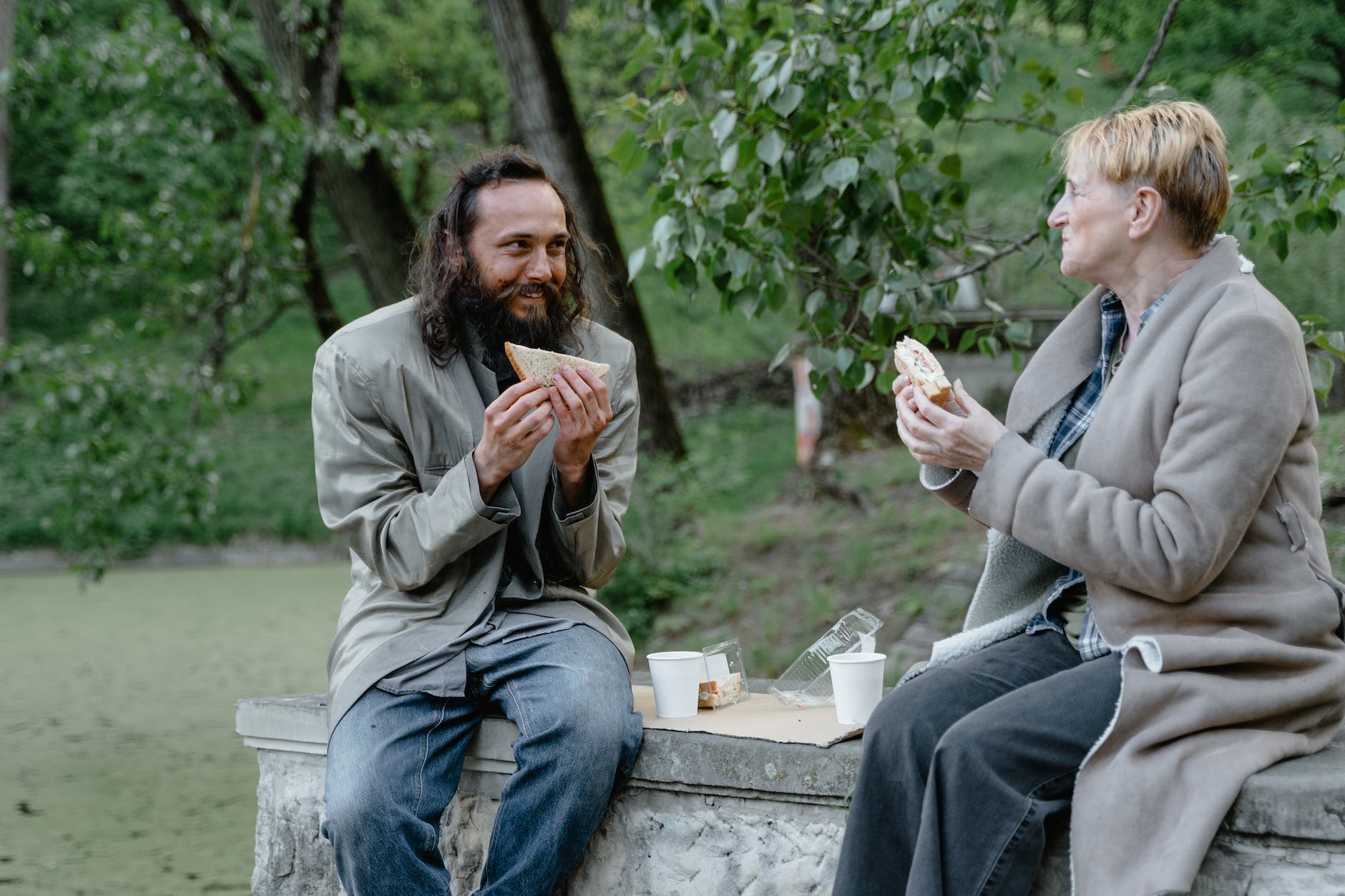
Apply: How much do we think of the “poor and needy” among us, and how much do we do for them?
Share: Your friend says people are poor because they are lazy and therefore we should not help them. What do you tell your friend?
Read in Class:Psalm 82:1-8. Define the main idea of this passage.
Study: What happens when the leaders pervert justice and oppress the people they are tasked to protect?
Apply: What kind of authority do you hold over others? How justly and fairly are you exercising that authority?
Share: Your friend asks, in our society who is ultimately responsible for social justice? The state or the church? Or God alone? What role do we play as individuals? What do you tell your friend?
Study: What sentiments do these psalms convey? Who is the agent of judgment in these psalms?
Apply: Who doesn’t, at times, have thoughts or fantasies about vengeance on those who have done them or their loved ones terrible wrong? How might these psalms help you put such feelings in proper perspective?
Share: Your friend says that the language in some of these Psalms seems pretty harsh? How could God inspire such harsh language? What do you tell your friend?
Study: Where does God’s judgment take place, and what are the implications of the answer for us? How does the sanctuary help us understand how God will deal with evil?
Apply: Read Romans 8:34. How does this verse show us that what Christ is doing in the heavenly sanctuary is good news for His people?
Share: Can you think of someone who is suffering from oppression or injustice? How could you help encourage them this week? How could you even help relieve their suffering at least to some extent?





 In Light of The Cross


