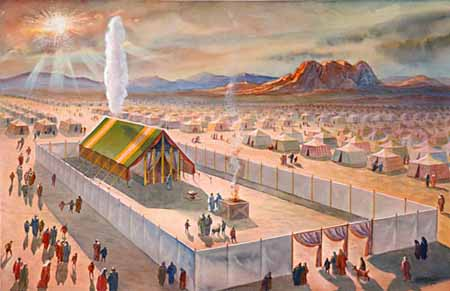
10: The Covenant and the Blueprint-Sabbath School Lesson Teaching Plan

Prepared by William Earnhardt for the Sabbath School class, 6 September 2025.

Main Theme:  We love God, and out of that love, we obey Him.

Read in Class: Exodus 24:3, 7-17. Ask the class to identify the main idea of this passage.

Study: What roles do the reading of the Word of God and the sprinkling of blood play in the ratification of the covenant between God and His people? What amazing experience were the children of Israel given here?

Apply: Dwell more on the story of these very privileged men, even sons of Aaron. What warning should this give to us, as Adventists, who, with the light we have been entrusted with, are indeed privileged?

Share: Your friend tells you she has promised God several times that she would quit an addiction, but keeps going back to it. After so many broken promises, she is ready to give up. What do you tell your friend? Hint: 2 Peter 1:4.

Read in Class: Ezekiel 36:24-30. Ask the class to identify the main idea of this passage.

Study: How does obedience take place in our lives?

Apply: If we have been promised the power to obey, why do we find it so easy to fall into sin anyway?

Share: Your friend asks you, “How do you build a resolve to follow God?” What do you tell your friend?

Read in Class: Exodus 25:1-9. Ask the class to identify the main idea of this passage.

Study: What crucial, practical, and theological truths are seen in these verses?

Apply: 1 Corinthians 6:19 tells us that our bodies are supposed to be a temple for the Holy Spirit to dwell in. How do you make sure that your body is an appropriate temple for the Holy Spirit to dwell in?

Share: Your friend tells you, in Great Controversy, page 488, Ellen White says, “The subject of the sanctuary and the investigative judgment should be clearly understood by the people of God.” Your friend asks you why it is so important, especially since Adventists are the only people who even teach the doctrine of an investigative judgment. What do you tell your friend?

Read in Class: Exodus 31:1-11. Ask the class to identify the main idea of this passage.

Study: What special assistance did God give so that all the tabernacle’s details and related services would be prepared and built in a beautiful and proper way?

Apply: The phrase “mercy seat” comes from one Hebrew word, whose root meaning is “to atone.” Why, then, would this “mercy seat” be set right over God’s law? What hope should we see in this fact?

Share: How does your understanding of the sanctuary help you share the Gospel, and what object lessons from the sanctuary do you like to use?

Near God’s Kingdom or in God’s Kingdom?

Photo by RDNE Stock project on Pexels.com

While last week’s Sabbath School lesson was titled ‘Living the Law,‘ this week’s Sabbath School Lesson’s memory verse contains a promise from the people to do everything the Lord commanded. 

So Moses came and told the people all the words of the LORD and all the judgments. And all the people answered with one voice and said, ‘All the words which the LORD has said we will do. Exodus 24:3 NKJV

The difference between knowing and doing is vital. Remember, in the story in Matthew 25:31-46, Jesus did not invite people into His kingdom based on what they knew, but instead on what they did. In Mark 12, a scribe makes a profound comment that drew commendation from Jesus. 

So the scribe said to Him, “Well said, Teacher. You have spoken the truth, for there is one God, and there is no other but He. And to love Him with all the heart, with all the understanding, with all the soul, and with all the strength, and to love one’s neighbor as oneself, is more than all the whole burnt offerings and sacrifices.” Now when Jesus saw that he answered wisely, He said to him, “You are not far from the kingdom of God.” Matthew 12:32-34 NKJV

While Jesus told the scribe he was not far from the kingdom of God He did not tell him he was already in the kingdom of God. Have you ever noticed or thought about that before? Why did his answer place the scribe near, but not in the kingdom of God? I think I found a clue in Jesus’ conversation with the lawyer in Luke 10.

And behold, a certain lawyer stood up and tested Him, saying, “Teacher, what shall I do to inherit eternal life?” He said to him, “What is written in the law? What is your reading of it?” So he answered and said, “ ‘You shall love the Lord your God with all your heart, with all your soul, with all your strength, and with all your mind,’ and ‘your neighbor as yourself.’ ”  And He said to him, “You have answered rightly; do this and you will live.” Luke 10:25-28 NKJV

The clue I found is, Jesus said do this and you live. Jesus did not tell the lawyer, say this and you will live, or know this and you will live, but do this and you will live. I realize I am not telling you anything new as far as the fact that we all know we have to walk the walk and not just talk the talk. However, the reality of what we already know should really sober us up, when we realize that even after giving a profound answer, the scribe in Mark 12 was near but not yet quite in the kingdowm of God. The answer to the lawyer in Luke 10 was. ” do this and you will live.” The difference between knowing and doing is just as big as the difference between being near God’s kingdom and being in God’s kingdom. 

And let us not grow weary while doing good, for in due season we shall reap if we do not lose heart. Therefore, as we have opportunity, let us do good to all, especially to those who are of the household of faith. Galatians 6:9-10

You may study this week’s Sabbath School Lesson here.