Month / April 2020
Be the Perfume
What one Right did Jesus Refuse to Give up While on the Cross?
Four Quick and Logical Reasons to Believe the Bible

I am writing today from the beautiful Tampa Bay area.
A while back I was talking with one of my former students from the Adventist school where I taught and gave Bible studies. She is now attending a public college in a different city, and she told me how sad she is that at least half of her school population is self-proclaimed atheist. She said she is often asked, “How do we know the Bible is true?” She needed some help answering that question. Here is what I shared:
While it takes faith to believe history books as well as the Bible, there are some ways to know if it is valid to put faith in any book. For example, historians say they trust books that are fair-minded. They are skeptical when a history book portrays a rose-colored view of the author’s own country. By contrast, the Bible writers actually share some embarrassing things about themselves that they probably would not share if they were just making things up. For example, Paul speaks of being “the chief of sinners.”First of all we all have to believe in something. Some people believe in evolution only because they read about it in a science book written by humans and then turn around and say they don’t believe in the Bible because it was written by humans. Where would we be if we did not believe anything that humans wrote? For example, I believe Sir Edmund Barton was the first prime minister of Australia, even though he died well before my time and lived on the other side of the planet. I never met him or even met anyone who did meet him. How do I know he really even existed? I believe it simply because a human wrote about it in a book. I have to put my faith in something.
Another test of accuracy is to ask whether the claims in a book are compatible with other history books. For example, not just one, but many books tell me Sir Edmund Barton was the first prime minister of Australia. Likewise not just one book of the gospel tells me Jesus died for us, but Matthew, Mark Luke and John all tell the same story.
Archeology also helps to validate history books, and it does the same for the Bible. It is interesting that many civilizations, even in communist countries, have a story about a great ancient flood, just like the great flood in Genesis. Here are some quick logical reasons to believe the Bible, based on prophecy:
- Here is one we don’t hear about much, but Revelation 9, written some 1,700 years before, gives us the exact day and year of the voluntary surrender of the Ottoman empire. This prophecy was fulfilled, August 11, 1840, and many Bible skeptics became believers, when this prophecy was fulfilled to the exact day! See Daniel and Revelation by Uriah Smith, Pages 493-518.
- Over 2600 years of earth’s history was accurately foretold by the image in Daniel 2. This includes Napoleon’s and Hitler’s defeats, as the prophecy says there will never be another one-world empire.
- Jesus perfectly fulfills all the Old Testament prophecies regarding the birth, baptism, death and resurrection of the Messiah.
- In 1 Corinthians 7 Paul is talking about the advantages of being married and the advantages of being single. In 1 Corinthians 7:12 Paul says that he is now going to share his own thoughts even though he was not directly commanded to from the Lord.If the Bible was just all made up by man’s own imagination as some people claim, why would Paul openly clarify what came directly from God and what came from him alone? If Paul was making everything up he would have claimed that even his own opinions were from God, but he did not do that. Paul openly recognized a distinct difference between God’s revelations and his own thoughts.
Of course there are many more reasons why I believe, but these are four quick examples why it is logical and reasonable to believe the Bible. While we have all had emotional experiences with God’s Word, God does not want us to put faith in our sight or emotions. This is why in Luke 24, Jesus traced Bible prophecy about Himself for the men on the road to Emmaus, instead of having them go by sight or feeling.
What are some logical and reasonable examples of why you put faith in the Bible?
You may study this week’s Sabbath School lesson here.
Is Sunday Worship the Biblical Memorial to the Resurrection?
A Deeper Look at the Cross of Christ
For further study click here.
The Supreme Sacrifice
What did Jesus experience beyond physical suffering on the cross?
For further study on this topic click here.
Its not Happening to you. Its Happening in Front of you-Podcast.

What’s the Difference Between Reading the Bible and Studying the Bible?
Trust no one!
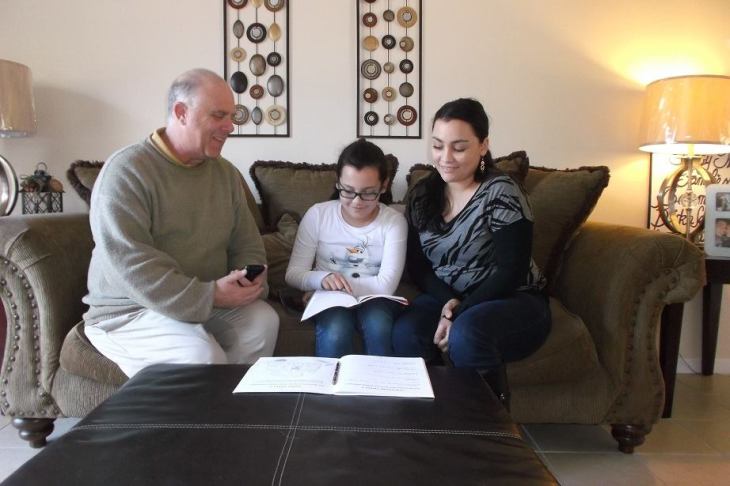
I am writing from the beautiful Tampa Bay area.
You may listen to the podcast version here.
Were you ever told that we only use 10% of our brain? I remember being told growing up that we only use 10% of our brain, but Einstein used 33% of his brain. I am not sure if this information was passed on to us as a way to encourage us to think harder in school, or as an insinuation that our minds had mysterious capabilities such as ESP, if only we could tap into the 90% of our brain we are not using. I have no doubt that the people who told me that really believed it. After all I am sure they heard it from a trusted friend who heard it from a trusted friend who heard it from a trusted friend. I know I shared that information with some of my students because I was sure my sources were reliable. Well they may have been mostly reliable, but not 100% reliable. You see, we do use our entire brain. Brain scans and other tests reveal that we use our entire brain. The idea that we don’t use our entire brain came from a study where mice could still do certain functions after having small amounts of brain matter removed. You can read about it here. It turns out that the idea that we only use 10% of our brains is a total myth.Now that I think about it, I would I have figured out as a kid that we use our entire brain if I had been using my brain. Pun intended. They myth that we only use 10% of our brains has endured for ages because we are prone to believe what we are told by trusted people instead of using our own minds to figure things out.
I am reminded of a time many years ago when I lived in Tulsa, Oklahoma. I had a friend, Anne, who was a flight instructor at the Spartan Flight School in Tulsa. One Saturday night, she and I decided to rent a small Cessna 152 and take an aerial tour of the city. While they were fueling the plane, Anne was checking all the gauges to make sure all systems were good to go. When she got to the fuel gauge she said, “Fuel gauge reads full.”
I joked that since we just watched them fueling the plane, there was no need to check the fuel gauge. Her reply has always stuck with me. “Trust no one,” she said. She was right. As the pilot of our little aircraft, it was her personal responsibility to check all the gauges, including the fuel gauge. It was not disrespectful for her to check to make sure the “pit crew” had done their job. It was her responsibility to check things out for herself.
We all have that responsibility as Christians. Paul was not offended at all that the Bereans checked out his preaching to see if it went along with the Scriptures. “Now the Berean Jews were of more noble character than those in Thessalonica, for they received the message with great eagerness and examined the Scriptures every day to see if what Paul said was true.” Acts 17:11 NIV Everyone knew Paul was sincere, but we are all human, right? We can make sincere mistakes.
As Seventh-day Adventists, we tell our Protestant and Catholic friends that they need to read the Bible for themselves, and not take their preacher’s word for it. But how many of us turn around and think, My pastor is an Adventist so I know he is preaching truth?
Friends, if the people searched the Scriptures to see if what Paul said was so, how much more should we be searching the Scriptures to see if what our pastor says is so. We are all human. We make mistakes. Making a sincere mistake does not make you a heretic. It does not mean you are a part of a global sinister conspiracy plot. It just means we are all human. We can’t rely on man alone. Like my friend Anne, who checked out things for herself, we must, along with the Bereans, search the Scriptures for ourselves, so that we can each know individually what is true.
You may study this week’s Sabbath School lesson here.
 In Light of The Cross