Read in Class:Mark 5:21-43. Define the main idea of this passage.
Study: What characteristics particularly stand out about Jairus? What interrupts the progress toward Jairus’s house?
Apply: The disciples asked Jesus how He knew someone touched him, while so many people were incidentally running into Him in the crowd. What is the difference between brushing up against Jesus and reaching out to touch Him? How can we apply incidentally running into Jesus or actually touching Him in our prayer and devotional life?
Share: Your friend asks why Jesus said the girl was not dead but sleeping, when it says He raised her from the dead? What do you tell your friend?
Read in Class: Mark 6:1-6. Discuss the main idea of this passage.
Study: Why did Jesus’ hometown people reject Him?
Apply: Have you ever experienced rejection by your own friends, family or even church? Did this expereince draw you closer to Jesus? How did it help you mature in your faith?
Share: Your friend asks why Jesus’ own family and townfolks rejected Him? What do you tell your friend?
Read in Class:Mark 6:34-52. Define the main idea of this passage.
Study: What was the problem Jesus and His disciples confronted, and how was it solved?
Apply: What should this story tell us about why a correct understanding of prophecy is important? If a false understanding of Christ’s first coming led to disaster for some, how much more so could a false understanding do the same for some in regard to His second?
Share: Can you share a time when you thought you may not have enough and God still worked a miracle to provide for you?
Something always bothered me about the story about Jesus calming the storm, and why Jesus asked His disciples where their faith was? I thought they were showing faith when they asked Him to calm the storm. Then one day it finally dawned on me. Let’s look.
As evening came, Jesus said to his disciples, “Let’s cross to the other side of the lake.” So, they took Jesus in the boat and started out, leaving the crowds behind (although other boats followed). But soon a fierce storm came up. High waves were breaking into the boat, and it began to fill with water. Jesus was sleeping at the back of the boat with his head on a cushion. The disciples woke him up, shouting, “Teacher, don’t you care that we’re going to drown?” When Jesus woke up, he rebuked the wind and said to the waves, “Silence! Be still!” Suddenly the wind stopped, and there was a great calm. 40 Then he asked them, “Why are you afraid? Do you still have no faith?” Mark 4:35-40 NLT
First it is important to notice that it was Jesus’ idea to cross the lake. Many times, we are following Jesus’ leading, but when things start to go wrong and we run into problems we start doubting our calling. I remember when I was living in Texas and got the call to be a Bible Worker in Florida. Everything seemed to be working out perfectly so I felt it was God’s will to go. While I was in the middle of what I considered to be a smooth transition, my aunt said something that surprised me. She said, “You are going to run into problems in Florida. But God will still be with you.” Her words proved true. Without going into detail not everything went as smooth at first as I thought it would. But God was with me and got me through those storms, until finally I was sailing on peaceful seas. When Jesus calls us, He is aware of the storms ahead. Sometimes He calls us into the storm. The question we need to ask ourselves, is not “Will everything work out smoothly?” The only question we need to ask ourselves is, “Did Jesus call me?”
This leads me to why Jesus asked the disciples about their faith after He calmed the storm. I always thought He was questioning if He could calm the storm but that clearly was not the case. They knew He could calm the storm. That is why they were calling on Him. I believe what Jesus was really asking was, “Don’t you have any faith? Why did you need me to calm this storm? Why couldn’t you just ride this storm out with me?”
If Joseph had never been sold and betrayed by his family, his dream of being a ruler never would have come true. If Naomi’s husband and sons had never died, she never would have gone back to her homeland with Ruth, where Ruth became an important role in the lineage of the Savior. If the early church had never been persecuted it never would have had to flee to spread the Gospel in foreign lands. It is often the storms of life that get us to where we need to be. Sailboats move by the wind, and if there is no wind there is no progress. Instead of asking Jesus to calm every storm our way, we need to have the faith to ride out the storm with Jesus and have enough faith to let Jesus take us wherever the storm needs to take us.
A while back a friend shared with me an experience where his family abandoned him as a very small child by the side of the road. It was heartbreaking. As an adult my friend asked Jesus where He was when his family abandoned him at such an early age. He told me God opened his eyes, and immediately he relived the scene where He was abandoned, except this time He saw Jesus walking beside him on the side of the road, smiling at him with love. Not too long after that I went through a stressful situation, nothing like being abandoned by family or friends, but to me a storm, nonetheless. As I prayed about my “storm” one morning, I remembered my friend’s testimony. This may sound silly, but I just spent a few moments imagining myself in the boat with Jesus in the middle of the storm. I imagined Jesus and me just sitting together in the bottom of the boat smiling at each other, while the boat was tossed about on the waves and the disciples were all freaking out. I imagined Jesus smiling and winking at me assuring me everything was going to be okay, and there was no reason to freak out with the disciples. This gave me peace in the middle of the storm and of course everything worked out fine in the end.
Recently I was on an airplane that hit some turbulence. I and many of the other passengers have experienced turbulence on a plane before so it did not alarm any of us. We just kept listening to our music and reading our books. I reminded myself I should stay just as calm when life hits turbulence. I should remain calm, and just ride out the storm with Jesus. Having enough faith to believe Jesus can calm the storm is one thing. Having enough faith to not ask Jesus to calm the storm, and just ride it out with Him is even greater.
You may study this week’s Sabbath School lesson here.
Care for the flock that God has entrusted to you. Watch over it willingly, not grudgingly—not for what you will get out of it, but because you are eager to serve God. Don’t lord it over the people assigned to your care, but lead them by your own good example. And when the Great Shepherd appears, you will receive a crown of never-ending glory and honor. 1 Peter 5:2-4 NLT
A Google search will confirm for you that in the United States respect for pastors is at an all time low. Part of this is because respect for the Bible itself is at an all time low. However, we have all at one time or another had a pastor who abused his position and influence and abused the flock he was entrusted to care for. This is very unfortunate for the entire Christian community. Speaking as someone who has spent plenty of time in the church as a lay member, and plenty of time as a full time Bible worker and now pastor, I have seen the damage this does to both sides. Lay members have been betrayed at the hands of their “protector.” That is damaging enough, but the damage continues when a young new pastor comes in and is disrespected with abusive behavior by those who were abused by a previous pastor now taking it out on the new pastor, who only came to love and to serve.
Again, having spent plenty of time on both sides, I know lay members who have been mistreated and outright abused by a pastor. This breaks my heart as a sacred trust has been betrayed. I also meet with and pray with younger pastors who are coming into the ranks and are being treated disrespectfully and yes, even abused by their lay members, because of what a pastor in their recent or distant past did to them. This breaks my heart also, as new pastors are being shunned and disrespected while only wanting to love and serve their church family. And something very Biblical and important for us to remember is, just as an abusive father does not diminish the respect that belongs to a loving father, just as an abusive teacher does not diminish the respect that belongs to a loving teacher, so an abusive pastor does not diminish the respect that is due to a loving pastor. Don’t throw away the eleven disciples just because there was a Judas.
Moses was the meekest of men, but He still was called by God to lead. And God dealt with those who disrespected His servant/leader. I rub shoulders with many new young pastors who want to serve God and lead their flock humbly as Moses did, but before they can even begin an older lay member, who had a bitter experience with another pastor in the distant past never gives the new pastor a chance. The lay member tells the new pastor “This is my turf.” Now the lay member who was mistreated by a previous pastor’s abuse is now carrying the same abuse and mistreatment on to the new pastor. Now the abused lay member is now abusing the new pastor. Fact is that the church is God’s turf. And God has led both the lay member and pastor to serve together on God’s turf.
So how do we bring this cycle of mistreatment and disrespect to an end? How do we restore the respect that is due to both the pastor and the lay member? First, I believe we all need to,
Make allowance for each other’s faults, and forgive anyone who offends you. Remember, the Lord forgave you, so you must forgive others. Colossians 3:13 NLT
Even when being mistreated we sometimes need to relax. Sometimes we accuse a pastor or even lay member of abusing their position or stepping outside their bounds when in reality they were only trying to go the extra mile to help. Keep in mind also we have not all had the best role models when it comes to those in “authority.” A while back, I was sharing with a couple of teachers something one of my teachers did in a classroom way back in the day, that would be considered outright abuse today, but back in my school days it was never even questioned. While leaders should be able to follow the example of their leaders, the fact is it may not always be best. Sometimes we follow the example of others, thinking it’s best when it is not. The fact that we have not always been given the best examples, and the fact that we all make well meaning mistakes should encourage us all to follow the counsel in Colossians 3:13.
Another way to make sure we all serve and lead well together is to have open and frank conversations. I have discovered it is very important to have expectation meetings and follow up on those meetings to see if expectations are being met. A new pastor needs to sit down with the board members and department leaders and discuss openly and candidly what each one expects from the other. Also discuss how each one sees his or her own role. In some churches the pastor picks the hymns, in other churches the organist does. The pastor and organist need to sit down and discuss who picks the hymns in this church. And if the organist picks the hymns she should not get bent out of shape if the pastor decides to change the hymn at the last second, though it would be wise for him to know first if she even knows how to play it. And if the pastor chooses the hymns, he should not get all bent out of shape if the organist says she had to change it because she can’t play it or maybe she already knows the congregation can’t sing it.
That’s just one example but you get the picture. We need to have open and frank conversations about our roles and expectations. At the same time, we must be flexible and forgiving. But being flexible and forgiving does not mean avoiding conversations that need to take place. The pastor and congregation can have great respect for one another when Phillipians 2:3 is carried out by all involved.
Don’t be selfish; don’t try to impress others. Be humble, thinking of others as better than yourselves. Phillipians 2:3 NLT
In a perfect church the pastor respects the congregation, and the congregation respects the pastor. If either one stops respecting the other the church will become very unbalanced and unhealthy. By being humble and forgiving, by having candid and open conversations about expectations, and not avoiding conversations that need to take place, we can restore the respect and cooperation that is needed between pastors and their flock.
You may study this week’s Sabbath School lesson here.
Main Theme: Jesus used parables to help His listeners relate to the Gospel.
Read in Class: Mark 4:1-9. Discuss the main idea of this passage.
Study: What are the different soils like, and what happens to the seed that falls on them?
Apply: What are some other spiritual lessons that we can learn from nature?
Share: Your friend asks, you if you have ever seen any fruit from the spiritual seeds you have planted. What testimonies can you share with your friend?
Read in Class: Mark 4:10-20. Discuss the main idea of this passage.
Study: Why did Jesus teach in parables, and how did Jesus interpret the parable of the sower?
Apply: Consider your own life. Are any characteristics of the path, the rocky ground, or weedy ground creeping into your experience? This could happen more subtly than you realize. What choice can you make to change, if need be?
Share: Your friend asks why Jesus did not want those on the outside to understand the parables? What do you tell your friend? Hint: 1 Corinthians 2:14.
Read in Class: Mark 4:21-25. What are the main ideas of these passages?
Study: What is Jesus’ special emphasis in the parable of the lamp? What lesson is Jesus conveying with the parable of the measuring basket?
Apply: How can we better understand the principle that with what measure you use, it will be measured to you? Think about it in all your dealings with others.
Share: Your friend asks why the one has little has even that taken away from them? What do you tell your friend?
Read in Class: Mark 4:26-32. What are the main ideas of these passages?
Study: What is the primary focus of each parable? What is the important stress of the parable of the mustard seed?
Apply: “ ‘And this gospel of the kingdom will be preached in all the world as a witness to all the nations, and then the end will come’ ” (Matthew 24:14). Consider what the “church” was like when Jesus made that prediction. Why is this such a remarkable and faith-affirming prediction?
Share: Your friend asks you how you are currently sowing the Gospel seeds. What do you tell your friend?
Amplified controversies can silence the Gospel, or amplifying the Gospel can silence controversies.
The church in Jesus’ day was praying. They prayed so much Jesus had to warn people not to be showing off how much they were praying and to pray in their closets. The church in Jesus’ day was debating Scripture. Many lawyers and Pharisees would approach Jesus with some Scripture they wanted to argue over or debate. They all quoted Scripture to each other. Yet, even though they knew the Scriptures and prayed a lot, they still crucified Jesus.
Why didn’t praying and quoting Scripture keep them from turning around and crucifying the Son of God? Well, here is one thing they weren’t doing. They weren’t reaching out to serve others. They weren’t sharing the Gospel with the Samaritans and the rest of the world. They would rather be stirring up controversy in the church instead of sharing the Gospel with the world. That kind of a mindset led them to crucify Jesus. After all they had to get rid of Jesus so the Romans would not take away their church where they could have power struggles and controversies. We read of the exact opposite happening during the Protestant reformation.
In Wesley’s time, as in all ages of the church’s history, men of different gifts performed their appointed work. They did not harmonize upon every point of doctrine, but all were moved by the Spirit of God, and united in the absorbing aim to win souls to Christ. The differences between Whitefield and the Wesleys threatened at one time to create alienation; but as they learned meekness in the school of Christ, mutual forbearance and charity reconciled them. They had no time to dispute, while error and iniquity were teeming everywhere, and sinners were going down to ruin. –Ellen White, Great Controversy, Pages 257-258
While the reformers did not agree on every point, they amplified the Gospel and silenced controversies. Please notice that even though they did not all agree on every point they were still all led by the Holy Spirit. They avoided needless controversy so they could reach the lost, instead of avoiding the lost to engage in needless controversy.
Of course I realize not all controversy is needless, There are issues and controversies that must be faced. At the same time we have to choose our battles well. We don’t have to die on every hill. Daniel was a man of strict integrity who still got promoted in Babylon, of all places. I imagine he chose his battles well. His diet was very important. His prayer life was so important he would not back down even from the lion’s den. At the same time I can’t see Daniel getting promoted in Babylon by making an issue out of every little thing. I see him following the counsel Paul gave us, to live as peacefully with people as possible, instead of stirring up controversy. For Daniel to be such a man of integrity and still get promoted in Babylon, he must have learned some diplomacy. Again I don’t see him doing that by making mountains out of molehills and fighting every battle that could possibly be fought, and dying on every hill there was to die on.
Let’s consider the story of the paralytic. Let’s pay attention to the different participants in this story and what each person or group were doing. Which ones were engaged in the Gospel and which ones were engaged in controversy?
And again He entered Capernaum after some days, and it was heard that He was in the house. ]Immediately many gathered together, so that there was no longer room to receive them, not even near the door. And He preached the word to them. Then they came to Him, bringing a paralytic who was carried by four men. And when they could not come near Him because of the crowd, they uncovered the roof where He was. So when they had broken through, they let down the bed on which the paralytic was lying. When Jesus saw their faith, He said to the paralytic, “Son, your sins are forgiven you.” And some of the scribes were sitting there and reasoning in their hearts, “Why does this Man speak blasphemies like this? Who can forgive sins but God alone?” But immediately, when Jesus perceived in His spirit that they reasoned thus within themselves, He said to them, “Why do you reason about these things in your hearts? Which is easier, to say to the paralytic, ‘Your sins are forgiven you,’ or to say, ‘Arise, take up your bed and walk’? But that you may know that the Son of Man has power on earth to forgive sins”—He said to the paralytic, “I say to you, arise, take up your bed, and go to your house.” Immediately he arose, took up the bed, and went out in the presence of them all, so that all were amazed and glorified God, saying, “We never saw anything like this!” Mark 2:1-12 NKJV
Jesus was preaching the Gospel. Some were carrying a man to Jesus so he could benefit from the gospel. Notice, though, it’s the people seated in the house that are causing controversy, (not all, I am sure) by questioning Jesus’ right to forgive. Jesus was too busy for controversy because He was too busy preaching the Gospel. As a matter of fact, His only response to the controversy was to amplify the Gospel by healing the man as well as forgiving him. The people bringing the paralytic to Jesus were so busy helping the man find Jesus that they had no time to engage in controversy. The only people in this story who had time for controversy were the people sitting in church waiting for something to be said that could turn into a controversy.
Maybe there would be less time for controversy if we were all like the Wesleyans engaged in helping sinners find the Savior. Maybe there would be less time for controversy if instead of sitting in church critiquing the new elder’s sermon and his wife’s dress, we were busy creating an opening in the church to let people in who are hungering and thirsting for forgiveness and the Gospel.
Maybe you’re right. Maybe the red carpet in the church does need to be replaced with an earth tone carpet instead. But while you were pleading your case in the board meeting, a young single mother could have used an encouraging phone call reminding her she is not alone and God loves her. You can amplify the need for earth tone carpet or you can amplify the Gospel.
Maybe you’re right. Maybe the church should have reimbursed you for traveling all the way to see a church member in the larger hospital all the way in the city. You also had to pay for parking. The church did not reimburse you for that either, even though they paid for the youth group to go into the city to buy ice cream. It’s not fair. But you got to share Jesus with the sick church member and even prayed with the person in the next bed. Leave that with Jesus. After all, you did not do it for the church. You did it for Jesus. Let Him pay you. He saw what you did. He will provide for you. You can amplify your rights or you can amplify the Gospel.
Maybe you’re right. Maybe your understanding of the 144,ooo is right ,and the Sabbath school teacher is wrong. But while you were fighting your case in Sabbath School, a teenage boy was loitering in the church hallway, not because he didn’t want to go to his Sabbath School class, but because he’s not sure he is worthy. You see, he found his uncle’s porn stash and got all tangled up in that again. He wasn’t looking for it. It was just there. Now he’s wondering why God allowed that to happen? He is wondering if God can forgive him – again. He is nowhere close to being able to debate and split hairs about Christian perfection. He just wants to know if God still loves him and can free him again from this one addiction. Amplify the Gospel.
You may study this week’s Sabbath School lesson here.
Main Theme: This week we will look at how Jesus handled some controversial situations and what we can learn from Him.
Read in Class: Mark 2:1-12. Discuss the main ideas in this passage.
Study: What was the paralytic looking for when he was brought to Jesus, and what did he receive?
Apply: In the story in Mark 2:1-12, Jesus is preaching the Gospel. A group of frirends are bringing another friend to Jesus to hear the Gospel. Another group of people are critisizing Jesus and questioning Jesus’ words and methods. Which group to you most closely identify with and why? Which group was doing waht they were supposed to be doing?
Share: Your friend asks how Micah 6:6-8 explains what was happening between Jesus and the leaders. What do you tell your friend?
Read in Class: Mark 2:13-22. Ask the class to summarize this passage.
Study: Who was Levi, the son of Alphaeus, and why would there be an objection to him becoming a disciple of Jesus?
Apply: Who are those who today might be looked upon as the tax collectors were in Jesus’ day? How do we adjust our thinking regarding them?
Share: Your friend asks you if we should be fasting to today, and if so why and how? What do you tell your friend?
Read in Class:Mark 2:23-28. Discuss the main idea of this passage.
Study: How does Jesus counter the charge brought by the Pharisees?
Apply: In the NLT Mark 2:24 says the pharisees accused the disciples of “harvesting grain on the Sabbath.” Really? All they were doing was plucking a few heads of grain to eat right then. Would you really consider that “harvesting?” Were the pharisees going a little overboard on this accusation? What are some things we sometimes go overbaord on or may be a little too picky about?
Share: Your friend asks you what Mark 3:1-6 teaches about Sabbath keeping. What do you tell your friend?
Read in Class:Mark 3:20-35. Discuss the main idea of this passage.
Study: What connection do you see between the two stories intertwined in this passage?
Apply: Based on Scripture how would you explain what the unpardonable sin is?
Share: Your friend says she is afraid she has commited the unpardonable sin. What do you tell your friend?
Today we had a wonderful celebration at the Homosassa Seventh-day adventist Church, as we had two baptisms and one profession of faith. Christina (on the right) was especailly celebrating as her sister Adelina (left), who left the church over 40 years ago came back into the fold today on profession of faith. Adelina was so glad to be back home she thanked her sister for praying for her for all those 40 years. Adelina was so glad to be back in God’s church, where she says she belonged the whole time.
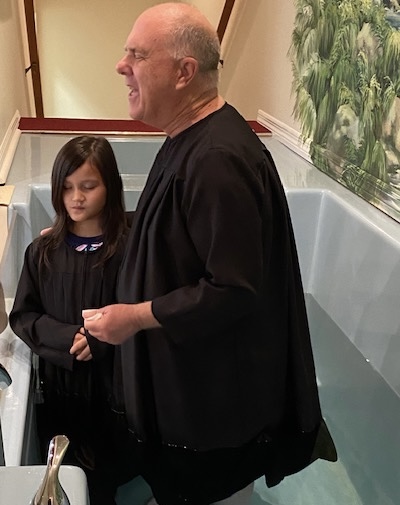
Angelita and her brother Apollos have been studying the Making Jesus my Best Friend baptism workbook with their parents. Parents are a child’s first pastor, and Angelita and Apollos’ parents, Kayle and Regine have done a very good job of leading their children to fall in love with Jesus, both by teaching and example. I also studied with Angelita and Apollos and was very moved by their dedication. Angelita even asked me how she can know that she really means it in her heart when she asks Jesus for forgiveness. Angelita and her brother both want to be real with God and have honest hearts.
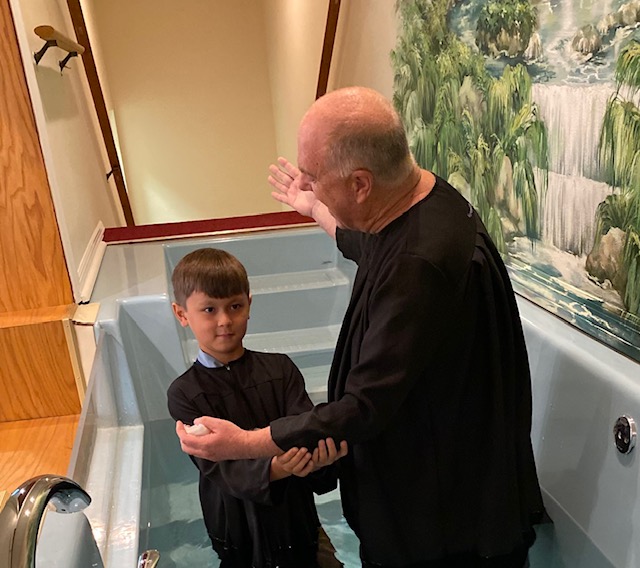
Apollos is the same age I was when I was baptized! Apollos loves building things and has the mind of an engineer and builder. You should see some of his legos creations they are quite complex. Apollos will be building up the kingdom of God.
Now, therefore, you are no longer strangers and foreigners, but fellow citizens with the saints and members of the household of God, having been built on the foundation of the apostles and prophets, Jesus Christ Himself being the chief cornerstone,in whom the whole building, being fitted together, grows into a holy temple in the Lord, in whom you also are being built together for a dwelling place of God in the Spirit. Ephesians 2:19-22 NKJV
Adelina says the Seventh-day Adventist Church is where she has belonged all her life. Do you want to belong to a church that loves Jesus and follows His teachings? I would love to talk to you about this anytime. You can reach me at william.earnhardt@floridaconference.com
I must admit, while I hated Covid and everything about it, there were some things I rather enjoyed about the temporary shutdown.
I enjoyed giving Bible studies at home on the phone in my pajamas. I enjoyed Sabbath mornings, relaxing with my Bible and having a nice big breakfast before meeting everyone on Zoom for church. I enjoyed the fact that while we did church on Zoom, old friends from around the world could join us. I even got to speak at my old church in Texas on Zoom, and a retired pastor in Texas who used to be at one of my current churches in Florida, got to be our guest speaker on Zoom.
I even learned I knew how to cook. However, when the restaurants opened back up, I seemed to have forgotten I knew how to cook. I enjoyed all the miles I saved on my car, working from home. Being an introvert, (My friends find this hard to believe but yes, I am an introvert.) I enjoyed having more time to read and write and just think and ponder life. I actually would not mind another shutdown every now and then, just without the Covid!
But as introverted as I may be, I missed people! A single friend who lives alone like I do, mentioned to me on the phone how long it had been since she had been hugged. She said at least people stuck at home with their families can touch and hug each other. For her, though, there was no human touch. For me neither. Human touch is important. As a matter of fact, I believe that is why Satan has so masterfully made inappropriate touching such a problem today. Now people are scared to touch someone even appropriately, and by this Satan has a double win. Bad people are touching others inappropriately and good people aren’t even touching others appropriately, for fear their motives will be misconstrued. But appropriate touch is still so vitally important. Take the story of Jesus healing the leper for example.
Now a leper came to Him, imploring Him, kneeling down to Him and saying to Him, “If You are willing, You can make me clean.” Then Jesus, moved with compassion, stretched out His hand and touched him, and said to him, “I am willing; be cleansed.” As soon as He had spoken, immediately the leprosy left him, and he was cleansed. Mark 1:40-42 NKJV
We all know in the Bible leprosy can be symbolic of sin. I love the fact that while some of our prayers may seem to have a delay in being answered not so the prayer to be made clean. As soon as the request was made for being cleansed, the leper was immediately cleansed. This tells me that when I ask for forgiveness and the moral cleansing referred to in 1 John 1:9 that there is no delay. I am immediately forgiven and cleansed.
But back to my point about how important appropriate touch is. Mark tells us Jesus touched the leper. Why? After all, He healed him with the words, “be cleansed,” so why did Jesus have to touch him? Because, while Jesus cleansed the leprosy with His words, He healed the loneliness with His hand. This man had been an outcast from society and even his own home. He needed more than just physical healing. He needed emotional healing. He needed to be healed from loneliness. Words can heal leprosy, but human touch cures loneliness.
When it comes to sharing the Gospel, many people want to drop a piece of literature on someone’s doorstep and run away before the person opens the door, so they don’t have to talk to them. But the Gospel heals us completely. The Gospel not only gives us amazing facts, but it also gives us amazing relationships. The Gospel takes away our sins, but it also takes away our loneliness. This means mingling with people instead of just throwing Bible facts at them and running away. And get this, while some people complain some Bible study groups and even Sabbath school classes have too much food and refreshments instead of just studying the Bible, the complete Gospel provides both spiritual food and physical food. The complete Gospel fills the mind, the heart and the stomach! The complete Gospel makes us complete spiritually, physically and emotionally. This is why many Bible study growth groups have refreshments after the deep Bible study. This gives the teacher the opportunity to teach and fellowship with the group so he/she can get to bond with everyone.
A while back a friend from Florida moved to another state for a couple of years and then moved back to Florida. When she came back, I asked how she liked where she just moved from. She said, “Everyone was friendly, but nobody wanted to be your friend.” I thought wow, that could describe some of our churches. Everyone smiles at you but as soon as church is over, they all want to run home to be alone. I have often said, you can’t tell how friendly a church is on Sabbath. You can tell how friendly a church is during the week. Smiles and greetings on Sabbath mean absolutely nothing if we ignore each other during the week. That is why its only during the week that you can tell how friendly a church or Sabbath school class is. Our Sabbath Schools classes and Bible study groups are designed to do way more than present a Gospel that just saves you from sin. If that were the case we could all just study our Bible alone and have church by ourselves at home. Our Sabbath School classes and Bible study groups are to present a Gospel that saves the sinner from sin and loneliness.
In the story of Jesus healing the leper, we see that the Gospel cleanses us and makes us whole, spiritually, physically and emotionally.
You may study this week’s Sabbath School lesson here.
Main Theme: Mark 1 gives us practical lessons for sharing the Gospel in day to day life.
Read in Class: Mark 1:16-28. Ask the class to summarize this passage.
Study: Who were the men Jesus called as disciples, and what was their response? What unforgettable experience happened in the Capernaum synagogue, and what spiritual truths can we take from this account?
Apply: What have you been called to give up in order to follow Jesus? (Think about the implications of your answer, especially if you can’t think of anything.)
Share: Your friend asks,”Why did Jesus tell the demons to be quiet when they were telling the truth? Is there a time for us to keep quiet even about things that are true?” What do you tell your friend? See, Why did Jesus Tell the Demons not to tell Everyone who He was?
Read in Class:Mark 1:29-34. Ask the class to identify the main idea of this passage.
Study: How did Jesus help Peter’s family, and what spiritual lessons can we draw from this account?
Apply: When and how has Jesus healed you, and how did it make you serve Him better?
Share: Your friend asks, “Just how sick should someone be before we ask Jesus to heal them? How sick should someone be before they call for the elders to anoint them?” What do you tell your frirend? See James 5:14-18.
Read in Class:Mark 1:35-39. Ask the class to summarize this passage.
Study: What important lessons can be taken from what Jesus did here?
Apply: Read Luke 6:12. Have you ever prayed all night? How big a part does prayer play in your daily living? Is it really even pracitical to think we can pray like Jesus did?
Share: Your friend asks, “Have you ever personally experienced a miracle that you credit directly to prayer? Can you tell us about it?” What do you tell your friend?
Read in Class: Mark 1:40-45. Ask the class to summarize this passage.
Study: What does this teach us about Jesus and how He related to the marginalized in society?
Apply: How can we be careful not to do things that could hamper the spread of the gospel, no matter how good our intentions?
Share: Can you think of someone who may be feeling like an “outsider”? How can you reach out to that person this week and make them feel included?
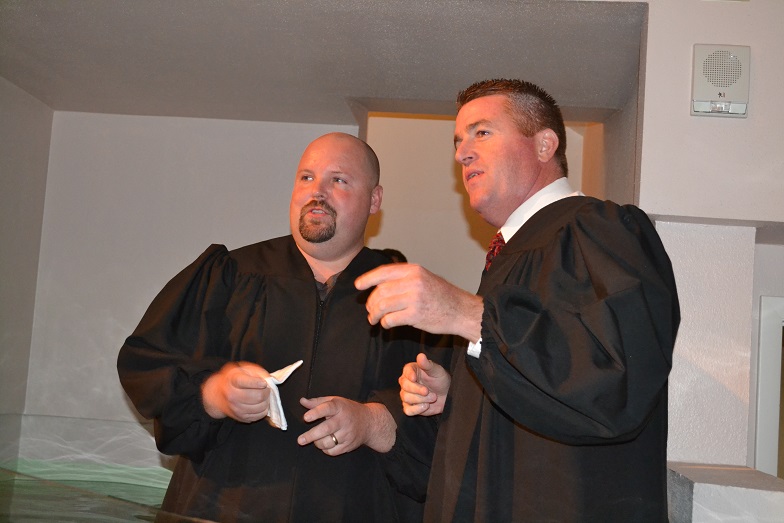
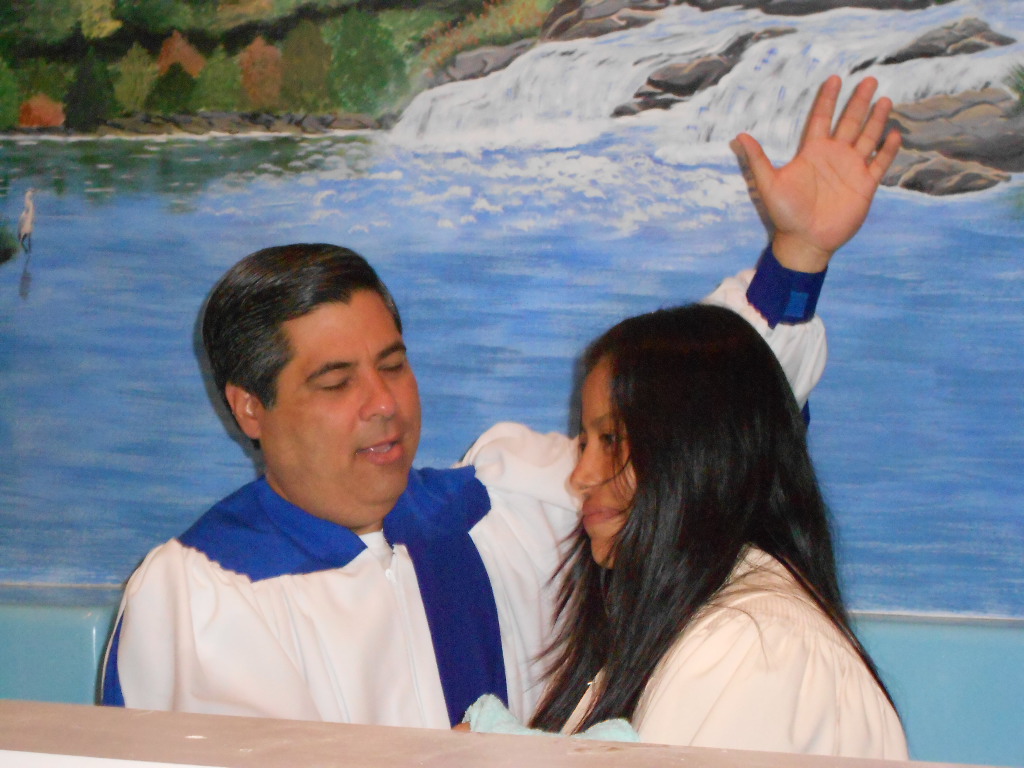
By baptism we confess our faith in the death and resurrection of Jesus Christ, and testify of our death to sin and of our purpose to walk in newness of life. Thus we acknowledge Christ as Lord and Saviour, become His people, and are received as members by His church. Baptism is a symbol of our union with Christ, the forgiveness of our sins, and our reception of the Holy Spirit. It is by immersion in water and is contingent on an affirmation of faith in Jesus and evidence of repentance of sin. It follows instruction in the Holy Scriptures and acceptance of their teachings. (Rom. 6:1-6; Col. 2:12, 13; Acts 16:30-33; 22:16; 2:38; Matt. 28:19, 20.)
Why it is important to understand the truth about baptism:
The Bible only teaches one form of baptism. See Ephesians 4:5. We get the word “baptism” from the Greek word, “baptizo” which means, to immerse. To be immersed you must go into the water all the way.
Why it is important to understand baptism in light of the cross:
Romans 6 tells us the reason there is only one form of baptism. Baptism is where we are crucified with Christ and die to self. In Baptism we are giving all of ourselves to Jesus because He loved and gave all of Himself for us. When we go under the water we stop breathing for a moment. That is symbolic of our death to self. When we come up out of the water, we take a new breath and that new breath represents the new life that we are now living for Jesus.
Further Study on Baptism
How essential is baptism?
Jesus replied, “I assure you, no one can enter the Kingdom of God without being born of water and the Spirit. John 3:5 NLT
Then Jesus went from Galilee to the Jordan River to be baptized by John. But John tried to talk him out of it. “I am the one who needs to be baptized by you,” he said, “so why are you coming to me?” But Jesus said, “It should be done, for we must carry out all that God requires.” So John agreed to baptize him. After his baptism, as Jesus came up out of the water, the heavens were opened and he saw the Spirit of God descending like a dove and settling on him. And a voice from heaven said, “This is my dearly loved Son, who brings me great joy.”Matthew 3:13-17 NLT
Why did John baptize there?
At this time John the Baptist was baptizing at Aenon, near Salim, because there was plenty of water there; and people kept coming to him for baptism. John 3:23 NLT
How did Philip baptize the Ethiopian?
He ordered the carriage to stop, and they went down into the water, and Philip baptized him. Acts 8:38 NLT
What must precede baptism?
Therefore, go and make disciples of all the nations, baptizing them in the name of the Father and the Son and the Holy Spirit. Teach these new disciples to obey all the commands I have given you. And be sure of this: I am with you always, even to the end of the age.” Matthew 28:19-20 NLT
Note: Discipling or mentoring and teaching takes place before and after baptism.
What else must take place?
Anyone who believes and is baptized will be saved. But anyone who refuses to believe will be condemned. Mark 16:16 NLT
What must follow belief?
Peter’s words pierced their hearts, and they said to him and to the other apostles, “Brothers, what should we do?” Peter replied, “Each of you must repent of your sins and turn to God, and be baptized in the name of Jesus Christ for the forgiveness of your sins. Then you will receive the gift of the Holy Spirit. Acts 2:37-38 NLT
What does baptism symbolize?
Or have you forgotten that when we were joined with Christ Jesus in baptism, we joined him in his death? For we died and were buried with Christ by baptism. And just as Christ was raised from the dead by the glorious power of the Father, now we also may live new lives. Since we have been united with him in his death, we will also be raised to life as he was. We know that our old sinful selves were crucified with Christ so that sin might lose its power in our lives. We are no longer slaves to sin. Romans 6:3-6 NLT
Here we see that baptism is the Biblical memorial to the resurrection and not Sunday worship.
Who now lives in us?
My old self has been crucified with Christ. It is no longer I who live, but Christ lives in me. So I live in this earthly body by trusting in the Son of God, who loved me and gave himself for me. Galatians 2:20 NLT
What are we declared to be?
For you are all children of God through faith in Christ Jesus. And all who have been united with Christ in baptism have put on Christ, like putting on new clothes. There is no longer Jew or Gentile, slave or free, male and female. For you are all one in Christ Jesus. And now that you belong to Christ, you are the true children of Abraham. You are his heirs, and God’s promise to Abraham belongs to you. Galatians 3:26-29 NLT
For what reason might one be re-baptized?
While Apollos was in Corinth, Paul traveled through the interior regions until he reached Ephesus, on the coast, where he found several believers “Did you receive the Holy Spirit when you believed?” he asked them.“No,” they replied, “we haven’t even heard that there is a Holy Spirit.” “Then what baptism did you experience?” he asked. And they replied, “The baptism of John.” Paul said, “John’s baptism called for repentance from sin. But John himself told the people to believe in the one who would come later, meaning Jesus.” As soon as they heard this, they were baptized in the name of the Lord Jesus. Acts 19:1-5 NLT
Why wait?
What are you waiting for? Get up and be baptized. Have your sins washed away by calling on the name of the Lord. Acts 22:16 NLT
If you are considering baptism. I encourage you to reach out to your local elder or pastor today! You may also reach out to me here or at william.earnhardt@floridaconference.com
You may study this week’s Sabbath School lesson here.








 In Light of The Cross