4: The Lord Hears and Delivers-Sabbath School Lesson Teaching Plan

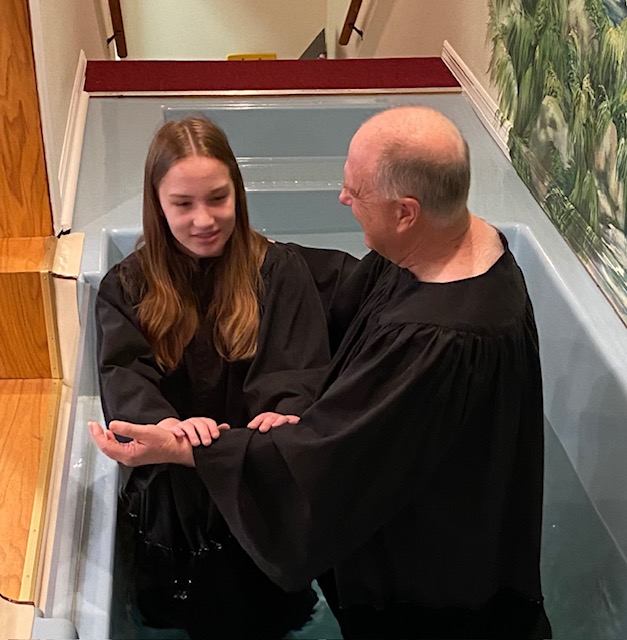
Photo by Guy Kawasaki on Pexels.com

Prepared by William Earnhardt, for Sabbath School class, January 27, 2024.

Main Theme: We should remember that the proper response to the Lord’s nearness consists in a life of faith in Him and of obedience to His commandments. Nothing short of this faith and obedience will be acceptable to Him, as the history of Israel often revealed.

Read in Class: Psalm 40:1-3, Psalm 121:1-8. Define the main idea of these passages.

Study:  How is God involved in our daily affairs?

Apply: What are some practical ways that you can better experience the reality of God’s care? How can you better cooperate with God in order to enable Him to work within you and for you?

Share: Tell about a time when God came through for you when all human help failed?

Read in Class: Psalm 17:7-9, Psalm 31:1-3, Psalm 91:2-7. Define the common thread of these passages.

Study: What does the psalmist do in times of trouble?

Apply: How, though, do we deal with the times when calamity strikes, and we can’t seem to see the Lord’s protection? Why do these traumas not mean that the Lord is not there with us?

Share: Your friend asks, if God always hearing our prayers means we always get what we ask for? How do you answer your friend?

Read in Class: Psalm 114:1-8. Define the main idea of this passage.

Study: How is the divine deliverance of the people of Israel from Egypt poetically described here?

Apply: What are some of the spiritual dangers we face as believers, and how can we learn to lean on the Lord’s power to protect us from succumbing to these dangers that are as real for us now as they were for the psalmist?

Share: Your friend says that God literally delivered Israel from slavery, but does God literally deliver us from oppression or is it just symbolic of God delivering us from sin and spiritual oppression? How do you reply to your friend?

Read in Class: Psalm 3:4, Psalm 14:7, Psalm 20:1-3. Define the common thread of these passages.

Study:  Where does help come from in these texts?

Apply: Read Hebrews 4:15-16. In what ways does this passage parallel what the psalmist says about the sanctuary?

Share: Can you think of someone who needs to be encouraged by something in this week’s lesson? How can you encourage them this week?

Why Lucifer Needed to Destroy God’s Perfect Law to Set up his own Government

The law of the Lord is perfect, converting the soul; The testimony of the Lord is sure, making wise the simple; Psalm 19:7 NKJV
Oh, how I love Your law! It is my meditation all the day. Psalm 119:97 NKJV

It’s amazing to me how people claim God’s law was done away with when it was absolutely perfect. David loved God’s law. Wouldn’t he be heartbroken to see it done away with?

I have a hard time understanding why some say the law was done away with at the cross. They say Jesus did away with the law when He died for our sins. This does not make sense to me, because since when has a law ever been done away with when someone paid the penalty for breaking that law? Paying for speeding tickets does not do away with speed limits. Serving time in prison for a felony does not do away with the laws of the nation. Never in all eternity has anyone ever paid the penalty for breaking a law and done away with the law at the same time, so why would anyone think Jesus did away with God’s law by paying the penalty for breaking His law? Fact is, if God’s law could be done away with, Jesus would not have needed to die. It was because God’s law could not be done away with that there needed to be a sacrifice to keep us from paying the penalty ourselves.

Also, why do people claim promises in the Old Testament while claiming the Old Testament law was done away with? If the Old Testament is no longer valid, wouldn’t that also mean the promises in the Old Testament are no longer valid either? Including the promises about the Messiah? If the promises in the Old Testament that we love to claim are still valid, then so is the law in the Old Testament.

Many preachers who preach the law was done away with preach themselves out of a job. 1 John 3:4 says sin is breaking God’s law. If there is no law, then I can’t break a law that no longer exists. If I am not breaking any laws (because they no longer exist) then I can’t sin. If I can’t sin why do I need grace ? If I don’t need grace, then I don’t need a Savior. If I don’t need a Savior, then I don’t need a preacher to tell me about the Savior. The fact that I still need a Savior to give me grace demonstrates that the law is still in effect.

After all, 2 Thessalonians 2:3-7 warns us that the man of sin creates the mystery of lawlessness. Lawlessness is not the work of Christ. It is the work of Lucifer and those working under his control. Isaiah 14:13-14 tells us Lucifer wants to overthrow God’s government and set up his own government. In order to remove God from the throne you have to do away with His law. God is no longer reigning over us if we are no longer keeping His laws.

Lucifer thinks to strip God of His authority by rendering His laws invalid. Then Lucifer thinks to set up his own government with his own set of laws. Naturally when a new government takes over, they destroy the seal of the previous government and make their own seal. The Sabbath commandment is like a seal to God’s government. It has His name “The Lord.” It has God’s title, “Created” (Creator), and it states His jurisdiction, “the heavens and the earth. the sea and all that is within them.”

Lucifer seeks to replace God’s seal with a man-made Sabbath. By destroying God’s law and God’s seal or authority, Lucifer thinks to destroy God’s government and thinks to set up his own government. Thus he thinks to achieve his goal stated in Isaiah 14:13-14 of being above God and even taking His throne. Through the man of sin in 2 Thessalonians 2:3-7, Lucifer thinks to accomplish on earth what he wanted to accomplish in heaven, and that is to get rid of God and take His place.

Revelation 19:16 tells us that Jesus is still Lord of lords and King of Kings. Our God still reigns. Lucifer’s attempt to take over has failed. God is still God. The Sabbath, God’s seal is still in tact. God’s government has not been over thrown. God still has authority. God still reigns, and His law has never been abolished. And His law is perfect. God’s law is still loved by His loyal subjects just as much as it was loved by David in Psalm 119:97.

Do you love God’s law?

You may study this week’s Sabbath School lesson here.

3: The Lord Reigns-Sabbath School Lesson Teaching Plan

Photo by Pixabay on Pexels.com

Prepared by William Earnhardt, for Sabbath School class, January 20, 2024.

Main Theme: The Lord’s sovereign rule thus renders the world firmly established and secure. The psalmists want the reader to understand this foundational truth. With this worldview as their lighthouse, the psalmists seek to thrive and to serve God with undivided devotion.

Read in Class: Psalm 97:1-12. Define the main point of this Psalm.

Study: What characterizes the Lord’s reign? What is the domain of His reign?

Apply: “You who love the Lord, hate evil!” (Psalms 97:10). Why should our love for God cause us to hate evil? How are these two concepts related?

Share: Your friend says Psalm 97:10 says the Lord delivers his saints out of the hands of the wicked. Yet so many innocent people have died in concentration camps and human trafficking. What good does that promise do them? What do you tell your friend?

Read in Class: Psalm 75:1-10. Define the main idea of this Psalm.

Study:  Why is the boasting of the wicked in vain?

Apply: The Psalms call us to rejoice in anticipation of God’s judgments. (See Psalm 67:4, Psalm, 96:10-14, Psalm 98:4-9) How is God’s judgment good news for those covered by the blood of Christ?

Share: Your friend claims he never gets promoted at work because of all the corruption where he works. Company politics has everything rigged. How might Psalm 75:6-7 help you respond to your friend? What illustrations in the Bible can you find of godly people being promoted even in the most corrupt environments?

Read in Class: Psalm 94:14, Psalm 105:7-10, Daniel 7:22. Define the common thread of these passages.

Study: The theme of God’s judgment prompts a significant question: How can God’s people have peace with God and assurance of salvation at the time of judgment?

Apply: What do we have in Jesus, which shows why these promises made to ancient Israel can now apply to us? See Galatians 3:26-29.

Share: Your friend says that the promises in the Old Testament were only given to the Jews. How do you answer your friend?

Read in Class: Psalm 19:7 and Psalm 119:165. What do these passages have in common?

Study: How is Satan’s attack on the law of God actually an attack on the kingdom of God? Why does Satan have to attack God’s law in order to reach his goal in in Isaiah 14:13-14? How do we know Satan will never reach his goal of reigning over the universe?

Apply: What are practical ways that keeping God’s laws and rules and testimonies have helped you in your life? On the other hand, what have you suffered from violating them?

Share: Your friend tells you the law of God was nailed to the cross and done away with. What do you tell your friend?

2: Teach us to Pray-Sabbath School Lesson Teaching Plan

Photo by MART PRODUCTION on Pexels.com

Prepared by William Earnhardt, for Sabbath School class, January 13, 2024.

Main Theme: Praying the Psalms has helped many believers establish and maintain regular and fulfilling prayer lives.

Read in Class: Psalm 105:5, Colossians 3:16, James 5:13. Define the common thread of these passages.

Study: What is the place of the Psalms in the believer’s worship experience?

Apply: What does it mean to “let the word of Christ dwell in you richly” (Colossians 3:16)? Why is reading the Bible the first and most crucial step for that experience?

Share: Your friend complains about their lack of faith. He says that God always provides for him but when new trials come he loses faith all over again and becomes anxious. What do you tell your friend?

Read in Class: Psalm 44:1-12, 23-26, and Psalm 22:1-11, 21-24. Define the main idea of these Psalms.

Study: What two main moods do we see in these Psalms? Why the change in moods? What does this teach us about trusting God even in times of trouble?

Apply: How can drawing on past times, when God’s presence felt very real, help you deal with the times in which troubles make you think that God is far away?

Share: Your friend suggests that David is way too negative in some of his prayers. Shouldn’t we always praise and thank God in our prayers instead of complaining or being so negative? What do you tell your friend?

Read in Class: Psalm 13:1-6. Define the main idea of this Psalm.

Study: What two main moods can you distinguish in this psalm? What decision do you think brought the radical change in the psalmist’s general outlook?

Apply: How can your trials draw you closer to God? Why, if you’re not careful, can they push you away from Him?

Share: Your friend asks you if you feel like God has always dealt bountifully you even amid your trials? What do you tell your friend?

Read in Class: Psalm 60:1-5. Define the main idea of this passage.

Study: For what occasions do you think this psalm would be a suitable prayer? How can we benefit from the psalms of lament even in joyous seasons of life?

Apply: Whom do you know, right now, who needs not only your prayers but your ministering touch, as well?

Share: Have you ever written a poem or “Psalm” about how God has heard your prayers? Can you share your poem with someone this week who may be encouraged by it?

A Beautiful Message in a Book of the Bible I Almost Didn’t Read

In my current personal devotions I read through the Psalms, and then kept cruising through Proverbs and Ecclesiastes. When I came to Song of Solomon I asked myself if I really needed to continue. After all some people wonder why such a book as Song of Solomon is even in the Bible. It’s a love story that some think gets a little too personal. Nonetheless, I reminded myself that all Scripture is inspired by God and profitable, so early this morning I prayed for the Holy Spirit to teach this book to me and I dove in. What I found was a beautiful ending to an ugly story I had already read in Revelation 3:14-21.

About 17 years ago I woke up in the middle of the night and could not get back to sleep. Laying there half awake and half asleep I realized if I left the house now I could make it to Daytona Beach to see the sunrise. I jumped in my car and started listening to the book of Revelation as I drove. I listened as the narrator gave Jesus’ account of how wretched, poor, blind, miserable and naked His last day church is. After such a discouraging message Jesus really woke me up when I head Him say,

To him who overcomes I will grant to sit with Me on My throne, as I also overcame and sat down with My Father on His throne. Revelation 3:21 NKJV

What? Is Jesus talking about the same church He called wretched, poor, blind, miserable and naked one day overcoming just as He overcame? Wow, Jesus just never gives up! I remember years ago when I was working at UPS I made a mistake and my supervisor got really upset and chewed me out. He ended his lecture by saying, “You may think I am making a big deal out of this by being so angry and upset but one day when you become a supervisor you will understand.” I walked away feeling rebuked and encouraged at the same time. My boss just chewed me out and told me I would be promoted one day all in the same breath. This is what Jesus was saying to His last day church. A dire warning that ended with a beautiful promise and hope.

Fast Forward to this morning as I was reading Song of Solomon. Chapter 3 ends with a wedding. Chapter 4 is the groom describing his bride. Further study led me to conclude that this is also symbolic of Jesus describing His bride, the church. The church He once described as wretched, poor, miserable, blind and naked. After being redeemed read how Jesus describes His bride and church now.

You are beautiful, my darling,
    beautiful beyond words.
Your eyes are like doves
    behind your veil.
Your hair falls in waves,
    like a flock of goats winding down the slopes of Gilead.
Your teeth are as white as sheep,
    recently shorn and freshly washed.
Your smile is flawless,
    each tooth matched with its twin.
Your lips are like scarlet ribbon;
    your mouth is inviting.
Your cheeks are like rosy pomegranates
    behind your veil.
Your neck is as beautiful as the tower of David,
    jeweled with the shields of a thousand heroes.
Your breasts are like two fawns,
    twin fawns of a gazelle grazing among the lilies.
 Before the dawn breezes blow
    and the night shadows flee,
I will hurry to the mountain of myrrh
    and to the hill of frankincense. You are altogether beautiful, my darling,
    beautiful in every way. Song of Solomon 4:1-7 NLT

The church Jesus once said was wretched, poor, miserable, blind and naked He has redeemed. Now as He inspects every part of her body He exclaims she is beautiful beyond words and beautiful in every way!

Just as the groom is inspecting every part of his bride’s body so Jesus inspects every aspect or our lives. Some parts of our lives may be downright ugly right now. Just like there are parts of our body we don’t want people looking at there are parts of our lives we really don’t want Jesus to see. We know what sin and ugliness He will find there. Here is the good news. Not just good news, it is beautifully wonderful news. We can turn those ugly parts of our lives over to Jesus. Let Him cleanse us and redeem us. Then the same Jesus who looked at us and said we are wretched, poor, miserable, blind and naked, will inspect every aspect of our being and go on and on about how beautiful we are. Beautiful beyond words. Beautiful in every way!

Jesus is the faithful and True Witness. He is being honest when He tells me how ugly my sins are. Now that He is redeeming me I can’t wait to hear Him say how beautiful I am. And when Jesus raves on and on about how beautiful we are-even too beautiful for words and beautiful in every way-He will still be just as honest, faithful and true as He has ever been!

You may study this week’s Sabbath School lesson here.

1: How to Read the Psalms-Sabbath School Lesson Teaching Plan

Prepared by William Earnhardt, for Sabbath School class, January 6, 2024.

Main Theme: The Psalms have been written in Hebrew poetry by different authors from ancient Israel, and so, the Psalms reflect their particular world, however universal their messages. Accepting the Psalms as God’s Word and paying close attention to the Psalms’ poetic features, as well as their historical, theological, and liturgical contexts, is fundamental for understanding their messages, which reach across thousands of years to our time today.

Read in Class: Nehemiah 12:8, Psalm 18:1, Psalm 30:1-2 and James 5:13. Define the common thread of these passages.

Study: What were the occasions that prompted the writing of some psalms? When did God’s people use the Psalms?

Apply: Though we, of course, do not worship God in an earthly sanctuary like the temple, how can we use the Psalms in our own worship, whether in a private or in a corporate setting?

Share: Your friend says that the Psalms were written so long ago, and mostly about the authors own experiences about war and so forth. We are not warriors from ancient times so what do the Psalms have to do with us today? What do you tell your friend?

Read in Class: Psalm 3:5-8, Psalm 33:1-3 and Psalm 109:6-15. Define the common thread in these passages.

Study: What different facets of human experience do these psalms convey?

Apply: What kind of psalms would you most likely be apt to use or write in your references to God in your life? 

Share: One of your friends says, “Why does David write so many psalms that seem to focus on destroying his enemies and bringing judgment on others? Where is Crist’s love for the erring and sinners in his heart?” What do you tell your friend?

Read in Class: 2 Samuel 23:1-2 and Romans 8:26-27. What is the main thought of these passages?

Study: What do these texts teach us about prayer?

Apply: Jesus quoted the Psalms like Luke 20:42-43 for example. What should Jesus’ use of the Psalms tell us about the importance that they could play in our own faith experience?

Share: Your friend asks what it means that the Spirit intercedes for us with groanings which cannot be uttered? What do you tell your friend?

Read in Class: Psalm 16:8, Psalm 44:8 and Psalm 46:1. What is the main idea of these passages?

Study: What place does God occupy in the psalmist’s life?

Apply: How can the Psalms help us understand that we cannot limit God to certain aspects of our existence only? What might be parts of your life in which you are seeking to keep the Lord at a distance?

Share: Can you share a time when Psalm 46:1 or one of the other passages in this section was a particular comfort to you?

The Mortal Soul in Psalms

Photo by Mike B on Pexels.com

”For in death there is no remembrance of You; In the grave who will give You thanks?“ Psalms‬ ‭6‬:‭5‬ ‭NKJV‬‬

I have seen Christian music videos illustrating someone dying and immediately going to heaven and singing in the heavenly choir. But David in the Psalms is quite clear along with the rest of Scripture that the dead know nothing and rest in their graves until Jesus comes.

”You hide Your face, they are troubled; You take away their breath, they die and return to their dust.“ Psalms‬ ‭104‬:‭29‬ ‭NKJV‬‬

”The dead do not praise the Lord, Nor any who go down into silence.“

‭‭Psalms‬ ‭115‬:‭17‬ ‭NKJV‬‬

Furthermore New Testament Scripture resonates David’s theology about resting in the grave instead of going straight to heaven when we die.

”Men and brethren, let me speak freely to you of the patriarch David, that he is both dead and buried, and his tomb is with us to this day. “For David did not ascend into the heavens, but he says himself: ‘The Lord said to my Lord, “Sit at My right hand,“ Acts‬ ‭2‬:‭29‬, ‭34‬ ‭NKJV‬‬

Scripture is very consistent from beginning to end that the dead know nothing and rest in their graves until Christ returns. David, Jesus, Peter and Paul never once say anyone dies and goes straight to heaven. But you know who does? The lying serpent in Genesis 3:4, who claims we don’t really die.

Let’s believe the Word of God instead of the lying serpent. Some lies may be fun to believe, but they are never safe to believe. The serpent never tells a harmless lie. Every lie from the serpent is intended for deception and destruction. Yet no one who believes in the Word of God will be deceived. God‘s Word which is truth will keep us safe.

You may study this week’s Sabbath School lesson here.

13: The End of God’s Mission-Sabbath School Lesson Teaching Plan

Prepared by William Earnhardt for Sabbath School Class, December 30, 2023.

Main Theme: God’s mission will be fruitful and have much success.

Read in Class: Revelation 14:6-7. Summarize the first angel’s message.

Study: What do these verses have to do with our last day message and mission?

Apply: Do you have a plan for sharing the everlasting Gospel? If a friend asked you how they can know if they are saved what would you tell them? See Salvation in Light of the Cross. How does this everlasting Gospel help you prepare for the judgment?

Share: Your friend asks how the Seventh-day Adventist Gospel is different from any other Gospel preached in protestant churches? Don’t we all preach the same cross? Is the Gospel preached by Adventists any different? What do you tell your friend? See the God-forsaken God.

Read in Class: Revelation 14:8 and Revelation 18:1-4. Define the common thread of these passages.

Study: How do the teachings of Babylon oppose the Gospel and the cross? How is Babylon legalistic? For clues see Daniel 1:2, Daniel 4:17 and Daniel 4:31-32.

Apply: 1 John 4:8 says God is love. How do the teaching of Babylon skew our understanding of God’s love? For an example, see Hell in Light of the Cross.

Share: Your friend says that instead of preaching the Three Angel’s message in the last days we should be Preaching the cross instead. What do you tell your friend? See The Three Angel’s Message in Light of the Cross.

Read in Class: Revelation 14:9-12. Discuss the main idea of this passage.

Study: What exactly is the mark of the beast? How is accepting the mark of the beast not only rejecting the Bible Sabbath but also rejecting the cross of Christ and salvation by grace? For example what is wine of God’s wrath that is poured into the cup of His indignation? Is this the same cup Jesus asked to pass from him, but ended up drinking for us?

Apply: What assurance do you see in Revelation 7:9-14 and Revelation 15:1-4 that the call out of Babylon and the warnings not to take the mark of the beast will be successful? What other passages in the Bible assure you of the success of God’s mission in the last days?

Share: Your friend asks you if the 144,000 who are saved in the last days is a literal number or symbolic? What do you tell your friend?

Read in Class: Revelation 21:1-4, Revelation 21:22-27, and Revelation 22:1-5. What is the common thread of these passages?

Study: What is the scene described here?

Challenge: How are you hastening Christ’s return? Are you planting seeds of hope in the hearts of those who need to hear good news? Are you “watering” new believers by helping them learn what it means to live a life of loyal obedience to Christ? Pray for opportunities to communicate the promise of the earth made new with the people on your daily prayer list.

Challenge Up: Some of your “disciples” may be ready to accept Christ. This includes joining a church or group of believers. Put yourself in his or her place and imagine attending your church for the first time. What kind of experience would he or she have? How prepared is your church to welcome and disciple new people? Are you open to starting new groups of believers, not just building up your own existing church? Create a strategy to address weak areas. Share your thoughts with your church leaders, and work with them to implement a plan to become a more intentional disciple-making church.

The Three Angel’s Message in Light of the Cross

And I saw another angel fly in the midst of heaven, having the everlasting gospel to preach unto them that dwell on the earth, and to every nation, and kindred, and tongue, and people” Revelation 14:6.

Who is this first angel and who are the three angels?

Revelation 1:20 says that the seven stars are the seven angels of the seven churches. So an angel would be like a leader or messenger to a church. Jesus begins His message to each church with, “Write unto the angel of the church of…” so He must be referring to an angel as being a terrestrial leader. When John saw the seven stars in Jesus’ hand, those stars were the angels, or ministers and leaders of the church.

Jesus calls us all to have a ministry in the church and a message to share with the world, and it’s comforting to know, that while we are messengers for Jesus, He holds all of us in His hand. Wherever in the world you are reading this – whether in a country with few Christian churches, and even persecution, or whether you are trying to share Jesus with your family members who all seem opposed to your message – rest assured, Jesus has you right in His hand and you are very special to Him! He will take care of you and make your ministry prosperous. You may find your ministry in a difficult place, but it is right in Jesus’ hands.

I believe the three angels in Revelation 14 make up the message that the Seventh-day Adventist church has to give to the world. These angels are sent out after the rise of the United States in Revelation 13, so this would fit the time prophecy. Thus I believe that the members of the Seventh-day Adventist Church are the three angels in Revelation 14, and, even more specifically, the three angels are you and I.

The Seventh-day Adventist church has a very important message to give to the world, so let’s see what it is.

The First Angel’s Message is all about the cross.

Now don’t all churches have the gospel? Yes, many people will be in the Kingdom because a Baptist, Methodist, Catholic or Lutheran etc. missionary shared the love of God with them. However, as the book of Revelation changes scenes from the Dark Ages to the earth being “lightened with His glory” the gospel will be shining brighter than ever before.

The everlasting gospel which the Seventh-day Adventist church shares overcomes the legalism of Babylon. This last message is filled with grace and the glory of God and not the works of man. It shows the love of God more clearly than the gospel presented by most other churches.

Many churches preach that Jesus died for us, and then they turn around and tell us people don’t really die. If that is the case, then Jesus did not really die, and if He did not really die, then He did not die for us.

Many churches preach that sinners will be eternally tormented in hell while John 3:16, which is the crux of the gospel, says that sinners will perish. Romans 6:23 says the wages of sin is death, not eternal torment in hell. It’s impossible to fall in love with a God who has a “love-me-or-I’ll-torment-you-for-eternity-in-hell” mentality. While sin and those who cling to it at any cost must perish, God will not be delighting in their eternal torture. The punishment, which is death, is eternal; the punishing is not.

Many churches focus on the physical torture Jesus endured. The physical torture was terrible, but Jesus suffered way more than a six-hour pain endurance marathon. Hebrews 2:9 tells us Jesus “tasted death” for all men. It obviously was not the death of the righteous that He tasted; we all taste that first death for ourselves. Obadiah 16 tells us the wicked will be as though they never were. Jesus faced more than nail-scarred hands and feet on the cross. He tasted the death of the wicked, which means He experienced total separation from God. This could be why He was crying out, “My God, My God, why have You forsaken me?” instead of singing hymns of praise while He died, like John Huss did. You see, Jesus died a totally different death than John Huss. John Huss died the death of the righteous while he burned at the stake for his faith. Jesus was dying the death of the wicked.

Many teach that Jesus saves us in our sins while Matthew 1:21 tells us clearly that Jesus will save us from our sins. We can’t call Jesus a Savior unless He actually saves us, and according to Ephesians 2:1-10 we are saved by grace. What His grace saves us from is our sinful life.

So we see, Seventh-day Adventists not only teach a different day of worship, we also teach the fullness of the gospel. Our job description, in being messengers for Jesus, is to let the whole world know the love of Jesus.

You don’t have to be a TV evangelist to have a ministry and share this message. This gospel is so amazing that many will not even believe it when they hear or read about it. However, they will believe it when they see these principles of self-sacrificing love manifested in your life.

I remember a story about a man who was married for 50 years. At breakfast he always insisted on having the heel of the bread loaf for toast. He acted as though it was his favorite part of the bread. Fifty years later after his wife died, he stopped eating the heel. His nephew asked him why he didn’t like it any more. The old man explained that he never did like it. He just knew his wife did not like it either, so for fifty years he pretended he loved it so she would not have to eat it. That made a great impact on the nephew, and it helped him understand the gospel better than any evangelist preacher ever could.

The first angel tells us how the cross prepares us for judgment,

Saying with a loud voice, Fear God, and give glory to him; for the hour of his judgment is come: and worship him that made heaven, and earth, and the sea, and the fountains of waters. Revelation 14:7

This angel is telling us of the judgment which began in 1844. Interestingly the angel says the hour of His judgment has come. What does this mean? It means God is the one being judged!

The judgment is not to see if God will accept us, Ephesians 1:6 tells us we are already accepted in the Beloved. The judgment is to see if we will accept God and let Him write His law on our hearts. Seventh-day Adventists preach a time of probation, but many do not realize that it is actually God who is on probation. God is being judged by the universe: Is God the mean control freak and tyrant that Satan makes Him out to be, or is He a God of love? Is God a good God or some psychopath saying, “Love me or I’ll kill you?”

Satan first attacked the character of God in heaven. Revelation 12 says there was war in heaven, but not with machine guns and tanks; it was a battle of the minds. Satan wanted God’s power but not his character.

I can see Satan playing mind games with the angels. I can see him going up to one of the other angels and saying, “You did a great job on that project God gave you. Did God give you any special recognition for it? He didn’t? Why that’s too bad. You know if I was God I would have thrown a banquet in your honor.”

And so Satan started these mind games trying to make the angels believe that he should be God and that God was not a God of love who was interested in their welfare.

Satan got a third of the angels to buy his lie. There may have been some angels who stayed in heaven but were not convinced who was right or wrong, until the cross. Then the whole universe saw the true character of Satan, who was willing to kill anyone who got in his way of being number one, contrasted with the true character of God who was willing to die on a cross and say goodbye to life forever to save others.

This is why Satan does not want us to understand the everlasting gospel. The everlasting gospel tells the truth about the character of God and the character of Satan. In the hour of His judgment those who clearly understand the everlasting gospel, free of legalism, will demonstrate that God is indeed a God of love. When we accept God we accept more than eternal life, we accept God Himself, along with all of His righteousness and goodness and power to live a victorious life.

The second half of this verse – “and worship him that made heaven, and earth, and the sea, and the fountains of waters” – reminds us of the language used in the fourth commandment about the Sabbath. Many times we quote the fourth commandment from Exodus 20: 8-11 but let’s take a look at it in Deuteronomy 5:12-15.

“Keep the sabbath day to sanctify it, as the LORD thy God hath commanded thee. Six days thou shalt labour, and do all thy work: But the seventh day [is] the sabbath of the LORD thy God: [in it] thou shalt not do any work, thou, nor thy son, nor thy daughter, nor thy manservant, nor thy maidservant, nor thine ox, nor thine ass, nor any of thy cattle, nor thy stranger that [is] within thy gates; that thy manservant and thy maidservant may rest as well as thou. And remember that thou wast a servant in the land of Egypt, and [that] the LORD thy God brought thee out thence through a mighty hand and by a stretched out arm: therefore the LORD thy God commanded thee to keep the sabbath day.”

In Egypt the king made all the Hebrew slaves work so he could rest. God delivered the Hebrews from their works and gave them the Sabbath, explaining that it was God who created and made everything and did all the work so they could rest. God is reminding Israel that He saved them from the slavery of the Egyptians, and that it was not their works that saved them. Likewise God Himself will save us from the slavery of sin, by His grace and not by our works. The Sabbath is clearly a sign that it is God who sanctifies us and not our own works. We see this also in Exodus 31:13. We rest from our works on the Sabbath, remembering that our salvation comes from resting our faith in His amazing grace and not in trusting our works to save us.

The Sabbath also reminds us of our Creator whom Satan wants us to forget. If the Sabbath had never been forgotten, atheism would never exist. For example we use the sun to mark a year, the moon marks a month and the earth’s rotation marks a day, but what do we have to mark a week? The only thing we have to mark a week is the creation week which ends with the seventh-day Sabbath. So how do atheists explain the seven-day week?

During the reign of terror the French tried to do away with the seven-day week and replace it with a ten-day week. This did not work.

The Sabbath reminds us that we have a Creator who did all the work in creating us. It reminds us that we did not make ourselves by our own works. Even more, the Sabbath reminds us that we were redeemed by the works and sacrifice of our Creator and not by our own works. By resting on the Sabbath we show that the gospel is practical and not just a theory. He literally rested, and we literally rest our faith in Jesus, believing that He literally saves us.

And there followed another angel, saying, Babylon is fallen, is fallen, that great city, because she made all nations drink of the wine of the wrath of her fornication. Revelation 14:8

The second angel warns us against trusting man made laws and traditions instead of trusting Jesus to save us by grace.

Many say that Babylon means confusion. Well it may, but it is not so much confusion about certain doctrines as much as it is about the gospel itself. When legalism mixes our works with God’s grace, it gets confusing. In Galatians 2:20 Paul gives us the pure gospel when he says, “Not I but Christ.” So many of us want to make it a combination of me plus Christ. Problem is, any time I make “me” a part of the gospel I have a corrupt gospel because “me” is corrupt. Does this mean doing away with good works? Not at all! It just means realizing that it is God who is working in us and not us. Philippians 2:13

Seventh-day Adventists teach that Babylon is a religious system which it is, but it is more than that. It is an attitude – an attitude that can be found in any system. Babylon is the attitude that I can save myself by my own works. It began with the tower of Babel.

Babel meaning “gate” and El meaning “God.” At the tower of Babel man decided they could work and build their own way to heaven. They did not think they could trust God to save them from another flood so they decided to build a tower and by their works save themselves. Thus Babylon symbolizes salvation by our own works, or legalism. Cain had the attitude of Babylon when he brought the works of his field and offered his own system of worship. But God could only accept Abel’s sacrifice – a lamb which pointed to the Lamb of God who could only save. Since then man has been presenting his own system of worship and even day of worship thinking he can save himself by inventing his own religion instead of accepting the gospel.

Years later Daniel 1 tells us that God gave Jerusalem into Nebuchadnezzar’s hands, but in Daniel 4 Nebuchadnezzar says “is this not Babylon which I have made?” And God says, “No! I made it and gave it to you.” But here is the attitude of Babylon again – that it is my works that save me.

During the Dark Ages people were taught that their works would save them. They could buy and work their way to heaven. They were also given a work day to worship instead of the Sabbath day of rest. So they were like Cain, worshiping their works instead of our Creator and Redeemer. When the everlasting gospel is proclaimed in all its glory, Babylon will fall! Man will see that we are not saved by our own religious works and inventions but rather are saved by the grace of God alone!

The third angel’s message encourages us to trust Jesus to save us instead of man. The third angel’s message encourages us to trust God’s grace instead of our won works.

Ellen White comments:

Several have written to me, inquiring if the message of justification by faith is the third angel’s message, and I have answered, “It is the third angel’s message, in verity.”– The Review and Herald, April 1, 1890. {1SM 372.2}

If you are like me, your first glance at the third angel’s message does not make you think of justification by faith. As a matter of fact many people get wrapped up in works over this passage. Let’s take another look and see why it’s not about works but rather justification by faith.

Revelation 14:9-12 And the third angel followed them, saying with a loud voice, If any man worship the beast and his image, and receive [his] mark in his forehead, or in his hand, The same shall drink of the wine of the wrath of God, which is poured out without mixture into the cup of his indignation; and he shall be tormented with fire and brimstone in the presence of the holy angels, and in the presence of the Lamb: And the smoke of their torment ascendeth up for ever and ever: and they have no rest day nor night, who worship the beast and his image, and whosoever receiveth the mark of his name. Here is the patience of the saints: here [are] they that keep the commandments of God, and the faith of Jesus.

The third angel’s message is justification by faith in verity because those who refuse the mark of the beast will not be allowed to buy or sell or do any business to provide for themselves or their families. They will be resting on the Sabbath and not working. Therefore they trust God to provide for them, and not their own works. This is justification by faith. Those who accept the mark so that they can buy and sell are not resting in Jesus or trusting Him to provide for them. Rather they are saying, “I do not trust Jesus to provide for me, so I am accepting the mark so that I can work and provide for myself.” This is salvation by works.

It is very important to notice that the ones who accept the mark and are trying to be saved by their works are rejecting the cross of Christ. The “cup of His indignation” is the cup that Jesus asked to be passed from Him, in Gethsemane. However, He drank that cup for us, at Calvary. Those who reject the seal of God, and the Sabbath are really rejecting the cross. They say, “I will accept the mark of the beast and provide my own salvation.” When they do this they reject the Salvation provided at Calvary, and instead of letting Jesus drink that cup for them, they must drink it themselves!

After all, if you do not trust Jesus enough to provide your daily bread, but rather accept the mark so that you can do business and put bread on the table yourself, how can you trust Him to provide for your eternal salvation? On the other hand, by rejecting the mark (works) and keeping the Sabbath and seal of God we are accepting the cross and justification by faith. Jesus drinks the cup mentioned in the third angel’s message so we don’t have to! We can all exclaim with Abraham at Moriah, “Jehovahjireh” My Lord Will provide!”

The third angel’s message is the climax of the battle between faith and works. For centuries man has been taught by tradition to save himself by worshiping a man made religion and even a man made Sabbath which is Sunday. Those who put their faith in Jesus triumph over the legalism of man made religions as they rest their faith in the One who gave all to save them. They cherish His Sabbath which is a sign that we are not saved by works but rather by His amazing grace!

You may study this week’s Sabbath School lesson here.

12: Esther and Mordecai-Sabbath School Lesson Teaching Plan

Photo by Bestbe Models on Pexels.com

Prepared by William Earnhardt for Sabbath School class, December 23, 2023.

Main Theme: The story of Esther shows how God’s people, even in foreign environments, can witness for truth.

Read in Class: Esther 2:5-10. Discuss the main idea of this passage.

Study: What do these verses tell us about the situation of Mordecai and Esther? Why did Mordecai tell Esther not to reveal her Jewish identity?

Apply: What circumstances would it be prudent not to be open about your faith? Or should we never hide who we are? See Why did Jesus tell the Demons not to Tell Everyone He was the Son of God?

Share: Your friend says that Mordecai not wanting people to know who Esther was showed a lack of faith. What do you tell your friend?

Read in Class: Esther 3:1-15. Define the main idea of this passage.

Study: What is happening here and why?

Apply: In what ways, even now, might we be tested, like Mordecai? 

Share: Your friend says the it seems like Mordecai was escalating the situation between him and Haman? Why couldn’t Mordecai have been a peace maker and just humbly bowed to Haman to show a little respect? Why did he have to create such a huge confrontation and put the lives of his people in peril? What do you tell your friend?

Read in Class: Esther 4:8-14. Define the main idea of this passage.

Study: Why was it considered appropriate at this time for Esther to identify herself as a Jew?

Apply: For the Jews in such a situation as described above, prayer would certainly accompany fasting. That is, though they acted in their own behalf, prayer was central to their response. What obvious lesson can we take from this?

Share: Your friend asks why Mordecai would put Esther in such a dangerous situation? What do you tell your friend?

Read in Class: Esther 9:1-12. Define the main idea of this passage.

Study: What was the result of Esther’s effort?

Challenge: Pray that God will give you the courage to share something He has done for you with one of the people on your prayer list this week.

Challenge Up: Begin a diary or journal of special little things (or big things) that God does for you. Review it and pray that God will bring these things to your mind at just the right time so you can share them with someone.