Study: According to this passage what brings life and blessings? What brings death and curses?
Apply: How have you seen or experienced the results of obedience or disobedience today?
Share: A friend tells you that we now have life trough grace and obedience to the law is no longer necessary. How do you respond to your friend? Hint: Matthew 19:17.
Read TogetherDeuteronomy 4:19. Discuss the main idea of this passage.
Study: How would worshiping the sun or moon be choosing death?
Apply: What things or people do people worship today? How is worshiping those things rejecting life and choosing death?
Share: Your child asks you what is the difference between admiring God’s creation and worshiping God’s creation? How do you answer your child?
Apply: A recent Newsweek article claims every time we drink a cola it takes 12 minutes off our life. In what subtle ways might we be choosing death or life in our every day choices?
Share: A friend asks, “how do I know if I have the Son?” How do you answer?
Apply: How does your behavior express your faith or lack thereof?
Share: your cousin tells you she wants to choose life, but wants to know how to know if she has eternal life. What do you share with your cousin? Hint: The Plan of Salvation,
Main Theme: While we are saved by grace in both Old and New Testaments, we have the law in both testaments to show us how to live a life of love.
Read Together Ezekiel 25:15-16. Define together the main idea of this passage.
Study: Iniquity is sin. According to the definition of sin in 1 John 3:4 was there a law in heaven when Lucifer sinned? Is it possible to sin where there is no law? See Romans 3:20.
Apply: Why is the idea of a moral law inseparable from the idea of moral beings? Without that law, what would define what is moral and what is not?
Share: Your neighbor asks, “did the angels have the ten commandments written in stone or was there a main underlying principle they followed?” What do you tell your neighbor?
Read Together Deuteronomy 5:6-22. Define together the main thought of this passage.
Study: Is God commanding we have no other gods or promising they will need no other gods? Both? How do we know? What assurances do we have in this passage of God’s grace? In verses 12-15 where do we see a promise of rest?
Apply: How do we keep the commandments without being legalistic?
Share: Your same neighbor tells you we were saved by keeping the law in the Old Testament, but today we are saved by grace. What do you say to your neighbor? Hint: God has Always Been Graceful.
Read Together Deuteronomy 9:1-6. Define together the main thought of this passage.
Study: How does this passage relate to Ephesians 2:8-10? Do we see the same principles of grace in both Old and New Testaments?
Apply: Even when we are obedient and victorious why should we never be proud? See Galatians 2:20.
Share: Your neighbor asks, “if we are not saved by keeping the law then why keep it?” What do you tell your neighbor?
Read TogetherRomans 3:20, 27-31. Define together the main idea of this passage.
Study: Is Paul presenting a new idea or an eternal idea? In other words was anyone in the Old Testament saved by keeping the law? Were those in the Old Testament saved by grace as well?
Apply: How does faith help you keep the law? See James 2:18.
Share: Your neighbor asks you how you can tell if you are saved? What do you tell your neighbor? See the Gospel Presentation.
One Sabbath afternoon I received a phone call from the mother of a child I had corrected earlier at church. The girl had smarted off to me when I told her to stay out of a room that was off-limits. The mother told me, “My daughter wants to tell you she is sorry, but before she gets on the phone, I wanted to ask you, when she says she is sorry, don’t tell her it is okay. Just tell her she is forgiven.”
“Wow!” I thought. This mother gets it! Forgiveness is not saying it is okay. So many are slow to forgive, because what happened to them was so wrong they can’t just sweep it under the rug. The deed deserves to be punished. What they don’t understand is that forgiveness is not sweeping it under the rug and saying it is okay. Then what is it saying?
When I share the gospel presentation, I always share this passage from the Desire of Ages. It is so clear and simple, and to me, sums up the whole plan of salvation.
“Christ was treated as we deserve, that we might be treated as He deserves. He was condemned for our sins, in which He had no share, that we might be justified by His righteousness, in which we had no share. He suffered the death which was ours, that we might receive the life which was His. “With His stripes we are healed.” -Ellen White, Desire of Ages, Page 25
Now I would like to take this passage to the next level – beyond the plan of my personal salvation. I understand that Jesus took the punishment for my sins so that I can now be treated the way He deserves to be treated. Now I need to understand, that the sins my enemy committed have not been swept under the rug. Jesus was also treated the way my enemy deserves to be treated, so that I may now treat my enemy the way Jesus deserves to be treated.
Jesus did not only suffer for my sins, He suffered also for sins committed against me. Why do I need to take it out on my enemy when it has already been taken out on Jesus?
They made fun of me and humiliated me! Jesus was mocked and humiliated on the cross in their place.
They killed my son! They deserve to die! Jesus died because they killed your son.
They sexually abused me! They deserve to be sexually abused! Jesus hung naked on a cross in front of the whole universe, including His own angels!
Earlier this year I was reading through the Old Testament, and when I came to Isaiah 53 something jumped out at me, when I read:
Suddenly I realized something I had never seen before. I realized that retaliation against my enemy will never bring me healing. I am healed by the stripes of Jesus, and not the stripes of my enemy. Jesus suffering for my sins can only bring partial healing and partial reconciliation. I am made whole, and totally reconciled, not just to Jesus but to my brothers, when I realize Jesus suffered for their sins too.
In the story in Matthew 18:21-35 a man is forgiven who did not ask to be forgiven. He only asked for more time to pay the debt. However the master forgave the debt anyway. This is important for us to note, because the master represents God who forgave us without us even asking. In the Lord’s prayer we find we are to forgive as we have been forgiven, meaning that we are to forgive in the same manner. God expects us to forgive without being asked to forgive, just as the man was forgiven while only asking for more time to pay the debt.
After the man was forgiven, he goes out and sees a brother who owes him a much smaller debt. Even after being forgiven he refuses to forgive. In the parable the unforgiving man ends up in prison until his full debt is paid.
Wait a minute! Wasn’t his debt forgiven? Separated as far as the east is from the west and into the depths of the sea? How did it come back? I believe it’s this way: When I refuse to forgive my brother, what I am saying is, “I don’t think Jesus’ death on the cross was enough to pay for what was done to me.” Well guess what? If Jesus’ death is not enough to pay for my enemy’s sin, then it is not enough to pay for my sin either! By not allowing Jesus to pay for my enemy’s sin on the cross, I have just disqualified the cross as a payment for sin and therefore I must still pay for my sins – and the only way I can do that is to die an eternal death.
Forgiveness and reconciliation is not saying “It’s okay.” It is saying, “I realize Jesus suffered for your sins on the cross.” It is realizing I am healed by the stripes Jesus received and not by the stripes my enemy receives. We have to be pretty sick ourselves to think that in order for us to be healed, someone else has to be hurt. Jesus does not have to hurt my enemy in order to heal me.
“Christ was treated as we deserve, that we might be treated as He deserves.” Christ was also treated as my enemy deserves, that I may now treat my enemy the way Christ deserves to be treated.
With His stripes we are all healed.
You may study this week’s Sabbath School lesson here.
The Lord did not set His love on you nor choose you because you were more in number than any other people, for you were the least of all peoples; Deuteronomy 7:7 NKJV
I suppose its natural that we are comforted with numbers. Years ago, while holding a revival in Connecticut, I took a night off and went to Fenway Park in Boston, where the Red Sox play. I took the advice of the clerk behind the hotel counter and took the subway to the game, instead of paying to park my car. This was my first trip to Boston and my first subway ride. I boarded the subway realizing I had no idea where to get off. However, I realized it was a no-brainer. I got off when all the people wearing Red Sox t-shirts got off. I followed the crowd right to Fenway Park. I found comfort in the crowd.
As Seventh-day Adventists, we comfort ourselves by knowing that our church has around 22 million members world wide. When we baptize people in a small, isolated church, we assure them that there are millions of us around the world. We don’t want them to feel alone. After all people have made fun of us and have called us a sect. But is it always safe to follow the crowd? Should it make us feel more comfortable to be in a throng? What if Noah’s family did not get on the ark because people were making fun of how few of them there were? Are numbers necessarily a sign of success? When two football teams play in the World Cup, do we make fun of them because there are only two of them? No! They take pride that they are in an elite group.
Of course we don’t want to be the only ones going to heaven. We want the whole word to be saved, and thank God, John saw a saved multitude that could not even be numbered! Still we need to be careful comforting ourselves with crowds and numbers. First of all, while we boast of 22 million members, those numbers are misleading. I have had to add people to my church by profession of faith who were already members. Why? Because the current conference that had their membership refused to transfer them because they did not want to lose any numbers. So in that 22 million, who knows how many people are actually being counted twice? How many are actually still practicing Adventist Christians? Just as importantly, how many are actually converted?
It is a solemn statement that I make to the church, that not one in twenty whose names are registered upon the church books are prepared to close their earthly history, and would be as verily without God and without hope in the world as the common sinner. –Ellen White, Christian Service, Page 41.
While God wants the whole world to be saved, and it is our duty and privilege to take the gospel into all the world, we should never put our faith in numbers. The story of Gideon in Judges 7:4-6, and the story of David counting his army in 2 Samuel 24:1-25, teach us not to put confidence in numbers. Right now many churches are counting to see how many members they lost during the pandemic. Not people who succumbed to the virus but who just have not returned to church. At the risk of sounding cynical, I have to ask myself, did the church really lose this many people or did we just never really have them in the first place?
They went out from us, but they were not of us; for if they had been of us, they would have continued with us; … 1 John 2:19 NKJV
Yes, I want to win these people back. Yes, I understand John is not saying this is the case every time someone leaves the church, and yes, I understand that some people leave the church without leaving Jesus, which is better than staying in the church without Jesus. Still, John’s statement stands for us to take to heart.
While it is important for the church to examine itself to see why it is losing members or not growing, it is also important to remember that we should never water down our message to get more people in the door or get them to stay. When many people left Jesus at the end of the 6th chapter of John, Jesus did not consult a marketing firm to see where He had gone wrong. When the rich young ruler refused to make a complete surrender and walked away, Jesus did not go chasing him and make an offer for him to come back if he could just make a partial surrender.
Ministers who labor in towns and cities to present the truth should not feel content, nor that their work is ended, until those who have accepted the theory of the truth realize indeed the effect of its sanctifying power, and are truly converted to God. God would be better pleased to have six truly converted to the truth as the result of their labors, than to have sixty make a nominal profession, and yet not be thoroughly converted. These ministers should devote less time to preaching sermons, and reserve a portion of their strength to visit and pray with those who are interested, giving them godly instruction, to the end that they may “present every man perfect in Christ Jesus.” -Ellen White, Evangelism, Page 320.
On the other hand, there’s no virtue in sticking to tradition and keeping out new people. I was in a church years ago that was preaching truth, and I cried as the older folk literally chased the youth out of that church. The youth believed and accepted the message, and in conversing with them, I found some of them knew their Bibles better than I did. (That’s not saying much I know.) So what was the issue? This particular church had Sabbath school after the worship service. The youth simply wanted it the other way around like most all churches do. The older folk were outraged by the youth who were “trying to take over the church” which “belonged” to the older people. I even had a little old lady tell me, “Don’t let those kids take over our church!” I was so stunned I forgot to ask her since when was it her church more than the youth’s church? The old folks won when they chased every young persona under the age of 30 out of the church. Today those old folks are dead and the youth never came back. Some victory, huh?
I want to encourage us to be as accommodating to new members as we possibly can be without sacrificing Bible principles. I also want to encourage us to make true conversions the goal instead of making a goal out of numbers. According to Deuteronomy 7:7 what makes a nation or a church great is not the number of people, but the fact that God has set His love upon them. True love leads to true conversions.
Let us daily represent Christ’s great love by loving our enemies as Christ loves them. If we would thus represent the grace of Christ, strong feelings of hatred would be broken down and into many hearts genuine love would be brought. Many more conversions than are now seen would follow. –Ellen White, Medical Missionary, Page 254.
It’s that time of year again when I like to celebrate and share the wonderful things God has done through the Plant City Bible Worker Fund. Even with the COVID restrictions God has been providing more ways than ever to share the Gospel.
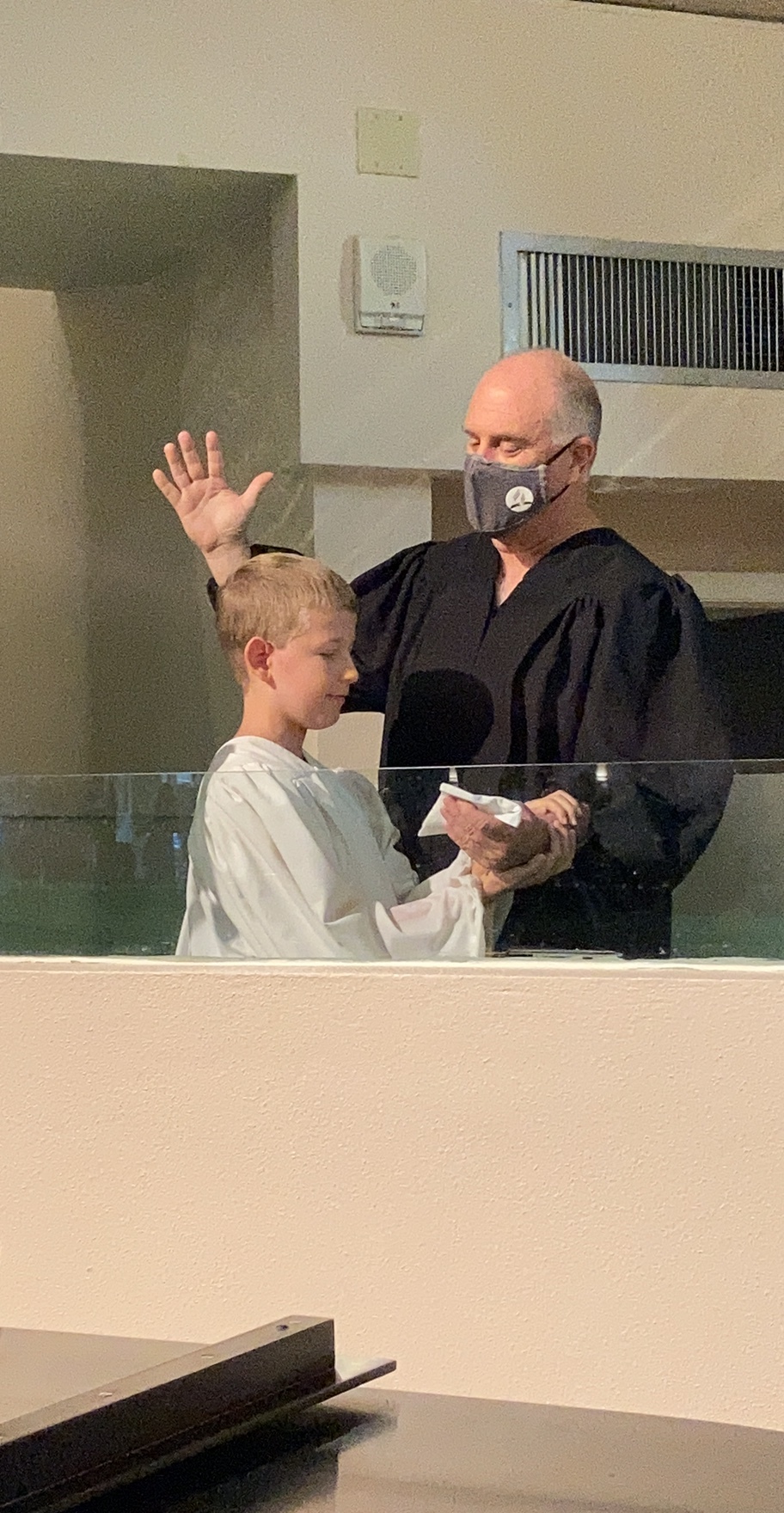
As well as continuing online Bible studies via Zoom and Facetime, personal and group Bible studies in person are growing as well. This year I have been enjoying several youth, adult and family Bible studies on Zoom as well as after school on the NTCA school campus. I have also been able to give Baptism studies in the Tampa Bay area, extending beyond the Plant City community. In just a few weeks I will be conducting another week of prayer evangelism series at the New Port Richey Adventist school.
In Plant City I have been having group Bible studies as well as personal Bible studies. Some groups meet at the church while I have also started a group Bible Study at the Krazy Kup Café in downtown Plant City. This group is intended to reach the unchurched as well as those who want a personal worship service but are not comfortable returning to a regular sized church yet. The start was rather small, but it has been growing steadily, and more people are showing an interest. Some Adventist members have been reluctant to come because it is at a coffee shop on Sabbath mornings. However no one in our group buys anything (not that I have told them not to, that’s their personal business) and we meet in a private meeting room the café provides at a reasonable cost.
This year also saw several new members coming into the kingdom of God at the Homosassa SDA Church by way of baptism and profession of faith. The Homosassa SDA Church generously provides for half of my fulltime salary. This is why I rely on God providing contributors like you to the Plant City Bible Worker Fund for the other half of my fulltime salary. The Plant City SDA Church itself is unable to contribute, but generously hosts the fund so I can do Bible Work in the Plant City-Tampa Bay area and beyond. Jim, is one of those who I have studied with and baptized at Homosassa. However there still turned out to be a link between him and my ministry in the Tampa Bay area. As it turns out, Jim is the cousin of some friends of mine from the Tampa First SDA Church. Both his family at Tampa First and the Homosassa SDA Church family were very encouraged to see Jim make his decision for Jesus!
As well as doing personal and online Bible studies and seminars, I am usually preaching twice a Sabbath. While many people are uncomfortable returning to the actual church for worship service and Sabbath School, this includes some lay preachers who hesitate to return, thus creating a greater demand for me to speak. The Homosassa SDA Church has graciously moved its services to the afternoon, allowing me to preach mornings at the Plant City SDA Church before driving to Homosassa to preach. Other area churches have had several pastors retire this year, and I have also been called to preach at a few of those churches as well.
Several times recently I have been given the opportunity to preach at the New Port Richey SDA Church.
Meanwhile, as I have been giving personal and group Bible studies and seminars in person in the Florida area, I have also been conducting Zoom and FaceTime personal Bible studies and seminars from Georgia to California and several points in-between. I want to thank those who have been faithfully contributing to this ministry with their generous monthly contributions as well as one time contributions. This ministry has been successful now for over 6 years. Yet there is still so much more to be accomplished. Also while this ministry relies on the continued support of contributors like yourself, some who have begun contributing 6 years are no longer able. This is why we are always welcoming new contributors to contribute monthly or with one time contributions.
You may send your tax deductible contributions to the Plant City SDA Church, P.O. Box 5379 Plant City, FL 33563. Please mark your check or envelope “Bible Worker Fund.”
You may also contribute online by going to the Plant City Adventist Online Giving page, and go to the third line item under “Local Church” which reads “Bible Worker.”
Love does no wrong to others, so love fulfills the requirements of God’s law. Romans 13:10 NLT
A young grade school boy and his daddy were walking down a country road, when they noticed a car pull over to the shoulder a few hundred meters up the road. The passenger door opened, and a little puppy fell out the door into the ditch near the shoulder of the road. The boy watched in amazement as the car then sped off. The boy ran to the aid of the little puppy. He found the puppy whining and confused as well as looking malnourished. When the father finally caught up to the boy, the boy firmly told his daddy, “I know you may not let me keep him, but we have to take him home and feed him right now!”
What did the little boy mean by “we have to?” How did an abandoned puppy suddenly became his problem? Was there some law written in stone that the boy had to rescue this poor dog? As a matter fact there was a law, but it was not written in stone. The only reason why the boy said, “we have to” is because there was a law written on that little boy’s heart.
In Luke 10:30-37 Jesus tells a familiar story we call today, “The Good Samaritan.” In the story both the Levi and the priest knew the law of God which was written in stone, but yet they passed by a suffering brother, because that law was not written on their hearts. Then a Samaritan walks by who has the law of love written on his heart. He at once recognized what he had to do, not because of the law written in stone but because it was a law of love tugging at his heart strings. Like puppet strings, his heart strings controlled his behavior. Love and compassion were written on his heart and controlled his behavior.
Writing God’s law of love on our heart is not new to the New Testament. the goal was never to have the law of love written on stone. The ultimate goal was always to have the law written on our hearts. This goes back to the Old Testament.
But this is the new covenant I will make with the people of Israel after those days,” says the Lord. “I will put my instructions deep within them, and I will write them on their hearts. I will be their God, and they will be my people. Jeremiah 31:33 NLT
And you must love the Lord your God with all your heart, all your soul, and all your strength. Deuteronomy 6:5 NLT
“Do not seek revenge or bear a grudge against a fellow Israelite, but love your neighbor as yourself. I am the Lord. Leviticus 19:18 NLT
True justice must be given to foreigners living among you and to orphans, and you must never accept a widow’s garment as security for her debt. Deuteronomy 24:17 NLT
In the Old Testament as well as today, God does not just want the letter of the law written on stone. He wants the spirit of the law written on our hearts. That means showing love and compassion for a little puppy that will never be able to help you. It means showing love and compassion for a neighbor or foreigner who would probably just spit on you and pass you by if the situation was reversed.
This “letter” is written not with pen and ink, but with the Spirit of the living God. It is carved not on tablets of stone, but on human hearts. 2 Corinthians 3:3 NLT
A Samaritan had to rescue a foreigner left to die in a ditch, a young boy had to rescue a helpless puppy, not because of a law carved in stone. They had to because the law was etched upon their hearts.
You may study this week’s Sabbath School lesson here.






 In Light of The Cross