As Adventists we understand from the book of Revelation that the anti-Christ is the papacy putting itself in the place of God. Of course any system putting itself in the place of God is an anti-Christ. In 1 John 2:18, John writes, “even now are there many anti-Christs; whereby we know that it is the last time.” So was John implying their were more anti-Christs besides just the papacy? If so could you or I have anti-Christ characteristics?
To answer this question, let’s back up a little. In studying the Three Angels Message, we see that a so-called religious system, Babylon, falls. Again we know from studying Revelation that this is a specific system. However, we also see that this system has an attitude. That attitude is legalism. Man-made laws and a man-made day of worship combine to make a man-made way of salvation, outside of trusting in the merits of Jesus. While Revelation pinpoints this system, it is clear that this attitude can be found in other systems as well, and history has demonstrated it. Were not the Sadducees and Pharisees making their own laws and trusting their own works for salvation? Yet they were not Babylon. So could it be that if I am not careful to crucify self and die daily, that this same attitude of Babylon could be found in my heart too?
So, if it is possible for me to have the attitude of Babylon, would it also be possible for me to have the same attitude as the anti-Christ, thus making me one of many anti-Christs? An anti-Christ is someone who sets himself up as Christ, just as the man of sin mentioned in 2 Thessalonians 2:3-4: “Let no man deceive you by any means: for that day shall not come, except there come a falling away first, and that man of sin be revealed, the son of perdition; Who opposeth and exalteth himself above all that is called God, or that is worshipped; so that he as God sitteth in the temple of God, showing himself that he is God.” Here we see that the man of sin, or anti-Christ sits in the place of God. So how could I possibly be an anti-Christ, sitting in the place of God? Isaiah 33:22 tells us; “For the LORD is our judge, the LORD is our lawgiver.” Our Lord God is our lawgiver and judge. So, when I set myself up as judge of other people’s motives, or think that I can interpret the law for everybody, I am usurping the seat of God and setting myself up as God, and thus becoming an anti-Christ!
Like Babylon, Anti-Christ is more than a system. It is an attitude. Ellen White explains, that while the pilgrims came to the new world, to escape the anti-Christ, that they carried the attitude of anti-Christ with them to the New World:
“It was the desire for liberty of conscience that inspired the Pilgrims to brave the perils of the long journey across the sea, to endure the hardships and dangers of the wilderness, and with God’s blessing to lay, on the shores of America, the foundation of a mighty nation. Yet honest and God-fearing as they were, the Pilgrims did not yet comprehend the great principle of religious liberty. The freedom which they sacrificed so much to secure for themselves, they were not equally ready to grant to others. “Very few, even of the foremost thinkers and moralists of the seventeenth century, had any just conception of that grand principle, the outgrowth of the New Testament, which acknowledges God as the sole judge of human faith.” (W. Carlos Martyn, The Life and Times of Luther, Vol. 5, p. 297.) The doctrine that God has committed to the church the right to control the conscience and to define and punish heresy, is one of the most deeply rooted of papal errors.-Ellen White, The Great Controversy, pp. 292-3
2 Timothy 3:16 tells us that the Scriptures are profitable for doctrine and correction. I can only define God’s law by what is in the Scriptures , but not by my personal opinions or traditions, like the Pharisees in Christ’s time and religious leaders in the Dark Ages did. I am not the interpreter of the Law for the whole world, nor, can I think to change times and laws to meet with my own opinions or inclinations. Since I am not the Lawgiver, I cannot judge people by my own standards.
While open sin must be dealt with by the community of believers, according to 1 Corinthians 6, I as an individual cannot judge inward motives. In judging outward actions we must still be careful. Joseph almost put poor Mary away thinking he had all the evidence of an affair. Even with his overwhelming evidence, he was wrong! Even with all his evidence, he tried to put her away privately, without any public embarrassment. What a great example for us to imitate. Even with his incontrovertible evidence, Joseph was not going to judge Mary’s heart.
In 1 Corinthians 6, Paul teaches that churches, not individuals, to judge open and outward actions very carefully. He teaches no one to judge the heart and inward motives. 2 Timothy 3:16 tells us God and the Scriptures alone tell us what is right and wrong. I am not the Lawgiver or the interpreter of the law for the rest of the world.
Only the Lord our God is our Lawgiver and Judge, and when we judge people according to our own standards, opinions and understanding, we usurp the throne of God and become an anti-Christ.
You may study this week’s Sabbath School lesson here.
When people ask me why Adventists do not keep the feast days, I tell them we do – literally! At the cross we had the literal Passover. Ever since 1844 we have been living in the literal Day of Atonement. When Jesus returns it will literally be the Feast of Trumpets. As Colossians 2:14-17 points out, we do not need to keep the feast sabbaths which were a shadow of things to come, because now we had the literal Passover when Jesus died on the cross. Now we are living in the literal Day of Atonement.
I have heard people say there is no such thing as a literal Day of Atonement, but that makes no sense to me, because how can there be a shadow to something that doesn’t even exist? Also the sanctuary building itself shows me there has to be a literal Day of Atonement and cleansing of the sanctuary. The sanctuary is an illustration of the gospel. Many try to tell me the gospel ended at the cross. If that is so then the sanctuary would have ended in the courtyard where the sacrifice was slain. The fact that the sanctuary continues to a holy and most holy place, tells me the gospel goes beyond a literal cross into a literal holy and most holy place. Besides, if the Passover had a literal cross and the Feast of Trumpets has a literal second coming then reason tells me the Day of Atonement must have a literal Day of Atonement as well.
A friend pointed out to me that there was no reason for a literal Day of Atonement beginning in 1844 because sins were forgiven and cleansed right away. There was no need for a cleansing of the sanctuary. Yet Peter refers to a future day of refreshing or cleansing of sin still to come.
Repent ye therefore, and be converted, that your sins may be blotted out, when the times of refreshing shall come from the presence of the Lord. Acts 3:19 KJV
Still I have heard people say there is no reason for a Day of Atonement or investigative judgment because God already knows everything and does not need to investigate. However in Genesis 3 God comes into the Garden of Eden to investigate after Adam and Eve disobeyed. Again in Genesis 18:21 God investigates Sodom and Gomorrah. So we cannot say there is no investigation because God already knows. Besides, all arguments aside, Daniel 8:14 says after 2300 days (a day for a year Ezekiel 4:6) the sanctuary shall be cleansed. The prophecy of Daniel 8 and 9 mesh together. If you try to make the cleansing of the sanctuary in 2300 literal days then you have to make the coming of the Messiah in 483 literal days which would make it impossible for Jesus to be our Messiah and Savior. But as Daniel 8 and 9 clearly teach, in A.D. 27 at the beginning of the 70th week, Jesus came as our Messiah and in 1844 He entered the Most Holy Place in heaven to complete the Gospel with the Day of Atonement and Cleansing of the Sanctuary.
Since the Old Testament Day of Atonement was a shadow or illustration of what would occur during the literal Day of Atonement when Jesus entered the Most Holy Place for us, let’s review what happened in that service:
What was to happen at the end of the 2300 days?
The other replied, “It will take 2,300 evenings and mornings; then the Temple will be made right again.” Daniel 8:14 NLT And he said unto me, Unto two thousand and three hundred days; then shall the sanctuary be cleansed. Daniel 8:14 KJV
Note: The Bible refers to two sanctuaries, one on earth and the other in heaven.
After what, was Moses to build the sanctuary?
“Have the people of Israel build me a holy sanctuary so I can live among them. You must build this Tabernacle and its furnishings exactly according to the pattern I will show you. Exodus 25:8- 9 NLT
Where is the location of the original?
Here is the main point: We have a High Priest who sat down in the place of honor beside the throne of the majestic God in heaven. There he ministers in the heavenly Tabernacle,the true place of worship that was built by the Lord and not by human hands. Hebrews 8:1-2 NLT
They serve in a system of worship that is only a copy, a shadow of the real one in heaven. For when Moses was getting ready to build the Tabernacle, God gave him this warning: “Be sure that you make everything according to the pattern I have shown you here on the mountain.” Hebrews 8:5 NLT
How many apartments did it have?
Hang the inner curtain from clasps, and put the Ark of the Covenant in the room behind it. This curtain will separate the Holy Place from the Most Holy Place.Exodus 26:33 NLT
When these things were all in place, the priests regularly entered the first room as they performed their religious duties. Hebrews 9:6 NLT
How frequent was it in the second apartment?
But only the high priest ever entered the Most Holy Place, and only once a year. And he always offered blood for his own sins and for the sins the people had committed in ignorance. Hebrews 9:7 NLT
When did the high priest do this?
“On the tenth day of the appointed month in early autumn, you must deny yourselves. Neither native-born Israelites nor foreigners living among you may do any kind of work. This is a permanent law for you. Leviticus 16:29 NLT
What was he doing?
On that day offerings of purification will be made for you, and you will be purified in the Lord’s presence from all your sins. Leviticus 16:30 NLT
How did he do it?
Then he must take the two male goats and present them to the Lord at the entrance of the Tabernacle. He is to cast sacred lots to determine which goat will be reserved as an offering to the Lord and which will carry the sins of the people to the wilderness of Azazel. Aaron will then present as a sin offering the goat chosen by lot for the Lord. Leviticus 16:7-9 NLT
What did he do with the blood?
“Then Aaron must slaughter the first goat as a sin offering for the people and carry its blood behind the inner curtain. There he will sprinkle the goat’s blood over the atonement cover and in front of it, just as he did with the bull’s blood. Through this process, he will purify the Most Holy Place, and he will do the same for the entire Tabernacle, because of the defiling sin and rebellion of the Israelites. Leviticus 16:15-16 NLT
What did he do with the sins?
“When Aaron has finished purifying the Most Holy Place and the Tabernacle and the altar, he must present the live goat. He will lay both of his hands on the goat’s head and confess over it all the wickedness, rebellion, and sins of the people of Israel. In this way, he will transfer the people’s sins to the head of the goat. Then a man specially chosen for the task will drive the goat into the wilderness. As the goat goes into the wilderness, it will carry all the people’s sins upon itself into a desolate land. Leviticus 16:20-22 NLT
“Be careful to celebrate the Day of Atonement on the tenth day of that same month—nine days after the Festival of Trumpets. You must observe it as an official day for holy assembly, a day to deny yourselves and present special gifts to the Lord. Do no work during that entire day because it is the Day of Atonement, when offerings of purification are made for you, making you right with[the Lord your God. All who do not deny themselves that day will be cut off from God’s people. Leviticus 23:27-29 NLT
What happened to those living willfully in open sin?
All who do not deny themselves that day will be cut off from God’s people. And I will destroy anyone among you who does any work on that day. Leviticus 23:29-30 NLT
Note: Jesus has begun the cleansing of the heavenly sanctuary or the blotting out of the record of confessed sins there, as well as from our lives here.
What pronouncement will Jesus soon make?
Let the one who is doing harm continue to do harm; let the one who is vile continue to be vile; let the one who is righteous continue to live righteously; let the one who is holy continue to be holy.” “Look, I am coming soon, bringing my reward with me to repay all people according to their deeds. Revelation 22:11- 12 NLT
What happens to those still sinning willfully?
And God will provide rest for you who are being persecuted and also for us when the Lord Jesus appears from heaven. He will come with his mighty angels, in flaming fire, bringing judgment on those who don’t know God and on those who refuse to obey the Good News of our Lord Jesus. They will be punished with eternal destruction, forever separated from the Lord and from his glorious power. 2 Thessalonians 1:7-9 NLT
What happens to the righteous?
For the Lord himself will come down from heaven with a commanding shout, with the voice of the archangel, and with the trumpet call of God. First, the Christians who have died will rise from their graves. Then, together with them, we who are still alive and remain on the earth will be caught up in the clouds to meet the Lord in the air. Then we will be with the Lord forever. 1 Thessalonians 4:16-17 NLT
Which group will you be found in?
“Not everyone who calls out to me, ‘Lord! Lord!’ will enter the Kingdom of Heaven. Only those who actually do the will of my Father in heaven will enter. On judgment day many will say to me, ‘Lord! Lord! We prophesied in your name and cast out demons in your name and performed many miracles in your name.’ But I will reply, ‘I never knew you. Get away from me, you who break God’s laws.’ “Anyone who listens to my teaching and follows it is wise, like a person who builds a house on solid rock. Though the rain comes in torrents and the floodwaters rise and the winds beat against that house, it won’t collapse because it is built on bedrock. But anyone who hears my teaching and doesn’t obey it is foolish, like a person who builds a house on sand. When the rains and floods come and the winds beat against that house, it will collapse with a mighty crash.” Matthew 7:21-27 NLT
What should we be doing in this time of judgment?
“Fear God,” he shouted. “Give glory to him. For the time has come when he will sit as judge. Worship him who made the heavens, the earth, the sea, and all the springs of water.” Revelation 14:7 NLT
What assurance do we have?
So then, since we have a great High Priest who has entered heaven, Jesus the Son of God, let us hold firmly to what we believe. This High Priest of ours understands our weaknesses, for he faced all of the same testings we do, yet he did not sin. So let us come boldly to the throne of our gracious God. There we will receive his mercy, and we will find grace to help us when we need it most. Hebrews 4:14-16 NLT
I think my parents did a pretty balanced job of raising me. I was taught that no one was better than me, and that I am no better than anyone else. A while back I was listening to a documentary on NPR , talking about how awkward it was for people who served as maids and butlers to become successful and turn around and have their own maids and butlers. To me it would not be awkward at all. I have actually had to hire a temporary housekeeper at times when I became so busy with multiple jobs. There were also times when I did some housekeeping or landscaping work myself to make extra money. When I was working for someone in their home I never thought of them as better than me, and when someone was working in my home I never thought I was better than them. I just thought we were all just helping each other out as we made our way through life.
However some people are tempted to think they are better than others. Having worked with youth and families in churches and schools I have learned there are two types of parents. One type of parent teaches their kids not to actlike they are better than anyone else. The other group teaches their kids they aren’t better than anyone else. Even with my professed balanced upbringing, I have had to tell myself, “If I shouldn’t say something condescending then I should not even think it.”
Here are some ideas that keep me humble as if all my mistakes and failures were not enough.
If someone says, “I love God,” and hates his brother, he is a liar; for he who does not love his brother whom he has seen, how can he love God whom he has not seen? 1 John 4:20 NKJV
I understand the word “love” here is “agape.” Agape is the love God has for bad people. Of course God is good so he does not need our agape, since He actually earns our love. So what I understand John saying here is this, “If you say would agape God and love Him even if He was bad, prove it by loving your brother who really is bad. Speaking on this passage I once heard Wintley Phipps say, “Our love for God is no stronger than the love we have for the person we love the least.”
How could I be too good to love someone who Jesus loves?
Speaking of the least, Jesus says,
‘Assuredly, I say to you, inasmuch as you did it to one of the least of these My brethren, you did it to Me.’ Matthew 25:40 NKJV
Jesus gave His life for sinners. If the least of sinners needs my time and help, and I shrug them off as not worth my time or money then I have just put myself above Jesus. No matter how smart, rich or talented I think I am, if I think a sinner is not worth my time and effort after Jesus gave His life for them, then I must think I’m greater than Jesus!
For indeed He does not give aid to angels, but He does give aid to the seed of Abraham. Hebrews 2:16 NKJV
How could I be too good to help someone who Jesus helps?
But God demonstrates His own love toward us, in that while we were still sinners, Christ died for us. Romans 5:8 NKJV
How could I be too good to die for someone who Jesus died for?
Our attitude towards the least of these shows our attitude towards Jesus.
You may study this week’s Sabbath School lesson here.
I am writing tonight from my beautiful hometown of Tulsa, Oklahoma.
“Not everyone who calls out to me, ‘Lord! Lord!’ will enter the Kingdom of Heaven. Only those who actually do the will of my Father in heaven will enter. On judgment day many will say to me, ‘Lord! Lord! We prophesied in your name and cast out demons in your name and performed many miracles in your name.’ But I will reply, ‘I never knew you. Get away from me, you who break God’s laws.’ Matthew 7:21-23 NLT
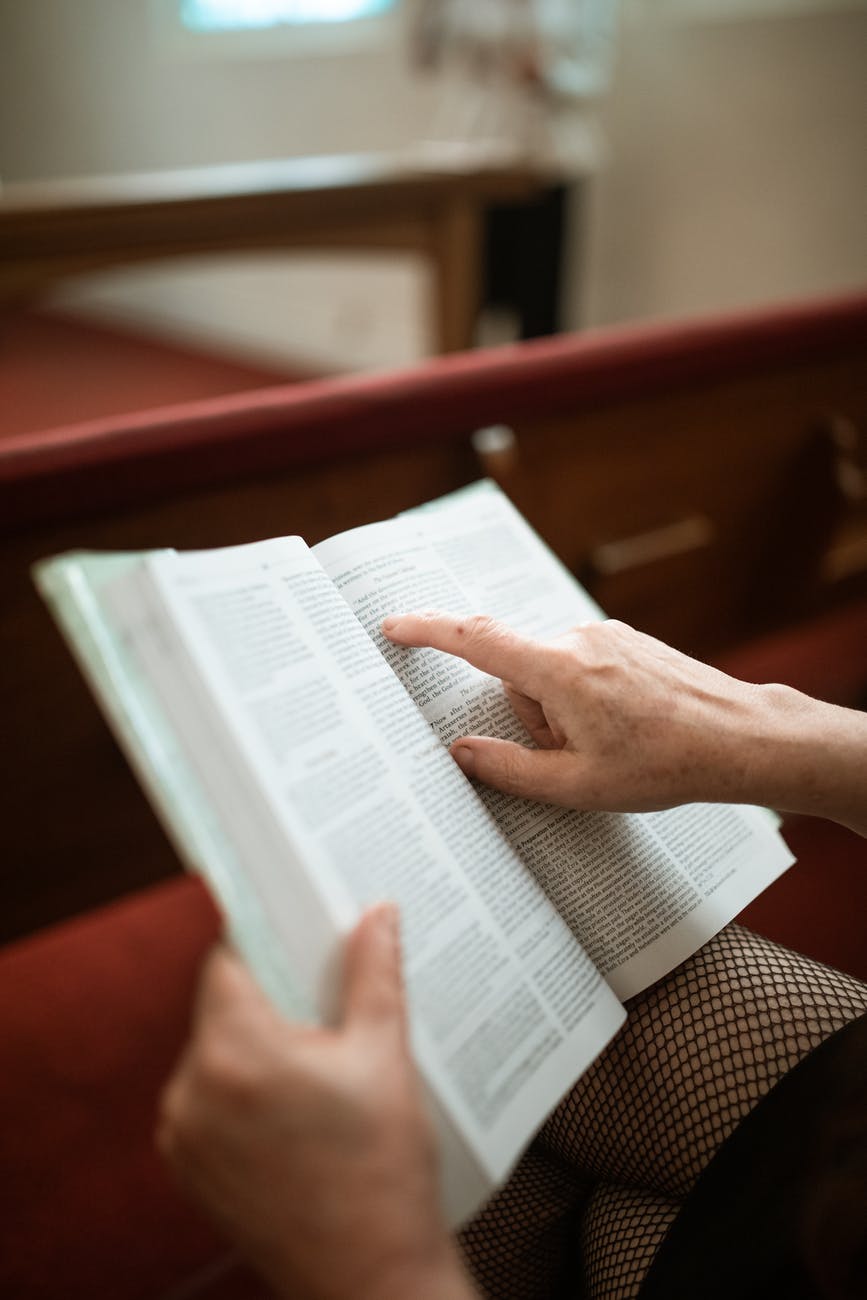
When I tell one of my students at school to clean the dry erase board he does not come up to me several minutes later saying, “I memorized what you told me to do.” Memorizing is not the goal. Obedience is the goal. This is why I find this week’s Sabbath School lesson so crucial as it stresses the importance of not only understanding or even memorizing the Bible but actually doing what it says. I know people who show great respect for the Bible by not placing anything on top of it or by not setting it on the ground, treating it much the way we do our nation’s flag. This is commendable, but I believe and I’m sure you do too, that the greatest way to show respect for God’s Word is to do what it says. Otherwise not stacking things on top of the Bible or not letting it touch the ground is meaningless if we are not doing what it says. After all what traitor could stand before a judge and say, “Sure I traded military secrets to the enemy but I never let the flag touch the ground.” Treating the flag with respect is meaningless if we are betraying the nation it represents.
Today when writing even a pronoun for God like “He” and “Him” we capitalize the pronouns referring to God out of respect. However you may have already noticed that in the Bible the pronouns for God are not capitalized. What gives? Did the Bible translators have no respect for God and His holiness? No, they had great respect for God, but they realized that the best way to show respect for God is to do what He says, and not just simply write His name with capital letters. After all, writing pronouns referring to God with capital letters is quite hallow if we are not exhibiting the greatest form of respect which is obedience.
After all, nowhere in Scripture does it tell us not stack anything on top of the Bible or make sure we write pronouns referring to God with capital letters. Nowhere in Scripture are we told the importance of merely memorizing Scripture if we are not prepared to actually do what it says. In Luke 10 a lawyer engages Jesus in a theological discussion regarding the law and salvation. Jesus commends the lawyer for his theory on theology. But even as Jesus commends his theory as being theologically correct He also lets him know more than head knowledge and theory is required.
Right!” Jesus told him. “Do this and you will live!” Luke 10:28 NLT
Jesus was not satisfied with theological head knowledge. Jesus wanted the lawyer to do what the law says. Jesus then illustrates His point with the story of the good Samaritan, who practiced loving his neighbor. The Samaritan was doing in the story what the lawyer was only talking about. At the end of the story Jesus reiterates the importance of doing what the law says instead of just studying and memorizing the law.
Then Jesus said, “Yes, now go and do the same.” Luke 10:37 NLT
A few years ago I was a part of a discussion where someone was saying that we don’t need to obey the health and temperance principles in the Bible. We only need to call upon the name of the Lord and we will be saved. He referenced Romans 10:13. I agreed that Romans 10:13 does indeed say those who call upon the Name of the Lord will be saved, but we can’t call Jesus “Lord” if we are not obeying Him. Matthew 7:21-23 makes it clear that we are calling on the name of the Lord in vain if we are not obeying His laws. After all obedience is the result of salvation.
Work hard to show the results of your salvation, obeying God with deep reverence and fear. Philippians 2:12 NLT
When Jesus was at the wedding party with His mother, and they ran out of wine, His mother told the servants something extremely simple but equally profound.
Many years ago I was the guest speaker at a church where a family had just lost a child. The pastor explained to me that they would take up an offering for the family to help with funeral expenses and assured me they would still take up the customary offering to cover my expenses traveling to their church. When the plea was made for the family’s offering someone testified how poor the family was. I perceived the Holy Spirit nudging me to tell the pastor sitting on the platform with me to collect all of the money for the family and not to take up an offering for me. I sat there a few moments considering what I felt the Holy Spirit telling me. Did I have the money to pay for this trip myself? Then I perceived the Holy Spirit speaking to my conscience again, “What is there to think about or consider? I just told you what to do!” I then leaned over and whispered in the pastor’s ear to forget about my offering and give it all to the family. I never missed the money I would have received that day. More importantly I did what I knew God was telling me to do.
It was not enough for me to know what God was telling me to do. It was not enough for me to memorize what God was telling me to do. The minimum God was requiring of me was to actually do what He was telling me to do. So it is with studying God’s Word. It is not enough to study. It is not enough to understand. It is not enough to memorize. We must obey the Word of God.



 In Light of The Cross
