Amplify the Gospel, Silence the Controversies

Amplified controversies can silence the Gospel, or amplifying the Gospel can silence controversies. 

The church in Jesus’ day was praying. They prayed so much Jesus had to warn people not to be showing off how much they were praying and to pray in their closets. The church in Jesus’ day was debating Scripture. Many lawyers and Pharisees would approach Jesus with some Scripture they wanted to argue over or debate. They all quoted Scripture to each other. Yet, even though they knew the Scriptures and prayed a lot, they still crucified Jesus.

Why didn’t praying and quoting Scripture keep them from turning around and crucifying the Son of God? Well, here is one thing they weren’t doing. They weren’t reaching out to serve others. They weren’t sharing the Gospel with the Samaritans and the rest of the world. They would rather be stirring up controversy in the church instead of sharing the Gospel with the world. That kind of a mindset led them to crucify Jesus. After all they had to get rid of Jesus so the Romans would not take away their church where they could have power struggles and controversies. We read of the exact opposite happening during the Protestant reformation.

In Wesley’s time, as in all ages of the church’s history, men of different gifts performed their appointed work. They did not harmonize upon every point of doctrine, but all were moved by the Spirit of God, and united in the absorbing aim to win souls to Christ. The differences between Whitefield and the Wesleys threatened at one time to create alienation; but as they learned meekness in the school of Christ, mutual forbearance and charity reconciled them. They had no time to dispute, while error and iniquity were teeming everywhere, and sinners were going down to ruin. –Ellen White, Great Controversy, Pages 257-258

While the reformers did not agree on every point, they amplified the Gospel and silenced controversies. Please notice that even though they did not all agree on every point they were still all led by the Holy Spirit. They avoided needless controversy so they could reach the lost, instead of avoiding the lost to engage in needless controversy.

Of course I realize not all controversy is needless, There are issues and controversies that must be faced. At the same time we have to choose our battles well. We don’t have to die on every hill. Daniel was a man of strict integrity who still got promoted in Babylon, of all places. I imagine he chose his battles well. His diet was very important. His prayer life was so important he would not back down even from the lion’s den. At the same time I can’t see Daniel getting promoted in Babylon by making an issue out of every little thing. I see him following the counsel Paul gave us, to live as peacefully with people as possible, instead of stirring up controversy. For Daniel to be such a man of integrity and still get promoted in Babylon, he must have learned some diplomacy. Again I don’t see him doing that by making mountains out of molehills and fighting every battle that could possibly be fought,  and dying on every hill there was to die on. 

Let’s consider the story of the paralytic. Let’s pay attention to the different participants in this story and what each person or group were doing. Which ones were engaged in the Gospel and which ones were engaged in controversy? 

And again He entered Capernaum after some days, and it was heard that He was in the house. ]Immediately many gathered together, so that there was no longer room to receive them, not even near the door. And He preached the word to them. Then they came to Him, bringing a paralytic who was carried by four men.  And when they could not come near Him because of the crowd, they uncovered the roof where He was. So when they had broken through, they let down the bed on which the paralytic was lying. When Jesus saw their faith, He said to the paralytic, “Son, your sins are forgiven you.”  And some of the scribes were sitting there and reasoning in their hearts, “Why does this Man speak blasphemies like this? Who can forgive sins but God alone?”  But immediately, when Jesus perceived in His spirit that they reasoned thus within themselves, He said to them, “Why do you reason about these things in your hearts? Which is easier, to say to the paralytic, ‘Your sins are forgiven you,’ or to say, ‘Arise, take up your bed and walk’? But that you may know that the Son of Man has power on earth to forgive sins”—He said to the paralytic, “I say to you, arise, take up your bed, and go to your house.”  Immediately he arose, took up the bed, and went out in the presence of them all, so that all were amazed and glorified God, saying, “We never saw anything like this!” Mark 2:1-12 NKJV

Jesus was preaching the Gospel. Some were carrying a man to Jesus so he could benefit from the gospel. Notice, though, it’s the people seated in the house that are causing controversy, (not all, I am sure) by questioning Jesus’ right to forgive. Jesus was too busy for controversy because He was too busy preaching the Gospel. As a matter of fact, His only response to the controversy was to amplify the Gospel by healing the man as well as forgiving him. The people bringing the paralytic to Jesus were so busy helping the man find Jesus that they had no time to engage in controversy. The only people in this story who had time for controversy were the people sitting in church waiting for something to be said that could turn into a controversy. 

Maybe there would be less time for controversy if we were all like the Wesleyans engaged in helping sinners find the Savior. Maybe there would be less time for controversy if instead of sitting in church critiquing the new elder’s sermon and his wife’s dress, we were busy creating an opening in the church to let people in who are hungering and thirsting for forgiveness and the Gospel. 

Maybe you’re right. Maybe the red carpet in the church does need to be replaced with an earth tone carpet instead. But while you were pleading your case in the board meeting, a young single mother could have used an encouraging phone call reminding her she is not alone and God loves her. You can amplify the need for earth tone carpet or you can amplify the Gospel. 

Maybe you’re right. Maybe the church should have reimbursed you for traveling all the way to see a church member in the larger hospital all the way in the city. You also had to pay for parking. The church did not reimburse you for that either, even though they paid for the youth group to go into the city to buy ice cream. It’s not fair. But you got to share Jesus with the sick church member and even prayed with the person in the next bed. Leave that with Jesus. After all, you did not do it for the church. You did it for Jesus. Let Him pay you. He saw what you did. He will provide for you. You can amplify your rights or you can amplify the Gospel. 

Maybe you’re right. Maybe your understanding of the 144,ooo is right ,and the Sabbath school teacher is wrong. But while you were fighting your case in Sabbath School, a teenage boy was loitering in the church hallway, not because he didn’t want to go to his Sabbath School class, but because he’s not sure he is worthy. You see, he found his uncle’s porn stash and got all tangled up in that again. He wasn’t looking for it. It was just there. Now he’s wondering why God allowed that to happen? He is wondering if God can forgive him – again. He is nowhere close to being able to debate and split hairs about Christian perfection. He just wants to know if God still loves him and can free him again from this one addiction. Amplify the Gospel. 

You may study this week’s Sabbath School lesson here.

3: Controversies-Sabbath School Lesson Teaching Plan

Prepared by William Earnhardt, for Sabbath School class, July 20, 2024.

Main Theme: This week we will look at how Jesus handled some controversial situations and what we can learn from Him.

Read in Class: Mark 2:1-12. Discuss the main ideas in this passage.

Study: What was the paralytic looking for when he was brought to Jesus, and what did he receive?

Apply: In the story in Mark 2:1-12, Jesus is preaching the Gospel. A group of frirends are bringing another friend to Jesus to hear the Gospel. Another group of people are critisizing Jesus and questioning Jesus’ words and methods. Which group to you most closely identify with and why? Which group was doing waht they were supposed to be doing?

Share: Your friend asks how Micah 6:6-8 explains what was happening between Jesus and the leaders. What do you tell your friend?

Read in Class: Mark 2:13-22. Ask the class to summarize this passage.

Study: Who was Levi, the son of Alphaeus, and why would there be an objection to him becoming a disciple of Jesus?

Apply: Who are those who today might be looked upon as the tax collectors were in Jesus’ day? How do we adjust our thinking regarding them?

Share: Your friend asks you if we should be fasting to today, and if so why and how? What do you tell your friend?

Read in Class: Mark 2:23-28. Discuss the main idea of this passage.

Study: How does Jesus counter the charge brought by the Pharisees?

Apply: In the NLT Mark 2:24 says the pharisees accused the disciples of “harvesting grain on the Sabbath.” Really? All they were doing was plucking a few heads of grain to eat right then. Would you really consider that “harvesting?” Were the pharisees going a little overboard on this accusation? What are some things we sometimes go overbaord on or may be a little too picky about?

Share: Your friend asks you what Mark 3:1-6 teaches about Sabbath keeping. What do you tell your friend?

Read in Class: Mark 3:20-35. Discuss the main idea of this passage.

Study: What connection do you see between the two stories intertwined in this passage?

Apply: Based on Scripture how would you explain what the unpardonable sin is?

Share: Your friend says she is afraid she has commited the unpardonable sin. What do you tell your friend?

Adelina, Angelita and Apollos’ Baptism and Profession of Faith Pictures and Stories

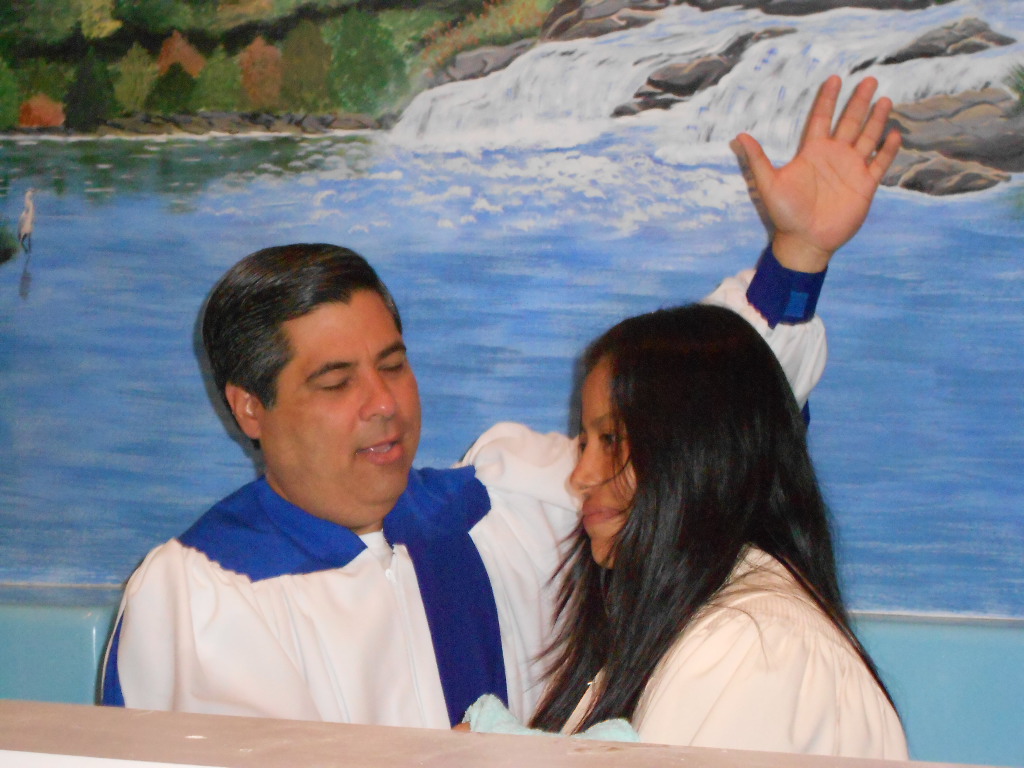
Today we had a wonderful celebration at the Homosassa Seventh-day adventist Church, as we had two baptisms and one profession of faith. Christina (on the right) was especailly celebrating as her sister Adelina (left), who left the church over 40 years ago came back into the fold today on profession of faith. Adelina was so glad to be back home she thanked her sister for praying for her for all those 40 years. Adelina was so glad to be back in God’s church, where she says she belonged the whole time.

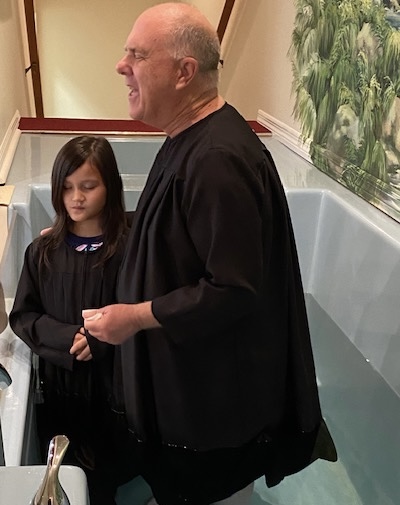
Angelita and her brother Apollos have been studying the Making Jesus my Best Friend baptism workbook with their parents. Parents are a child’s first pastor, and Angelita and Apollos’ parents, Kayle and Regine have done a very good job of leading their children to fall in love with Jesus, both by teaching and example. I also studied with Angelita and Apollos and was very moved by their dedication. Angelita even asked me how she can know that she really means it in her heart when she asks Jesus for forgiveness. Angelita and her brother both want to be real with God and have honest hearts.

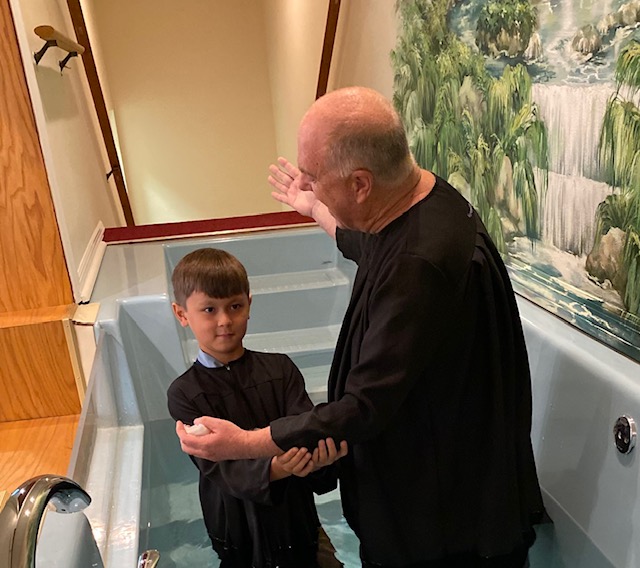
Apollos is the same age I was when I was baptized! Apollos loves building things and has the mind of an engineer and builder. You should see some of his legos creations they are quite complex. Apollos will be building up the kingdom of God.

Now, therefore, you are no longer strangers and foreigners, but fellow citizens with the saints and members of the household of God, having been built on the foundation of the apostles and prophets, Jesus Christ Himself being the chief cornerstone,  in whom the whole building, being fitted together, grows into a holy temple in the Lord, in whom you also are being built together for a dwelling place of God in the Spirit. Ephesians 2:19-22 NKJV

Apollos and Angelita both received flowers as well as cards, a devotional book and their baptism certificates which contain the fundamental Bible teachings of the Seventh-day Adventist Church.

Adelina received the same gifts too along with her Profession of Faith certificate.

Adelina says the Seventh-day Adventist Church is where she has belonged all her life. Do you want to belong to a church that loves Jesus and follows His teachings? I would love to talk to you about this anytime. You can reach me at william.earnhardt@floridaconference.com

How the Complete Gospel Brought Complete Healing to the Leper

Photo by Cytonn Photography on Pexels.com

I must admit, while I hated Covid and everything about it, there were some things I rather enjoyed about the temporary shutdown.

I enjoyed giving Bible studies at home on the phone in my pajamas. I enjoyed Sabbath mornings, relaxing with my Bible and having a nice big breakfast before meeting everyone on Zoom for church. I enjoyed the fact that while we did church on Zoom, old friends from around the world could join us. I even got to speak at my old church in Texas on Zoom, and a retired pastor in Texas who used to be at one of my current churches in Florida, got to be our guest speaker on Zoom.

I even learned I knew how to cook. However, when the restaurants opened back up, I seemed to have forgotten I knew how to cook. I enjoyed all the miles I saved on my car, working from home. Being an introvert, (My friends find this hard to believe but yes, I am an introvert.) I enjoyed having more time to read and write and just think and ponder life. I actually would not mind another shutdown every now and then, just without the Covid!

But as introverted as I may be, I missed people! A single friend who lives alone like I do, mentioned to me on the phone how long it had been since she had been hugged. She said at least people stuck at home with their families can touch and hug each other. For her, though, there was no human touch. For me neither. Human touch is important. As a matter of fact, I believe that is why Satan has so masterfully made inappropriate touching such a problem today. Now people are scared to touch someone even appropriately, and by this Satan has a double win. Bad people are touching others inappropriately and good people aren’t even touching others appropriately, for fear their motives will be misconstrued. But appropriate touch is still so vitally important. Take the story of Jesus healing the leper for example.

Now a leper came to Him, imploring Him, kneeling down to Him and saying to Him, “If You are willing, You can make me clean.” Then Jesus, moved with compassion, stretched out His hand and touched him, and said to him, “I am willing; be cleansed.” As soon as He had spoken, immediately the leprosy left him, and he was cleansed. Mark 1:40-42 NKJV

We all know in the Bible leprosy can be symbolic of sin. I love the fact that while some of our prayers may seem to have a delay in being answered not so the prayer to be made clean. As soon as the request was made for being cleansed, the leper was immediately cleansed. This tells me that when I ask for forgiveness and the moral cleansing referred to in 1 John 1:9 that there is no delay. I am immediately forgiven and cleansed.

But back to my point about how important appropriate touch is. Mark tells us Jesus touched the leper. Why? After all, He healed him with the words, “be cleansed,” so why did Jesus have to touch him? Because, while Jesus cleansed the leprosy with His words, He healed the loneliness with His hand. This man had been an outcast from society and even his own home. He needed more than just physical healing. He needed emotional healing. He needed to be healed from loneliness. Words can heal leprosy, but human touch cures loneliness.

When it comes to sharing the Gospel, many people want to drop a piece of literature on someone’s doorstep and run away before the person opens the door, so they don’t have to talk to them. But the Gospel heals us completely. The Gospel not only gives us amazing facts, but it also gives us amazing relationships. The Gospel takes away our sins, but it also takes away our loneliness. This means mingling with people instead of just throwing Bible facts at them and running away. And get this, while some people complain some Bible study groups and even Sabbath school classes have too much food and refreshments instead of just studying the Bible, the complete Gospel provides both spiritual food and physical food. The complete Gospel fills the mind, the heart and the stomach! The complete Gospel makes us complete spiritually, physically and emotionally. This is why many Bible study growth groups have refreshments after the deep Bible study. This gives the teacher the opportunity to teach and fellowship with the group so he/she can get to bond with everyone.

A while back a friend from Florida moved to another state for a couple of years and then moved back to Florida. When she came back, I asked how she liked where she just moved from. She said, “Everyone was friendly, but nobody wanted to be your friend.” I thought wow, that could describe some of our churches. Everyone smiles at you but as soon as church is over, they all want to run home to be alone. I have often said, you can’t tell how friendly a church is on Sabbath. You can tell how friendly a church is during the week. Smiles and greetings on Sabbath mean absolutely nothing if we ignore each other during the week. That is why its only during the week that you can tell how friendly a church or Sabbath school class is. Our Sabbath Schools classes and Bible study groups are designed to do way more than present a Gospel that just saves you from sin. If that were the case we could all just study our Bible alone and have church by ourselves at home. Our Sabbath School classes and Bible study groups are to present a Gospel that saves the sinner from sin and loneliness. 

In the story of Jesus healing the leper, we see that the Gospel cleanses us and makes us whole, spiritually, physically and emotionally.

You may study this week’s Sabbath School lesson here.

2: A Day in the Ministry of Jesus-Sabbath School Lesson Teaching Plan

Prepared by William Earnhardt, for Sabbath School class, July 13, 2024.

Main Theme: Mark 1 gives us practical lessons for sharing the Gospel in day to day life.

Read in Class: Mark 1:16-28. Ask the class to summarize this passage.

Study: Who were the men Jesus called as disciples, and what was their response? What unforgettable experience happened in the Capernaum synagogue, and what spiritual truths can we take from this account?

Apply: What have you been called to give up in order to follow Jesus? (Think about the implications of your answer, especially if you can’t think of anything.)

Share: Your friend asks,”Why did Jesus tell the demons to be quiet when they were telling the truth? Is there a time for us to keep quiet even about things that are true?” What do you tell your friend? See, Why did Jesus Tell the Demons not to tell Everyone who He was?

Read in Class: Mark 1:29-34. Ask the class to identify the main idea of this passage.

Study: How did Jesus help Peter’s family, and what spiritual lessons can we draw from this account?

Apply: When and how has Jesus healed you, and how did it make you serve Him better?

Share: Your friend asks, “Just how sick should someone be before we ask Jesus to heal them? How sick should someone be before they call for the elders to anoint them?” What do you tell your frirend? See James 5:14-18.

Read in Class: Mark 1:35-39. Ask the class to summarize this passage.

Study: What important lessons can be taken from what Jesus did here?

Apply: Read Luke 6:12. Have you ever prayed all night? How big a part does prayer play in your daily living? Is it really even pracitical to think we can pray like Jesus did?

Share: Your friend asks, “Have you ever personally experienced a miracle that you credit directly to prayer? Can you tell us about it?” What do you tell your friend?

Read in Class: Mark 1:40-45. Ask the class to summarize this passage.

Study: What does this teach us about Jesus and how He related to the marginalized in society?

Apply: How can we be careful not to do things that could hamper the spread of the gospel, no matter how good our intentions?

Share: Can you think of someone who may be feeling like an “outsider”? How can you reach out to that person this week and make them feel included?

A Look at Baptism in Light of the Cross

As we are taking a look at the baptism of Jesus in this week’s Sabbath School lesson, let’s also look at baptism in light of the cross

Brief overview:

By baptism we confess our faith in the death and resurrection of Jesus Christ, and testify of our death to sin and of our purpose to walk in newness of life. Thus we acknowledge Christ as Lord and Saviour, become His people, and are received as members by His church. Baptism is a symbol of our union with Christ, the forgiveness of our sins, and our reception of the Holy Spirit. It is by immersion in water and is contingent on an affirmation of faith in Jesus and evidence of repentance of sin. It follows instruction in the Holy Scriptures and acceptance of their teachings. (Rom. 6:1-6Col. 2:1213Acts 16:30-3322:162:38Matt. 28:1920.)

Why it is important to understand the truth about baptism:

The Bible only teaches one form of baptism. See Ephesians 4:5. We get the word “baptism” from the Greek word, “baptizo” which means, to immerse. To be immersed you must go into the water all the way.

Why it is important to understand baptism in light of the cross:

Romans 6 tells us the reason there is only one form of baptism. Baptism is where we are crucified with Christ and die to self. In Baptism we are giving all of ourselves to Jesus because He loved and gave all of Himself for us. When we go under the water we stop breathing for a moment. That is symbolic of our death to self. When we come up out of the water, we take a new breath and that new breath represents the new life that we are now living for Jesus.

Further Study on Baptism

How essential is baptism?

Jesus replied, “I assure you, no one can enter the Kingdom of God without being born of water and the Spirit. John 3:5 NLT

How many types of baptism does God recognize?

There is one Lord, one faith, one baptism Ephesians 4:5 NLT

How was Jesus baptized?

Then Jesus went from Galilee to the Jordan River to be baptized by John. But John tried to talk him out of it. “I am the one who needs to be baptized by you,” he said, “so why are you coming to me?” But Jesus said, “It should be done, for we must carry out all that God requires.” So John agreed to baptize him. After his baptism, as Jesus came up out of the water, the heavens were opened and he saw the Spirit of God descending like a dove and settling on him. And a voice from heaven said, “This is my dearly loved Son, who brings me great joy.”Matthew 3:13-17 NLT

Why did John baptize there?

At this time John the Baptist was baptizing at Aenon, near Salim, because there was plenty of water there; and people kept coming to him for baptism. John 3:23 NLT

How did Philip baptize the Ethiopian?

He ordered the carriage to stop, and they went down into the water, and Philip baptized him. Acts 8:38 NLT

What must precede baptism?

Therefore, go and make disciples of all the nations, baptizing them in the name of the Father and the Son and the Holy Spirit. Teach these new disciples to obey all the commands I have given you. And be sure of this: I am with you always, even to the end of the age.” Matthew 28:19-20 NLT

Note: Discipling or mentoring and teaching takes place before and after baptism.

What else must take place?

Anyone who believes and is baptized will be saved. But anyone who refuses to believe will be condemned. Mark 16:16 NLT

What must follow belief?

Peter’s words pierced their hearts, and they said to him and to the other apostles, “Brothers, what should we do?” Peter replied, “Each of you must repent of your sins and turn to God, and be baptized in the name of Jesus Christ for the forgiveness of your sins. Then you will receive the gift of the Holy Spirit. Acts 2:37-38 NLT

What does baptism symbolize?

Or have you forgotten that when we were joined with Christ Jesus in baptism, we joined him in his death? For we died and were buried with Christ by baptism. And just as Christ was raised from the dead by the glorious power of the Father, now we also may live new lives. Since we have been united with him in his death, we will also be raised to life as he was. We know that our old sinful selves were crucified with Christ so that sin might lose its power in our lives. We are no longer slaves to sin. Romans 6:3-6 NLT

Here we see that baptism is the Biblical memorial to the resurrection and not Sunday worship. 

Who now lives in us?

My old self has been crucified with Christ. It is no longer I who live, but Christ lives in me. So I live in this earthly body by trusting in the Son of God, who loved me and gave himself for me. Galatians 2:20 NLT

What are we declared to be?

For you are all children of God through faith in Christ Jesus. And all who have been united with Christ in baptism have put on Christ, like putting on new clothes. There is no longer Jew or Gentile, slave or free, male and female. For you are all one in Christ Jesus. And now that you belong to Christ, you are the true children of Abraham. You are his heirs, and God’s promise to Abraham belongs to you. Galatians 3:26-29 NLT

For what reason might one be re-baptized?

While Apollos was in Corinth, Paul traveled through the interior regions until he reached Ephesus, on the coast, where he found several believers “Did you receive the Holy Spirit when you believed?” he asked them.“No,” they replied, “we haven’t even heard that there is a Holy Spirit.” “Then what baptism did you experience?” he asked. And they replied, “The baptism of John.” Paul said, “John’s baptism called for repentance from sin. But John himself told the people to believe in the one who would come later, meaning Jesus.” As soon as they heard this, they were baptized in the name of the Lord Jesus. Acts 19:1-5 NLT

Why wait?

What are you waiting for? Get up and be baptized. Have your sins washed away by calling on the name of the Lord. Acts 22:16 NLT

If you are considering baptism. I encourage you to reach out to your local elder or pastor today! You may also reach out to me here or at william.earnhardt@floridaconference.com 

You may study this week’s Sabbath School lesson here.
1: The Beginning of the Gospel-Sabbath School Lesson Teaching Plan

Prepared by William Earnhardt, for Sabbath School class, July 6, 2024.

Main Theme: The first step this week will be to learn about Mark as reported in Scripture, to see his early failure and eventual recovery. Then the study will turn to the opening section of Mark with a look forward to where the story is headed and a look backward at why a failed and then restored missionary would write such a text.

Read in Class: Acts 13:1-5, 13. Define the main idea of this passage.

Study: How did John Mark get attached to Saul and Barnabas, and what was the outcome?

Apply: Recall a time when you backed off from something—or even flat out failed at it—in your Christian walk. What did you learn from the experience?

Share: Your friend is the Pathfinder leader in your local church. She is getting discouraged, because a few of her assistant leaders keep quitting whenever there are challenges. Now she feels like quitting. What do you tell your friend?

Read in Class: Acts 15:36-39, 2 Timothy 4:11, and Philemon 1:23-24. What are these passages telling us?

Study: Why did Paul reject John Mark, and why did Barnabas give him a second chance? What details about Mark’s recovery do these verses suggest?

Apply: Consider a time when you or a friend failed and were given a second chance. How did that experience change you and those who helped you? How did it modify your ministry to others?

Share: Your friend, who is the pathfinder leader. is telling you about a Pathfinder girl and boy who were caught in the woods alone acting inappropriately with each other. The kids are being disciplined, but she is wondering if they should both be kicked out of the club? She asks you where you draw the line between a second chance and getting kicked out? What do you tell your Pathfinder leader friend?

Read in Class: Mark 1:9-13. Define the main idea of this passage.

Study: Who is present at the baptism of Jesus, and what happens?

Apply: What does it tell you about the amazing love of God that, though Jesus was God, He would take upon Himself our humanity in order to save us?

Share: Yiour friend asks you why the Sprit led Jesus into the wilderness to be tempted? What do you tell your friend? See also Matthew 4:1-11.

Read in Class: Mark 1:14-15. Define the main idea of this passage.

Study:  What are the three parts of the gospel message that Jesus proclaimed?

Mark summarizes here the simple and direct message of Jesus. Its three parts are illustrated in the following table:

CategoryContent
Time ProphecyThe time is fulfilled.
Covenant PromiseThe kingdom of God is near.
Call to DiscipleshipRepent and believe the gospel.

Apply: Read Daniel 9:24-27 and Acts 10:38. When was the last time you studied the 70-week prophecy? How can knowing this prophecy help increase your faith not only in Jesus but in the trustworthiness of the prophetic Word?

Share: If someone asked you, “How do you know Jesus was actually the Messiah?” What Scriptures from the Old and New Testament could you share with them to show Jesus was the Messiah? See The Messiah in Scripture.

The Thousand Years in Light of the Cross

Photo by Pixabay on Pexels.com

Brief Overview: The millennium is the thousand-year reign of Christ with His saints in heaven between the first and second resurrections. During this time the wicked dead will be judged; the earth will be utterly desolate, without living human inhabitants, but occupied by Satan and his angels. At its close Christ with His saints and the Holy City will descend from heaven to earth. The unrighteous dead will then be resurrected, and with Satan and his angels will surround the city; but fire from God will consume them and cleanse the earth. The universe will thus be freed of sin and sinners forever. (Rev. 201 Cor. 6:2,3Jer. 4:23-26Rev. 21:1-5Mal. 4:1Eze. 28:1819.)

Why it is important to know the truth about the millennium: There are many erroneous teachings about the millennium, including the idea some will be given a second chance after the second coming. This is a false security leading many to disregard the exhortation of Paul, “For God says, “At just the right time, I heard you. On the day of salvation, I helped you.”Indeed, the “right time” is now. Today is the day of salvation.” 2 Corinthians 6:2 NLT

Why it is important to understand the millennium in light of the cross: Only when we get to heaven will we see and realize what Jesus left to come and die for us.

Further Study on the Millennium

What happens to the earth when Jesus comes?

Look! The Lord is about to destroy the earth and make it a vast wasteland. He devastates the surface of the earth and scatters the people. Isaiah 24:1 NLT

What happens to all of the wicked?

In that day those the Lord has slaughtered will fill the earth from one end to the other. No one will mourn for them or gather up their bodies to bury them. They will be scattered on the ground like manure. Jeremiah 25:33 NLT

What happens to the righteousness?

We tell you this directly from the Lord: We who are still living when the Lord returns will not meet him ahead of those who have died. For the Lord himself will come down from heaven with a commanding shout, with the voice of the archangel, and with the trumpet call of God. First, the Christians who have died will rise from their graves. Then, together with them, we who are still alive and remain on the earth will be caught up in the clouds to meet the Lord in the air. Then we will be with the Lord forever. 1 Thessalonians 4:15-17 NLT

Note: When Jesus comes the wicked are all slain, the righteous are all taken to heaven, and the earth is left in a desolate state (“without form and void” Jer. 4:23; as a “bottomless pit” Rev. 20:1).

How long is Satan bound to the earth?

Then I saw an angel coming down from heaven with the key to the bottomless pit and a heavy chain in his hand. He seized the dragon—that old serpent, who is the devil, Satan—and bound him in chains for a thousand years. The angel threw him into the bottomless pit, which he then shut and locked so Satan could not deceive the nations anymore until the thousand years were finished. Afterward he must be released for a little while. Revelation 20:1-3 NLT

Note: Satan is chained up by circumstances. All the wicked are dead. The righteous are in heaven, and he has no one to tempt or torment. Before his expulsion from heaven he thought he would make a better ruler than God. See Isaiah 14:14. Satan now gets to roam the world for a thousand years and consider the fruits of his empire.

What will the righteous be doing during the thousand years?

Then I saw thrones, and the people sitting on them had been given the authority to judge. And I saw the souls of those who had been beheaded for their testimony about Jesus and for proclaiming the word of God. They had not worshiped the beast or his statue, nor accepted his mark on their foreheads or their hands. They all came to life again, and they reigned with Christ for a thousand years. Revelation 20:4 NLT

Whom shall they be judging?

Don’t you realize that someday we believers will judge the world? And since you are going to judge the world, can’t you decide even these little things among yourselves? Don’t you realize that we will judge angels? So you should surely be able to resolve ordinary disputes in this life. 1 Corinthians 6:2-3 NLT

Jesus spoke of two resurrections.

Don’t be so surprised! Indeed, the time is coming when all the dead in their graves will hear the voice of God’s Son, and they will rise again. Those who have done good will rise to experience eternal life, and those who have continued in evil will rise to experience judgment. John 5:28-29 NLT

Marvel not at this: for the hour is coming, in the which all that are in the graves shall hear his voice, And shall come forth; they that have done good, unto the resurrection of life; and they that have done evil, unto the resurrection of damnation. John 5:28-29 KJV

When are the wicked dead raised?

This is the first resurrection. (The rest of the dead did not come back to life until the thousand years had ended.) Blessed and holy are those who share in the first resurrection. For them the second death holds no power, but they will be priests of God and of Christ and will reign with him a thousand years.Revelation 20:5-6 NLT

What does Satan do when they are raised?

When the thousand years come to an end, Satan will be let out of his prison. He will go out to deceive the nations—called Gog and Magog—in every corner of the earth. He will gather them together for battle—a mighty army, as numberless as sand along the seashore. Revelation 20:7-8 NLT

What descends down from God?

And I saw the holy city, the new Jerusalem, coming down from God out of heaven like a bride beautifully dressed for her husband. Revelation 21:2 NLT

What does Satan attempt and what happens?

And I saw them as they went up on the broad plain of the earth and surrounded God’s people and the beloved city. But fire from heaven came down on the attacking armies and consumed them. Revelation 20:9 NLT

What is this fire called?

Then death and the grave were thrown into the lake of fire. This lake of fire is the second death. Revelation 20:14 NLT

What will God create from the ashes?

But the day of the Lord will come as unexpectedly as a thief. Then the heavens will pass away with a terrible noise, and the very elements themselves will disappear in fire, and the earth and everything on it will be found to deserve judgment. Since everything around us is going to be destroyed like this, what holy and godly lives you should live, looking forward to the day of God and hurrying it along. On that day, he will set the heavens on fire, and the elements will melt away in the flames. But we are looking forward to the new heavens and new earth he has promised, a world filled with God’s righteousness. 2 Peter 3:10-13 NLT

What will the new earth be like?

In those days people will live in the houses they build and eat the fruit of their own vineyards. Unlike the past, invaders will not take their houses and confiscate their vineyards. For my people will live as long as trees, and my chosen ones will have time to enjoy their hard-won gains. They will not work in vain, and their children will not be doomed to misfortune. For they are people blessed by the Lord, and their children, too, will be blessed. I will answer them before they even call to me. While they are still talking about their needs, I will go ahead and answer their prayers! The wolf and the lamb will feed together. The lion will eat hay like a cow. But the snakes will eat dust. In those days no one will be hurt or destroyed on my holy mountain. I, the Lord, have spoken!” Isaiah 65:21-25 NLT

What promise of God does John receive in vision?

Then I saw a new heaven and a new earth, for the old heaven and the old earth had disappeared. And the sea was also gone. And I saw the holy city, the new Jerusalem, coming down from God out of heaven like a bride beautifully dressed for her husband. I heard a loud shout from the throne, saying, “Look, God’s home is now among his people! He will live with them, and they will be his people. God himself will be with them. He will wipe every tear from their eyes, and there will be no more death or sorrow or crying or pain. All these things are gone forever.” And the one sitting on the throne said, “Look, I am making everything new!” And then he said to me, “Write this down, for what I tell you is trustworthy and true.” Revelation 21:1-5 NLT

You may study this week’s Sabbath School lesson here.
13: The Triumph of God’s Love-Sabbath School Lesson Teaching Plan

Prepared by William Earnhardt, for Sabbath School class, June 29, 2024.

Main Theme: n this quarter’s final lesson, we will see Christ’s steadfast love during the most exciting time in the history of the universe and His complete triumph in the great controversy. The Bible’s last book, Revelation, gives us hope for today, tomorrow, and forever.

Read in Class: Jeremiah 30:5-7, Daniel 12:1-2, and Revelation 22:11-12. Define the common thread of these passages.

Study: What events occur just before the Second Advent?

Apply: Read Psalm 91. What reassuring promises does God give us for the time of trouble in Psalm 91 as well as other portions of Scripture?

Share: Your friend asks you how are we to prepare for the time of trouble? What do you tell your friend? What Bible passages help us to prepare?

Read in Class: John 14:1-3 and Titus 2:11-14. Define the common thread of these passages.

Study: Why are these verses so encouraging in the light of the coming time of trouble and the challenges of the future?

Apply: Read Revelation 6:15-17 and Isaiah 25:8-9. How do you think you would respond if Jesus came right now?

Share: Your friend says he is enjoying the world right now, but plans to come back to God right before probation closes. What do you tell your friend?

Read in Class: Revelation 20:1-9 and Revelation 21:2-5. Summarize these passages.

Study: What happens to Satan in these passages? What happens to the righteous? What happens to the wicked?

Apply: What do you think we will be judging during the thousand years and why? How will this judgment vindicate God’s character? See 1 Corinthians 6:1-2.

Share: You friend says that during the thousand years the wicked will be given a second chance. What do you tell your friend?

Read in Class: John 3:16, John 5:28-29 and Romans 6:23. Define the common thread of these passages.

Study: Who has eternal life, and who perishes?

Apply: What choices are you making today to prepare to be with Jesus for eternity?

Share: As we conclude this quarter’s last lesson, what meaningful insights did you glean from this quarter’s lessons?

Reaching a Biblically Illiterate Generation With the Gospel

Photo by Israel Torres on Pexels.com

Last week I was in a pastor’s meeting where we were reminded, we are preaching the Gospel to a Biblically illiterate generation. Even in the church, for various reasons the current generation is not reading their Bible as the generations before have. Now, before I sound all gloom and doom, I do know many in the current generation who are reading their Bibles. I get invitations from young adults and teens to join their group Bible reading plans on their Bible apps. I get text messages from young people asking questions about a passage of Scripture they just read. Still there are an alarming number of young people who, even though they are attending church, and Bible study groups, they are simply not reading the Bible on their own. Some contributing factors may be that they don’t believe the Bible is real. Also, in previous generations everyone seemed to agree the Bible was the moral standard, regardless of if their lives were in harmony with it or not. They knew the Bible was right. Today’s generation does not think that way. A couple of years ago I had a conversation with a former Adventist academy high school student, who told me she no longer believes in the Bible because it does not harmonize with her feminist views. She also went on to explain that the Bible was hate speech because it condemned homosexuality. In her eyes she was a moral person condemning the Bible because it was immoral. I have just described what could be a discouraging evaluation of our current culture not only in the world but also in the church! yet this is the generation to which the everlasting gospel will be preached. This is the generation that is to experience a reformation of primitive godliness which has not been seen since New Testament times.

So how do we make the Bible relevant to today’s generation? How do we encourage today’s generation to read the Bible on their own, and accept it as the moral standard that judges this generation, instead of this generation judging the Bible? I don’t have all the answers. I don’t even know if I have any of the answers, but I have a few ideas, and would like to hear your ideas also.

1. We need to understand people are Biblically illiterate.

While preaching, we can’t casually refer to a story in the Bible and assume everyone or even anyone knows what we are talking about. We need to share the story from the Bible. This means instead of preaching topical sermons, jumping from passage to passage, we may need to preach on one passage just focusing on one Bible story. This way people can read along in their Bibles, instead of having to find one passage after another. It will also help them become familiar with the actual stories in the Bible and learn their applications. We can focus on one Bible story and make it relevant to today’s generation by finding modern day illustrations to go along with the Bible study. For example, after preaching about Jesus feeding the multitude tell a story about how God provided for you when you had very little.

We need to stop telling the younger generation to only read the KJV. First of all, the King James Version is simply that, a version. It is not the original manuscript. I imagine back when the KJV came out there were probably conspiracy theorists telling people to only read the Geneva Bible or better yet, the original scrolls! I am not going to take too much time to talk about versions of the Bible here, but we can trust that God will protect His Word so that the pure message of the Gospel will not be lost. For more detail let me share an article I wrote a while back. Meanwhile let me just say here, that I have studied with many people who can barely read today’s English let alone 17th century English. A friend once told me, the best version of the Bible is the one that you are reading, I agree! Especially with today’s generation. And don’t worry. I have successfully taught Adventist Bible teachings from the NLT, NIV, and NKJV as well as the KJV, After all, even when reading from the KJV I have to explain mistakes in translations like the misplaced coma in Luke 22:43.

When we are preaching or teaching, instead of just telling people to turn in their Bibles to John 3:16, tell them now to find John 3:16. And take you own time finding John 3:16. Don’t race to it and then make people feel bad for you waiting on them. Again, I know we Adventists love comparing Scripture with Scripture, but there is nothing wrong with sticking to just one passage per presentation. After all, when I was on a mission trip to Peru, a Peruvian Adventist pastor told us, “You American Adventists love using 30 different texts to explain our Bible doctrines. We use 7.” Yes, we want to search the Scriptures. Yes, we want to be well grounded in Bible doctrine, but show me one sermon or parable Jesus gave where He had His listeners refer to several scattered passages of Scripture. Yes, I am aware that in Luke 24 Jesus explained to them in all the Scriptures the things concerning Himself, but that was an exception, and He was not dealing with Scripturally illiterate people in that setting. Yes in Acts 17:11 the people searched the Scriptures daily to see if what Paul said was true. That is the goal, to get people to search the Scriptures for themselves. At the same time, we need to understand point number 2.

2. We need to understand attention spans are smaller in today’s generation.

We can understand this without having to apologize for today’s generation. After all, Jesus never prayed public prayers that lasted all day. His public prayers were extremely brief. Likewise, Jesus never preached long exhausting sermons. His teachings were brief and easy to understand. They were simple, yet profound. His illustrations involved things the people He was talking to worked with every day. I imagine if Jesus was telling parables today, His stories would include computers and cell phones and such. And it is not only today’s younger generation that feels this way. An elderly lady in one of my churches told me the other day she loves it when I preach because my sermons are short. No, she is not in a hurry to get out of church. She is a very devoted, conservative and seasoned Adventist. She just does not like sitting through sermons where the speaker takes all day explaining the same point a hundred different ways. When I fly from Tampa to Dallas I don’t need to fly through New York and Toronto along the way. Likewise, when preaching make a direct route from your introduction to your conclusion, and don’t forget to land the plane and let everyone off. Old people as well as young people will thank you!. And more importantly God will thank you too!

3. We need to assure people the Bible is Truth.

This is why many Bible study guides begin with the prophecy in Daniel 2. So much of Daniel 2 has already been fulfilled it helps the reader to see that God’s Word can be trusted. While we may not rely upon discoveries made by modern archeology to validate the Bible it can be useful to today’s generation. There are a lot of Bible skeptics in the world today, but there is also plenty of evidence in secular research to validate Scripture. Remember one of the reasons Jesus used his humanity to veil His divinity was because He had to gain people’s trust and He knew that would take time. Be patient. Share with new believers reasons why you believe the Bible and how you have found it to be true. If you don’t have plenty of stories to tell about how you have personally tested God’s Word and found it to be true, don’t be so surprised that those who have never tested it may be skeptical.

It may appear we are taking a few steps backwards to reach our current generation with the Gospel but believe me we are not. Simplifying the Gospel is a step forward. After all, Jesus simplified the Gospel in His day. I have heard that if you can’t explain a complex topic to a kindergartner then you really don’t understand it yourself. Simplifying the Gospel does not mean watering it down either. While focusing on the basic teaching of the Bible we are not losing the vision of our Adventists message for the last days. Consider what one of our Adventist pioneers wrote concerning sharing the Gospel in the last days.

“More people than we think are longing to find the way to Christ. Those who preach the last message of mercy should bear in mind that Christ is to be exalted as the sinner’s refuge. Some ministers think that it is not necessary to preach repentance and faith; they take it for granted that their hearers are acquainted with the gospel, and that matters of a different nature must be presented in order to hold their attention. But many people are sadly ignorant in regard to the plan of salvation; they need more instruction upon this all-important subject than upon any other.” –Ellen G. White, Evangelism, pp. 185-186

I have shared some of my ideas. I hope you have more ideas to share with all of us so we can reach this generation for Jesus.

You may study this week’s Sabbath School lesson here.