I actually thought I was the only one concerned about how little Bible study is actually done in Sabbath School. It seems we study the quarterly more than the Bible. Then I found this quote from 1991, and found out I am not alone, and have not been for years.
“Too often I find that what passes for Bible study in many Sabbath School classes is little more than a rehash of familiar sayings, personal opinion, and Ellen White quotations. It isn’t Bible study, but simply comments about the Bible…..Our “lesson study” has the guise of Bible study but isn’t. It is more a study of the Sabbath School lesson quarterly than the Bible.” –Myron Widmer, Adventist Review, September 12, 1991.
During the quarantine I would ask people what they have been finding in their personal Bible study time, only to get answers about what they heard a Television preacher say. I never got any direct answers to my question about personal Bible study time. This greatly concerned me. In Acts 17:11 they were not only listening to Paul preach, but they were searching (not just casually reading) the Scriptures (Not a quarterly or periodical) daily, (not just every now and then).
This is why I have recently been producing a Sabbath School Lesson plan ,which is actually a Bible study instead of just a quarterly study. I am thankful for the quarterly because it points us to the Bible, but after being pointed to the Bible we need to actually study it. Instead of studying the quarterly and then casually referring to Scripture, we need to study Scripture and casually refer to the lesson quarterly.
I don’t pretend to be a pioneer in developing Bible based lesson plans. Michael Fracker has been doing this long before me. I remember using his lesson twenty years ago. I found them on Sabbath School Net. Since then I have been writing and moderating for Sabbath School Net. During this time I have occasionally made lesson plans for Michael when he was unable to write, and helped edit his plans. In the process I began making my own lesson plans. Both Michael and my lesson plans can also be used for small group Bible studies. Several enjoy using our plans but many teachers like making their own, which is great. I am for whatever helps make Sabbath School time Bible study time, where we study Scripture and casually refer to the quarterly, instead of reading the quarterly and talking about what we heard a TV preacher say and then giving our own opinion, without ever really searching and studying Scripture. Lets make Sabbath School a Bible Study.
Study: What does this teach us about how dangerous and evil unregenerate hearts can be and to what they can lead any one of us to do?
Apply: Why is it so important to seek God’s power in order to change bad traits of character before they can manifest themselves into some acts that, at one point in your life, you would never imagine yourself doing?
Share: Your friend says, Joseph’s brothers never would have treated Joseph so cruel if he had not boasted about his dreams, and Jacob did not make him the favorite. It’s not their fault. What would you say to your friend?
Read Together: Genesis 39. Summarize this chapter.
Study: What made Joseph so successful?
Apply: How did Joseph resist the wife’s advances? Why did Joseph specifically say that to have done what she asked would have been a sin against God? What understanding does he show about the nature of sin and what it is?
Share: Your friend says, if you are going to get charged for a crime you might as well do it. What’s the point of being innocent if you are still treated like you are guilty? What do you tell your friend?
Study: How are the dreams of Pharaoh related to the dreams of the officers? What is the significance of this parallel?
Apply: How can we learn to trust God and cling to His promises when events don’t appear providential at all, and indeed, God seems silent?
Share: Can you think of someone who may be experiencing something similar to what Joseph experienced in Genesis 39? How can you encourage them this week?
Read Together: Genesis 12:1-9. Define the main idea of this passage.
Study: Why did God call Abram to leave his country and family? How did Abram respond?
Apply: What might God be calling you to leave behind? That is, what part of your life might you have to abandon in order to heed the call of God?
Share: Your friend is given an opportunity to serve a couple of years in the mission field far from home. A decent salary and travel and lodging are all provided. Your friend acknowledges that it looks like God is leading in this venture, but your friend does not want to leave a comfortable home, as well as family and friends. What can you share with your friend?
Read Together: Genesis 12:10-20. Discuss the key idea in this passage.
Study: Why did Abram leave the Promised Land to go to Egypt? How did the pharaoh behave in comparison to Abram?
Apply: What should this story teach us about how easy it is, even for faithful Christians, to stray from the correct path? Why is disobedience never a good choice?
Share: Your friend acknowledges that we are saved by faith, but says that a lack of obedience shows a lack of faith. Do you agree with your friend? Why or why not?
Read Together: Genesis 13:1-18. Discuss the main idea of this passage.
Study: What does this story teach us about the importance of character?
Apply: How can we learn to be kind and generous to others, even when they aren’t that way to us?
Share: Your friend asks, “How can we reach wicked cities with the Gospel if we are counselled to live in the country and stay away from such places?” What do you tell your friend?
Read Together: Genesis 14:1-17. Define the main idea of this passage.
Study: What is significant about this war taking place just after the gift of the Promised Land? What does this story teach us about Abram?
Apply: What kind of influence do our actions have on others? What kind of message are we sending about our faith by our actions?
Share: Can you think of a friend who needs to be encouraged by the fact that God has a plan for their life? Can you reach out and encourage your friend this week?
“By faith Abraham obeyed when he was called to go out to the place which he would receive as an inheritance. And he went out, not knowing where he was going” Hebrews 11:8 NKJV
Marriage is honorable among all, and the bed undefiled; but fornicators and adulterers God will judge. Let your conduct be without covetousness; be content with such things as you have. For He Himself has said, “I will never leave you nor forsake you.” Hebrews 14:4-5 NKJV
Hebrews 13 is making Christian living practical. Verse 4 is teaching about practical living when it comes to sex. So how does this relate to single people? Some may think that it has nothing to do with single people. After all what do single people have to do with keeping the marriage bed undefiled? Well, sadly there are single church members who get propositioned by married church members. When this happens we keep the marriage bed undefiled by turning down those propositions and reminding the married party about Jesus and their commitment. Verses 4-5 also talk about being content with what you have. As single people, we can be content with meaningful relationships that don’t include sex. After all, even if you are married, life is not all about marriage and sex. The Christian church at large is learning it has made mistakes in the past by stressing sexual purity and purity rings, and talking about how great sex will be once you are married. Now teaching sexual purity is no mistake! it is right on with the Gospel. The problem is the church made such a big deal about sex and marriage that it caused two problems. 1. It built up so much unrealistic anticipation for sex, that once those with purity rings finally got married and had sex they found it disappointing. It just didn’t live up to all the hype. 2. Focusing on sex and marriage all the time encourages people to think that life is all about sex and marriage, while it clearly is not. Jesus, who was single, endorsed the gift (notice its a gift not a curse or burden) of celibacy in Matthew 19:11-12. Paul joins Jesus in lauding the blessings of single living in 1 Corinthians 7. By reading Scripture you would never get the idea that life is all about being married, as some have preached and taught in recent years.
I believe instead of teaching young people to keep themselves pure for marriage, I believe we should teach them to keep themselves pure for Jesus. Instead of encouraging young people to constantly occupy their minds with waiting for marriage, I believe we should encourage them to occupy their minds on waiting for Jesus to come.
Today there are more and more divorced Christians, and people who have other ambitions, who are putting off marriage until later in life. Being single, I find myself in single circles, where single Christians, both men and women voice their sexual frustration. They are not trying to be provocative or seductive. They are just being real. They want to be Christians, but they are still sexual. We are not made sexual at marriage. We are made sexual at birth.
Being made sexual at birth, how do Christians control sexual appetite until they are married? How do Christian divorced people control their sexual urges? How do Christian widows and widowers satisfy their sexual needs? After 60 years of marriage, I don’t imagine sexual urges die after your spouse dies. Does God meet the sexual needs of all these single people?
And this same God who takes care of me will supply all your needs from his glorious riches, which have been given to us in Christ Jesus. Philippians 4:19 NLT
If it says God will supply all our needs, we have to understand that includes sexual needs of single people. If we can trust God to provide for our financial needs, we can trust Him to provide for our sexual needs as well. We can go to Him and tell Him about all our needs. Then we can trust Him to provide in a way that is best for us. We are familiar with a phrase in Desire of Ages,
Our heavenly Father has a thousand ways to provide for us, of which we know nothing. Those who accept the one principle of making the service and honor of God supreme will find perplexities vanish, and a plain path before their feet. –Ellen White, Desire of Ages, Page 330.
Was sex the context here? No. Am I taking things out of context if I say God has a thousand ways to provide for our sexual needs, when we serve and honor God? Maybe, but please hear me out. First, we need to understand that marriage does not guarantee sex. Sadly there are celibate marriages for various reasons we won’t get into here. Having said that, sex does not guarantee intimacy. I once read in a sexual purity book long ago, that some people will have sex to avoid intimacy! Instead of talking and being intimate with their hearts and emotions, they will just be physical to avoid being intimate. Now that’s not good either, because sex should involve intimacy. But here is my point: Many of us think we crave sex when we actually crave intimacy. All sex should be intimate, but not all intimacy has to be sex.
I think we crave healthy relationships more than we crave sex. I think Mary Magdalene found something in Jesus that satisfied her desire for sex, even though it wasn’t sex, and Jesus was the perfect Gentleman with her. I think she found something in Him greater than sex. She found true love and intimacy. She needed true love and intimacy more than she needed sex. So do we.
God does not require us to give up anything that it is for our best interest to retain. In all that He does, He has the well-being of His children in view. Would that all who have not chosen Christ might realize that He has something vastly better to offer them than they are seeking for themselves. –Ellen White, Steps to Christ, Page 46.
I have to believe this passage includes sexual activity. If God has not given you a Christian sex life right now, it is only because He has something vastly better for you right now. He knows all your needs, not just the needs of your bank account. He knows your sexual needs too. He cares for you in all your ways. By the way, a while back I heard a married Christian say, “sex is not a need. It is a want.” That would apply to married as well as single people. I am in no way implying that married people should limit sexual activity. I’m just saying when dealing with temptations and urges it is important to know the difference between needs and wants.
The Lord will withhold no good thing from those who do what is right. Psalms 84:11 NLT
If sex was good for single people God would give it to them, but sex is not good for single people, which is the only reason He does not give it to them. But love and intimacy is good for single people, and He gives that to them, through church, family, and a personal relationship with Him.
Though I don’t have all the answers, I believe God can supply the sexual needs of His single people, with pure love and intimacy, and a thousand other ways we know nothing about. The solution is to trust God with your sexual needs just like any other need.
Please let me paraphrase a popular passage.
Keep your [sexual] wants, your joys, your sorrows, your cares, and your fears before God. You cannot burden Him; you cannot weary Him. He who numbers the hairs of your head is not indifferent to the [sexual] wants of His children. “The Lord is very pitiful, and of tender mercy.” James 5:11. His heart of love is touched by our [sexual] sorrows and even by our utterances of them. Take to Him everything [including sex] that perplexes the mind. Nothing is too great for Him to bear, for He holds up worlds, He rules over all the affairs of the universe. Nothing that in any way concerns our [sexual] peace is too small for Him to notice. There is no chapter in our experience too dark for Him to read; there is no perplexity too difficult for Him to unravel. No [Sexual] calamity can befall the least of His children, no anxiety harass the soul, no joy cheer, no sincere prayer escape the lips, of which our heavenly Father is unobservant, or in which He takes no immediate interest. “He healeth the [sexually] broken in heart, and bindeth up their wounds.” Psalm 147:3. The relations between God and each soul are as distinct and full as though there were not another soul upon the earth to share His watchcare, not another soul for whom He gave His beloved Son. –Ellen White, Steps to Christ, Page 100.
God loves single people just as much as He loves married people, and He makes single people just as happy as married people. God can appropriately meet the sexual needs of single people as easily as He can meet the sexual needs of married people. Believe in His love, and He will meet all your daily needs.
Therefore, since we are receiving a kingdom which cannot be shaken, let us have grace, by which we may serve God acceptably with reverence and godly fear. Hebrews 12:28 NKJV
For quite a while now, I have been studying the Sabbath school lesson every morning, over the phone with my father, who lives 1,200 miles away. I always look forward to this special time we can spend together. The other day as we studied, I read the above passage. As I read, “a kingdom which cannot be shaken” my mind went to our dear brothers and sisters in the Ukraine. Their kingdom is being shaken. My father and I pray for them every morning now.
Meanwhile, with soaring gas prices, and grocery stores having bare shelves, and various other inconveniences that United States citizens are not used to, we are sensing the vulnerability of our nation. Its always good to have a healthy sense of pride in your nation, but perhaps we in the United States have been a little too arrogant over the years? Maybe we think as United States Citizens, (I say United States citizens because I realize everyone from the northern tip of Alaska to the southern tip of Chile are Americans) we are above suffering inconveniences that other countries suffer. If that is so, then that is not pride, that is arrogance.
If as a United States citizen I think of myself as too good to suffer the same things that my brothers and sisters around the world suffer, then I divorce myself “from whom the whole family in heaven and earth” (See Ephesians 3:15.) Several years ago I was on a mission trip to Peru. I and several others were holding reaping meetings, after our Peruvian brothers and sisters had been having small group Bible studies in their homes. The Peruvians were honored to have American Citizens come help them. They were surprised and pleased when I told them that they along with us were actually missionaries in Peru. Their citizenship, as well as mine is in heaven. We are equals as we serve God together. At the end of our mission trip our flight was delayed, and I ended up sleeping on the airport floor that night. I was perfectly comfortable on the floor that night, knowing that many of my Peruvian brothers and sisters, who were much more noble than I, also had no bed that night. After all, if they did not have a bed to sleep on that night then who was I to have a bed? Now when I get into my comfy bed at home I realize there is only one reason that God has granted me a bed for the night, so that I can get a good nights rest in order to share the Gospel the next day. God does not owe me a bed. I owe God for giving me a bed. I assure you God does not think more highly of me than He does the beggar sleeping on the street. I can assure you God thought more highly of John the Baptist while he was being beheaded in prison, than He thinks of me sleeping comfortably in my own bedroom. I remember while in Peru all the children especially seemed to be awe of us United States citizens. They would flock around us and talk to us regardless if we could understand each other or not. They just loved being around us. I also remember one girl, about 12 years old or so, who would stand at a distance and watch with what I perceived as disdain as the other kids made over us. She refused to join them as she kept her nose in the air. Over time I realized she was not so impressed with us United States Citizens. She did not think we were “all that.” I agreed with her! We weren’t “all that.”
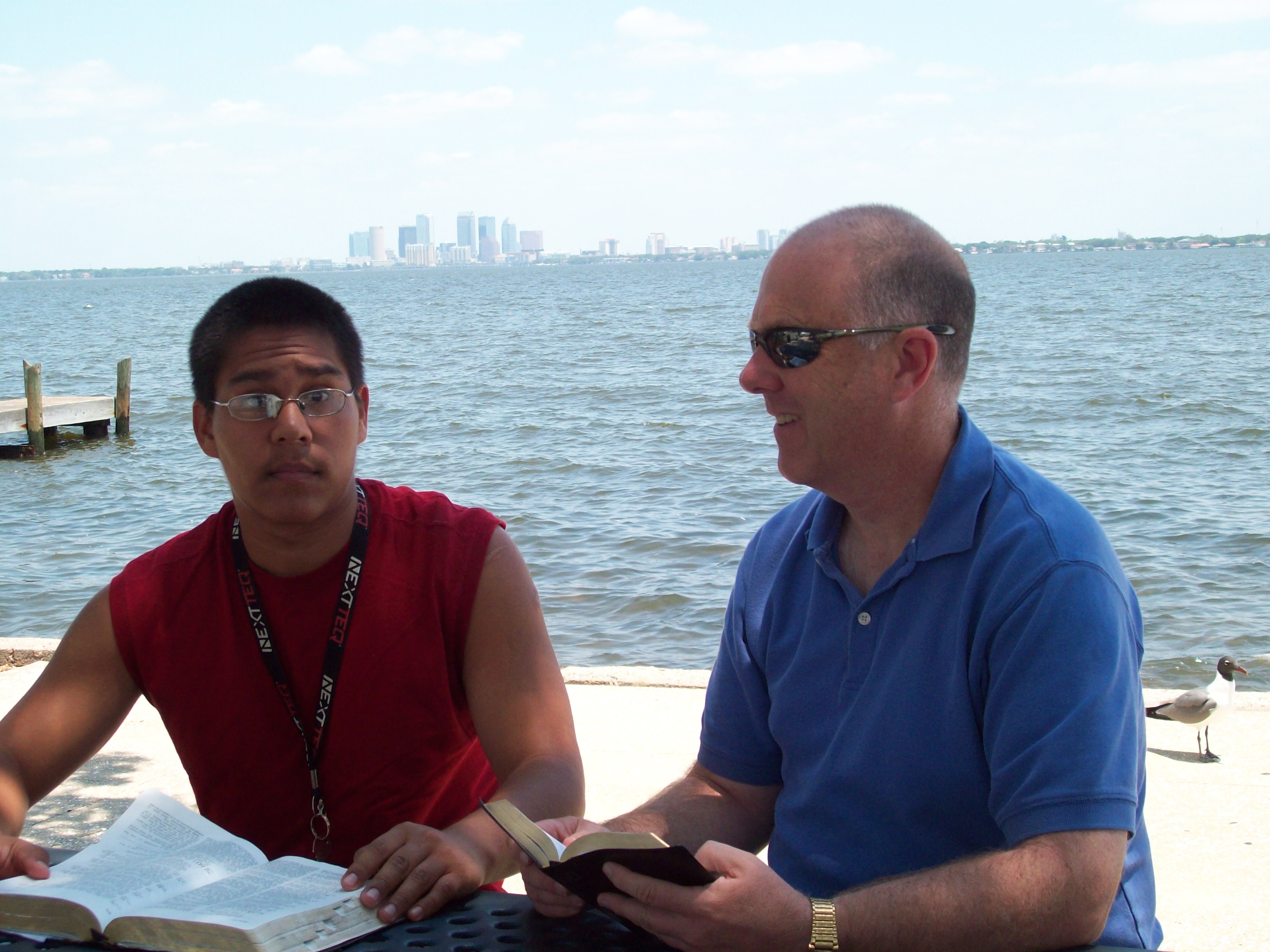
This is me with some of the young people who attended our meetings every night.
Revelation 6:14 speaks of ‘every mountain and rock being moved out of place.” The entire world is being and will be shaken. The Ukraine is being shaken, but so is the United States. It is time for us to identify more with the sufferings of our brothers and sisters around the world more than we identify with our respective nations. It is time for us to identify more with our heavenly citizenship than our earthly citizenship. It is time to realize we are all citizens of heaven and each of us are here only as missionaries. Any advantage we have is only to be used to strengthen our brothers and sisters around the world. We are not too good to suffer anything our brothers and sisters around the world suffer. Hebrews 11:36-37 mentions those who,
had trial of mockings and scourgings, yes, and of chains and imprisonment. They were stoned, they were sawn in two, were tempted, were slain with the sword. They wandered about in sheepskins and goatskins, being destitute, afflicted, tormented— Hebrews 11:36-37 NKJV
How can I, as a missionary in the United States have any ambition any higher than that? Am I any more special than my brother and sister missionaries around the world? Do I deserve any special treatment, privileges or favors beyond what they endure? NO! NO! NO!
While we pray for our heavenly family in the Ukraine we must also suffer with them and share with them. They are our brothers and sisters in that family which spans heaven and earth. Regardless if we are missionaries in the United States or The Ukraine, or wherever you are reading this from, we must realize we are only here to share the Gospel. When our respective nations are being shaken we must realize, we are only missionaries here. We must make sure we are a part of that kingdom which cannot be shaken. The kingdom that Our High Priest has now made us citizens is the only kingdom that will never be shaken. Friend, wherever you are reading this from, I invite you to be a part of Christ’s kingdom, which will never be shaken. By faith you can endure the trials, hardships and persecutions missionaries before you have suffered. By faith we can give our lives for the sake of the Gospel, and be a part of that kingdom which will never be shaken.
Outpost Centers International networks and nurtures hundreds of Adventist supporting ministries around the world. I have trusted them with my personal mission offerings for years. I would like to invite you to join me in ministering to our brothers and sisters in the Ukraine. If the Spirit leads you, you can go to the OCI Ukraine Emergency Relief Fund page.
Main Theme: The book of Hebrews shows us how Jesus is working on our behalf in the heavenly sanctuary.
Read Together:Hebrews 9:24. What is the main idea of this passage?
Study: According to this passage,what was the purpose of Jesus’ ascension to heaven?
Apply: Why should the reality of what Christ has done, not only on the cross but what He is doing now in heaven, give us assurance of salvation?
Share: Your friend shares that she thinks there is no real sanctuary in heaven. Christ is the actual sanctuary. How would you answer your friend’s claims?
Apply:Matthew 27:51 tells us the veil of the earthly sanctuary was torn apart when Jesus was crucified. In Hebrews 4:14-16 it tells us to come boldly before the throne of grace in time of need. How does this veil being removed give you confidence to enter the presence of God today?
Share: Your friend asks you, if Jesus was God why weren’t people destroyed when they saw Him walk the earth, just like the Israelites were destroyed if the approached God on Sinai or the temple? How do you answer your friend? Hint: Hebrews 10:19-20.
Read Together:Hebrews 10:19-22. Define the main idea of this passage.
Study: What invitation do we have in this passage?
Apply: What accusations could Satan make against you before God, if He were allowed? Though he is a liar, how much would he have to lie about you in order to seek your condemnation? What’s your only hope?
Share: Your friend asks, “What does it mean to be able to enter into the holiest through the veil through His flesh and blood by a new and living way? And what does it mean to have our hearts sprinkled and our bodies washed?” How do you answer your friend?
Read Together:Hebrews 12:22-24. What is the main idea of this passage?
Study: In what sense have we arrived atheavenly Jerusalem into the presence of God? See Ephesians 2:5-6 and Colossians 3:1.
Apply: How can we learn to make the promise of eternal life real to us now, amid a world so full of pain and suffering? What answer can you give to those who say that this is all just a fantasy to help us feel better about our life here and now?
Share: Your friend asks you how you know your name is registered in heaven? How do you answer your friend?
The precious Saviour will send help just when we need it. The way to heaven is consecrated by His footprints. Every thorn that wounds our feet has wounded His. Every cross that we are called to bear, He has borne before us. The Lord permits conflicts, to prepare the soul for peace.–The Great Controversy, p. 633. (1888)
Apply: Are there portions of the law or Scripture that we need to be reminded of or simply start putting into practice?
Share: An older church member laments that some of the inspired writings of earlier days seems to be forgotten and needs to be rediscovered, much like the book of the law in Josiah’s time. Do you agree? Disagree? Why?
Read TogetherDeuteronomy 10:12-15. Identify the most important point in this passage.
Study: What is Jeremiah telling the people, and how does it relate to what was already written in Deuteronomy?
Apply: Israel received a similar message from both Moses and Jeremiah. What is your reaction when you receive similar messages from different people? For example when your mother says you need to exercise more and then you hear the same thing from your wife?
Share: A class member shares that Jeremiah had to remind God’s people of messages Moses already taught in Deuteronomy. She then references Joel 2:28-31, and says God may also use last day prophets to remind us what was already taught in the Bible. Do you agree or disagree? Why? Click here for ideas.
But be doers of the word, and not hearers only...James 1:22.
Study: What is God telling His people to remember, and why?
Apply: What is God doing for his church today, and how do we make sure we remember and share with others?
Share: Your friend mentions children starving in third world countries. “What has God done for them?” she asks. How do you respond to your friend?
Read TogetherDeuteronomy 8:7-18 and discuss the main idea of this passage.
Study: What warning is God given here and what does it mean to us today?
Apply: What does this teach us about the dangers associated with wealth and prosperity? Just like Nebuchadnezzar in Daniel 4, does success make us prone to forget God? Why or why not?
Share: Can you think of a friend who may be encouraged by some of the testimonies shared in class today? Can you reach out to that friend this week?
But be doers of the word, and not hearers only...James 1:22.
Main Theme: Jonah could not find rest with his heart in the wrong place. God is patient as He helps us have the right attitudes that give our hearts peace.
Read TogetherJonah 1:1-18. Discuss together what the main idea is of this passage.
Study: Why might Jonah be running away? Did running away bring true rest?
Apply: What are some ways people run from God today? Do they find true rest apart from God? Hint: Isaiah 48:22.
Share: Share a brief testimony of a time when God finally brought you around to doing the right thing.
Read TogetherJonah 2:1-10. Discuss what the main idea is of this passage.
Study: What is Jonah praying about? Where does he direct his prayer and why?
Apply: How has God been merciful even when you were running the wrong way? How did his mercy help you find true rest?
Share: Your friend asks what exactly Jonah 2:8 is talking about. How do you explain it?
Read TogetherJonah 3:1-10. Discuss what the main idea is of this passage.
Study: How did Nineveh respond and how do we see their repentance was sincere?
Apply: How do we show that we have sincerely repented? Hint: Ephesians 4:24-32, Luke 19:8-10. How does repentance and making things right give us true rest? Can you think of a time when you could find no rest until you finally made something right?
Share: A friend at church says she is afraid to share Jesus with her coworkers for fear of being rejected or made fun of. What hope can you share with your friend?
Read TogetherJonah 4:1-11. Discuss the main idea of this passage.
Study: Why is Jonah so upset? Do you think Jonah may have forgot that the same mercy that saved Nineveh also provided the great fish to save him also? What can we learn from this?
Apply: Have you ever been reluctant to grant mercy to someone only to realize later that we all need mercy? See We all Need Mercy. How does forgiving others give us rest?
Share: Can you think of someone you have “discarded” as hopeless as a Ninevite? Will you rethink your attitude and share the Gospel with them this week? Remember,
Study: How does 2 Kings 2:11 explain why God did not just let Elijah die back in 1 Kings 19? How does it explain why Elijah never should have let Jezebel destroy his rest and peace in God? Why should we never let the world destroy our peace?
Apply: Even when Elijah was discouraged God still gave him an assignment in 1 Kings 19:15-16. Does God give up on us when we show sings of fear or doubt or discouragement?
Share: Can you think of a friend or loved one who is suffering depression and could use an encouraging word? Could you pick up the phone and give them a call this week, or maybe even write a letter that they could read and re-read whenever they needed encouragement?
But don’t just listen to God’s word. You must do what it says. Otherwise, you are only fooling yourselves. James 1:22 NLT







 In Light of The Cross